
What Glendon is known for
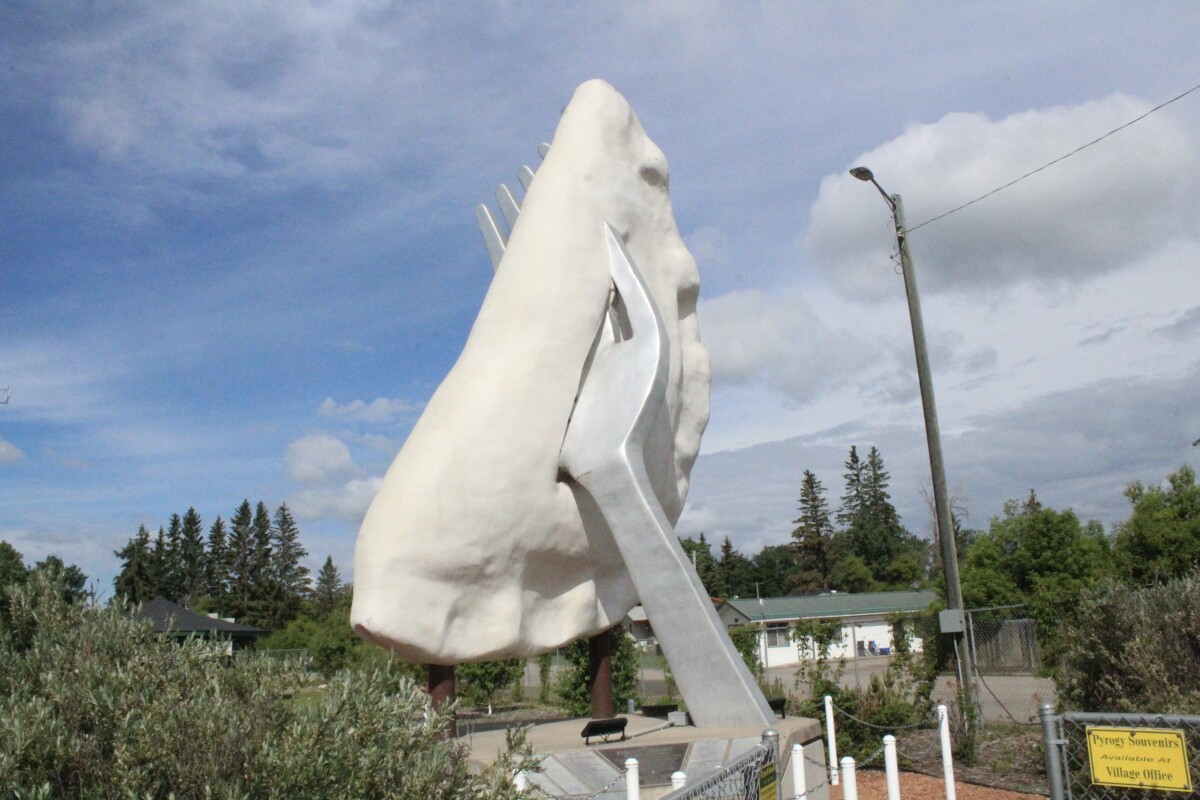
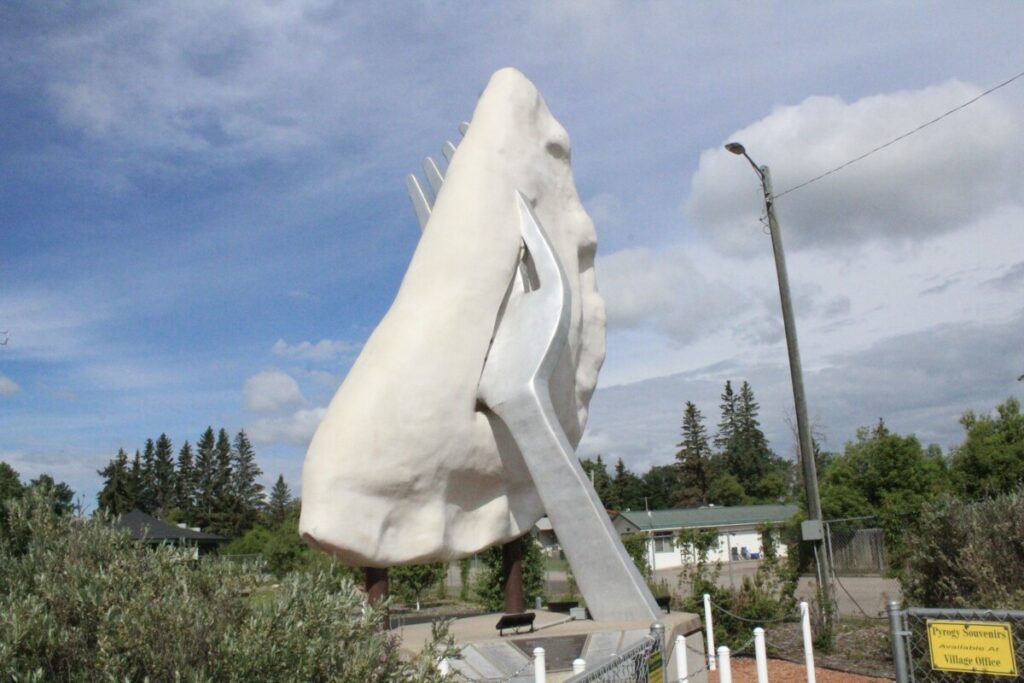
Glendon is a northern Alberta village of 516 people at the 2021 census, about 40 km north of St. Paul. Its Ukrainian-Canadian community is known for one thing: a giant pyrogy unveiled in 1991, with a fork speared into it so passersby can tell what it is. Regional tourism bodies promote Glendon as the Pyrogy Capital of the World, a title of its own making.
A dying town's answer
Glendon became a village on January 1, 1956, and takes its name from the maiden name of an early postmaster’s mother. Mayor Johnnie Doonanco, who served nearly 40 years, said the town was dying and had to come up with something out of the ordinary to have people come in. His answer was food the community already had: the pyrogy, spelled Glendon’s own way.
A fork, so it would read as a pyrogy
The pyrogy marker was erected in 1991 by the Official Pyrogy Committee, whose members were Doonanco, Deputy Mayor Alex Lysy, Councillor Maxine Amyotte and administrator Sharon Wylie. The sculpture, in fibreglass and steel, is usually given as 6,000 pounds. Atlas Obscura records that the first, forkless design left passersby baffled about what the sculpture was, so a fork was added to settle the question.
Civic business, and a marker that overstates
Doonanco treated the pyrogy as civic business: in 1995 he asked the Royal Canadian Mint to put a pyrogy on the new two-dollar coin, arguing the polar bear would not stay strong without one to eat. No pyrogy was ever stamped on a coin. The annual festival usually draws around 500 people for a pyrogy eating contest and the Glendon Shevchenko Ukrainian Dance Club. The marker at the site calls the pyrogy a food brought to Western Canada in the early 19th century; the first wave of Ukrainian immigration to Canada actually began in 1891. Glendon’s municipal district, not the village itself, holds Treaty 6 land, signed in 1876 with Plains and Woods Cree, Assiniboine and other First Nations, and the Elizabeth and Fishing Lake Metis Settlements; Fishing Lake was partly settled by people from the dissolved Saint-Paul-des-Métis colony.
Questions people ask about Glendon
Why is Glendon, Alberta famous?
Glendon is known for a giant pyrogy sculpture unveiled in 1991 by its Ukrainian-Canadian community. Regional tourism bodies promote the village, population 516 at the 2021 census, as the Pyrogy Capital of the World, a title Glendon gave itself.
Why does the Glendon pyrogy have a fork?
The first pyrogy sculpture had no fork, and Atlas Obscura recorded that it left passersby baffled about what it was supposed to be. The Official Pyrogy Committee added a fork so anyone driving past could tell at a glance.
Who built the Glendon pyrogy?
The Official Pyrogy Committee built it in 1991: Mayor Johnnie Doonanco, Deputy Mayor Alex Lysy, Councillor Maxine Amyotte and administrator Sharon Wylie. Doonanco, who served nearly 40 years, said the town was dying and needed something out of the ordinary.
Did the pyrogy ever appear on a Canadian coin?
No. In 1995 Doonanco wrote to the Royal Canadian Mint proposing the pyrogy replace the polar bear on the new two-dollar coin, arguing the bear would not stay strong without perogies to eat. No pyrogy was ever stamped on a coin.