
What St. Paul is known for
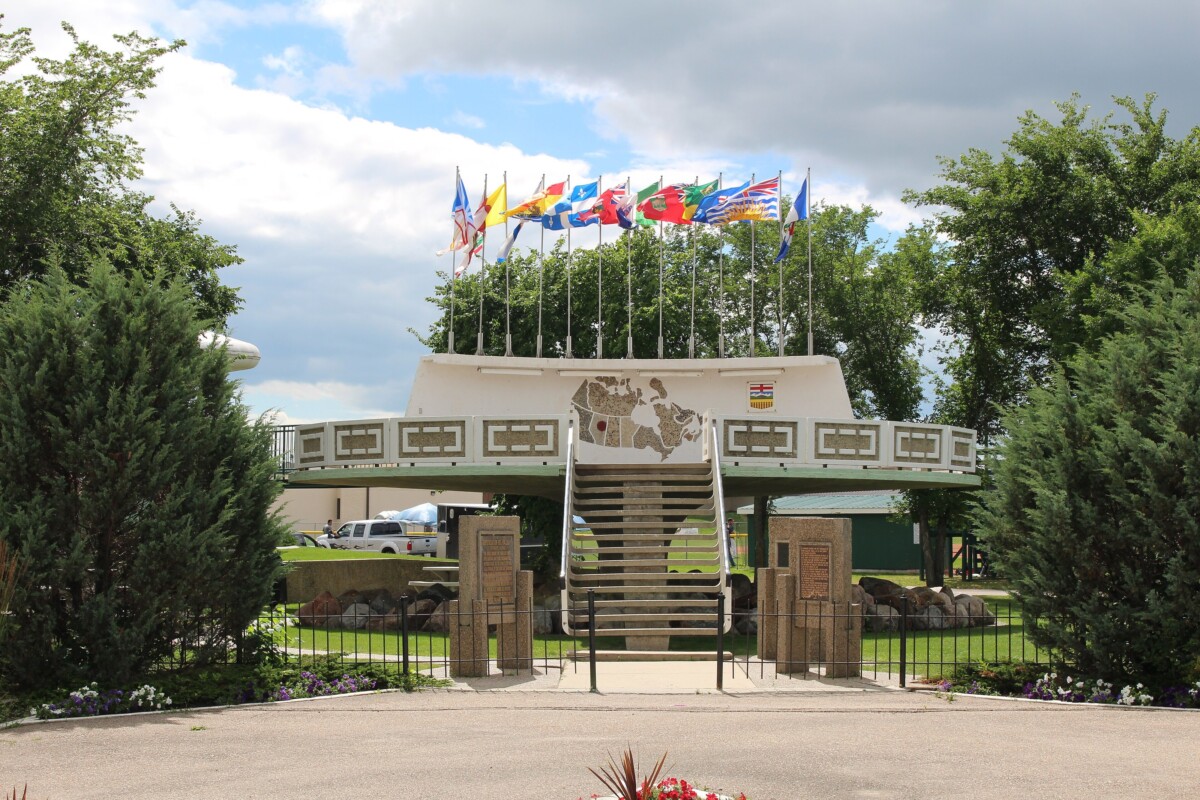
St. Paul is an Alberta farm and service town of 5,863 people at the 2021 census, about 200 km northeast of Edmonton. It is known for one structure: a UFO landing pad, built in 1967 as a Canadian Centennial project. Guinness World Records lists it as the first official UFO landing pad, though it has never been used for its intended purpose.
A Métis colony, first
St. Paul began in 1896 as Saint-Paul-des-Métis, a Métis agricultural colony on 92,160 acres set aside by the federal government after Father Albert Lacombe’s petition. The colony was short of the equipment, livestock and government funding it had been promised, and relied mainly on charity; after fire destroyed its school in 1905, the colony’s managers and Father Therien decided the project should be abandoned. The land was opened to French Canadian settlers on April 10, 1909, with 450 homesteads recorded in a single day. The town shortened its name from Saint Paul des Métis to Saint Paul in 1936.
Over beers, a different plan
For Canada’s 1967 Centennial, mayor Jules Van Brabant said the committee had planned an ordinary park before deciding, over beers, that they wanted something really different: a landing pad for UFOs. Local businesses donated the materials, so, Chris Rutkowski reported, it cost the town nothing. Defence minister Paul Hellyer arrived by helicopter to open it on June 3, 1967, and St. Paul was declared the Centennial Capital of Canada. The backstop carries a map of Canada made from stones each province sent, and the sign welcomes visitors from earth or otherwise and calls the ground under the pad international.
The welcome, and what it leaves out
The pad has never been used for its purpose, and the invitation is now a festival. The first UFO Days, in July 2026, drew an estimated 700 or more people, the Chamber of Commerce said. The welcome leaves one history out. Historian Nathalie Kermoal argued in 2009 that French Canadian heritage in the area was celebrated while its Métis predecessors were passed over in silence. That history is not only past. Saddle Lake 125, a Treaty 6 reserve of the Saddle Lake Cree Nation, lies 24 kilometres west of town, and the local group Reconciliation St. Paul works to improve relationships between Indigenous and non-Indigenous people.
Questions people ask about St. Paul
Why is St. Paul, Alberta famous?
St. Paul is known for a UFO landing pad built in 1967 as a Canadian Centennial project. Guinness World Records lists it as the first official UFO landing pad in the world, though it has never been used for its intended purpose.
When did the UFO landing pad open?
The landing pad opened on June 3, 1967, when Canada's defence minister, Paul Hellyer, arrived by helicopter. Mayor Jules Van Brabant said the town's Centennial committee had planned an ordinary park before deciding, over beers, that it wanted something different.
What was St. Paul before the UFO landing pad?
St. Paul began in 1896 as Saint-Paul-des-Métis, a Métis agricultural colony that struggled for funding and relied on charity. After a 1905 school fire, its lands were released and homesteaded by French Canadian settlers, 450 claims in a single day, on April 10, 1909.
Has a UFO ever landed at St. Paul's pad?
No. The pad has never been used for its intended purpose, and no extraterrestrial landing there is documented. The town now hosts UFO Days, a festival that drew more than 700 people in its first year, 2026.