
What Kiskunhalas is known for
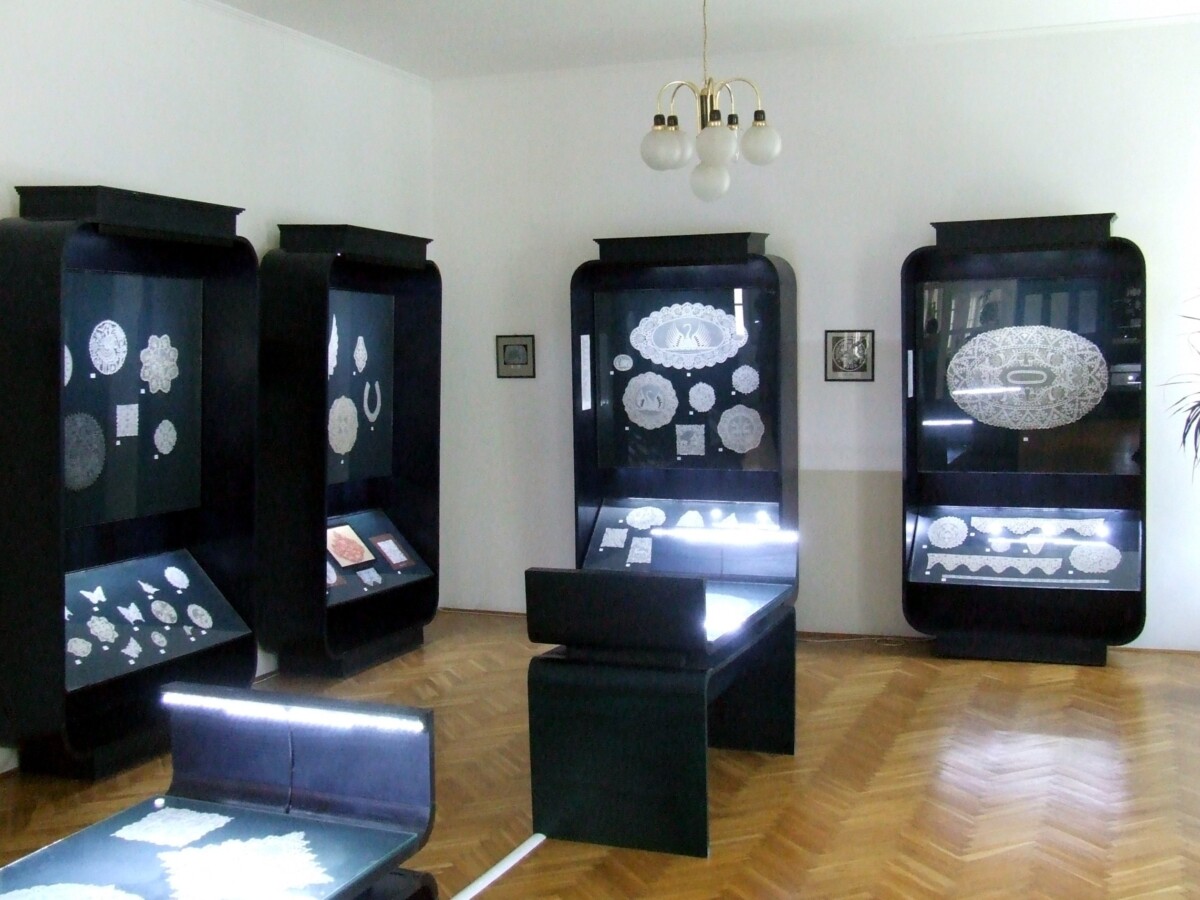
Kiskunhalas is a Hungarian town of 26,784 people at the 2022 census, about 130 kilometres south of Budapest. It is known for Halas lace, a needle lace first made in 1902 and still hand sewn today at the town’s own lace house.
A teacher's design, a dressmaker's stitch
In 1902 Árpád Dekáni, the drawing teacher at the local Reformed gymnasium, began designing the lace, and Mária Markovits, a local dressmaker, developed the needle technique that turned his drawings into lace. The lace won the Grand Prix at the 1904 St Louis World’s Fair and the 1906 Milan exhibition, credit that belongs to Dekáni’s designs and Markovits’s technique together, not to either alone. Dekáni designed every piece until he left for Budapest in 1906.
A house built for the craft
In April 1934 the municipal council decided to build a lace house, and the Csipkeház, designed by Gitta Mallász, opened on 23 June 1935, the same year the lace took its three crossed fish trademark. A 1939 extension made room for about 100 permanent employees. Today nine lace sewers make Halas lace using 60 traditional stitch variations, paid by the piece, and new lace makers have rarely been trained since 1964.
A false pedigree, and an honest one
Around the launch, Pest county notary József Zseny suggested that Cumans had made similar lace at Attila’s court, an idea he based on the Byzantine chronicler Priscus. Local historian István Végső calls the theory an early twentieth century romantic fantasy, and says Priscus never mentions Cumans. Cumans did resettle the Halas area after the thirteenth century Mongol invasion, and the region around the town, Kiskunság, still carries that heritage in its name; the lace itself, though, owes nothing to Attila’s court.
Recognised, but not always visited
Halas lace has been on Hungary’s diplomatic gift list since 2001, with recipients including Pope John Paul II, Queen Elizabeth II and the Empress of Japan, and it became a hungarikum in 2014. A small piece of 2.5 to 3 centimetres takes 4 to 5 work hours to sew, and the town’s only published visitor figure is its annual lace exhibition, which draws 1,500 to 2,000 people.
Questions people ask about Kiskunhalas
Why is Kiskunhalas famous?
Kiskunhalas is famous for Halas lace, a needle lace first made in 1902 by drawing teacher Árpád Dekáni and dressmaker Mária Markovits. The town council built the lace a permanent home, the Csipkeház, in 1935.
Who invented Halas lace?
Árpád Dekáni, a drawing teacher, designed the patterns from 1902, and Mária Markovits, a local dressmaker, developed the needle technique that turned his drawings into lace. The lace they made together won Grand Prix awards at St Louis in 1904 and Milan in 1906.
Is Halas lace really linked to Attila the Hun?
No. A Pest county notary once claimed Cumans made similar lace at Attila's court, but local historian István Végső calls that an early twentieth century fantasy and notes that the source it relies on, the chronicler Priscus, never mentions Cumans.
How many people still make Halas lace?
The town of Kiskunhalas says nine women sew Halas lace today, using 60 traditional stitch variations, paid by the piece. New lace makers have rarely been trained since 1964, and a small piece still takes 4 to 5 work hours to sew.