
What Gore is known for
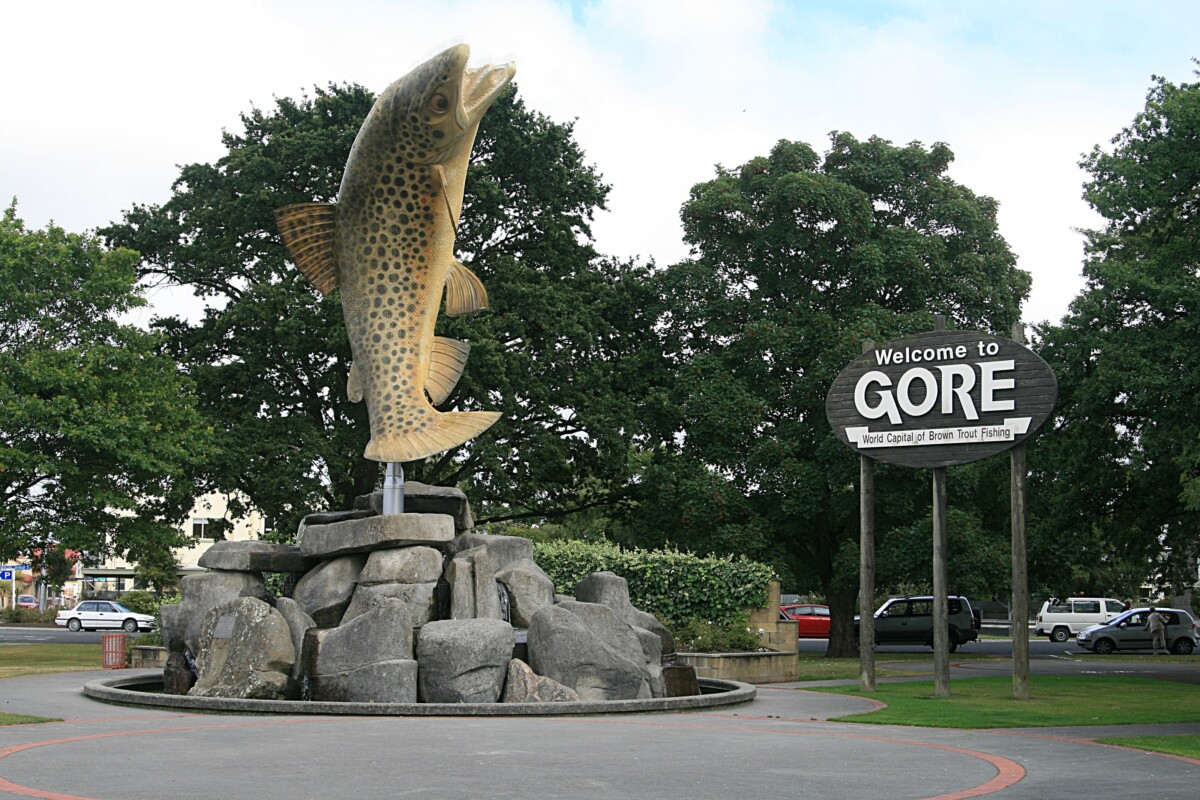
Gore is a Southland town on the Mataura River, about 64 km northeast of Invercargill, with an urban population of 8,310 as of June 2025. It has given itself two titles: New Zealand’s capital of country music, home to the Gold Guitar Awards since 1974, and the world’s brown trout fishing capital, marked by a 6.5 metre trout statue unveiled in 1989.
A long ford, and Māori travel routes before it
The Hokonui Rūnanga, a branch of Ngāi Tahu, are served by O Te Ika Rama Marae, and the town site lies on or near routes Māori travellers used, with Tuturau, near Mataura, the nearest pre-European settlement. English settlers called the crossing the Long Ford, for its long, shallow walk across the Mataura River, and in 1862 it was renamed Gore for Sir Thomas Gore Browne, an early Governor of New Zealand.
A talent quest, then a golden guitar
When Country Style Promotions wound up in 1970, its money was offered to the fledgling Gore Country Music Club to help establish a talent quest. The first Gold Guitar Awards, held in 1974, drew 38 contestants and were won by Patsy Riggir, a 28 year old checkout operator from the North Island. By 1978 a wagon north of town proclaimed Gore New Zealand’s capital of country music.
The awards now sit inside Tussock Country, a ten day festival of more than 70 events. The 2024 festival drew 10,322 participants and injected NZ$2.1 million into the Eastern Southland economy, and the 2025 awards, their 50th, received a record 829 entries. That year Amy Maynard, the 2024 senior winner, who is Māori, said security had targeted brown faces and made disparaging comments during a te reo Māori waiata, and she vowed not to return; organisers said they held a zero tolerance policy and had not warned anyone of disqualification for speaking te reo.
A trout named Trevor, and water trouble
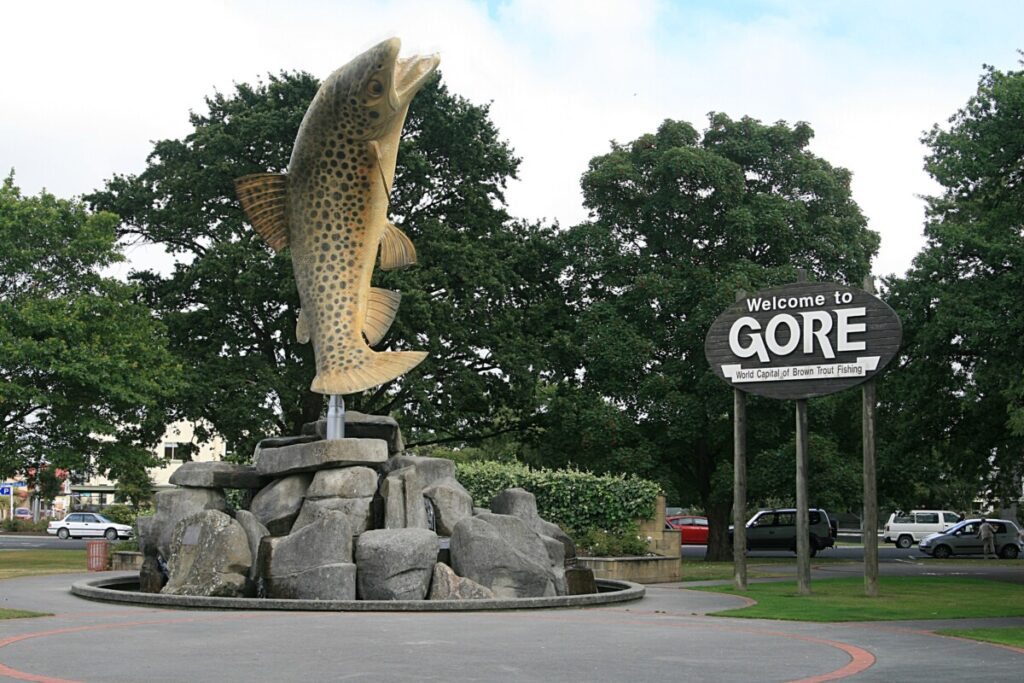
In 1989, marking its 25th birthday, the local Lions Club paid for a 6.5 metre brown trout statue, designed by signwriter Erroll Allison, after convenor David Ogg proposed it to proclaim Gore the brown trout fishing capital of the world. The council refurbished the statue in 2017, and in early 2026 a public naming competition, run with Hokonui FM, gave it a name: Trevor, with over a third of the vote.
The titles carry strain. On 18 July 2025 the council told residents not to drink or cook with the tap water after a nitrate reading of 11.4 milligrams per litre, just over the maximum acceptable value of 11.3. Greenpeace activists responded by placing crosses on the trout’s eyes and altering the welcome sign to blame dairy farming, a claim Federated Farmers denied.
Questions people ask about Gore
Why does Gore call itself two capitals?
Gore calls itself both New Zealand's capital of country music, for the Gold Guitar Awards it has held since 1974, and the world's brown trout fishing capital, marked by a 6.5 metre trout statue unveiled in 1989. Both titles were self given by local clubs, not awarded from outside.
What is the trout statue in Gore called?
Trevor. In early 2026 Gore District Council and Hokonui FM ran a public naming competition with five finalists, and the name Trevor received over a third of the votes, announced at the town's fly fishing festival.
What happened with racism allegations at the Gold Guitar Awards?
In 2025 Amy Maynard, the Māori singer who won the senior title in 2024, said security had targeted brown faces and made disparaging comments during a te reo Māori waiata, and she vowed not to return. Organisers said they held a zero tolerance policy and had not warned performers against speaking te reo.
Why were Gore residents told not to drink their tap water?
On 18 July 2025 the council found nitrate in the town supply at 11.4 milligrams per litre, just over the maximum acceptable value of 11.3, and told residents not to use it for drinking, food preparation or teeth brushing. Greenpeace activists then protested at the town's trout statue, blaming dairy farming, which Federated Farmers denied.