What Bulls is known for
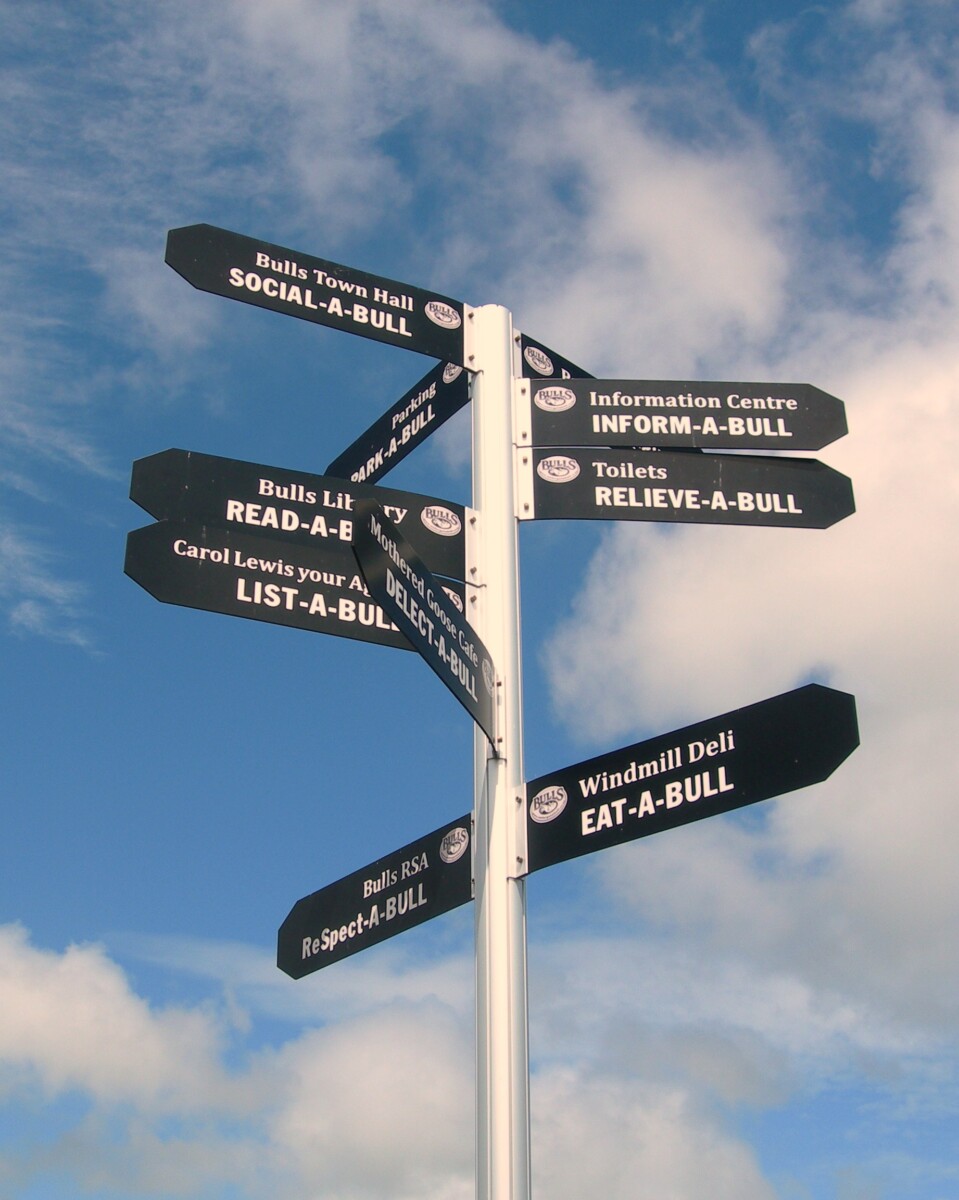
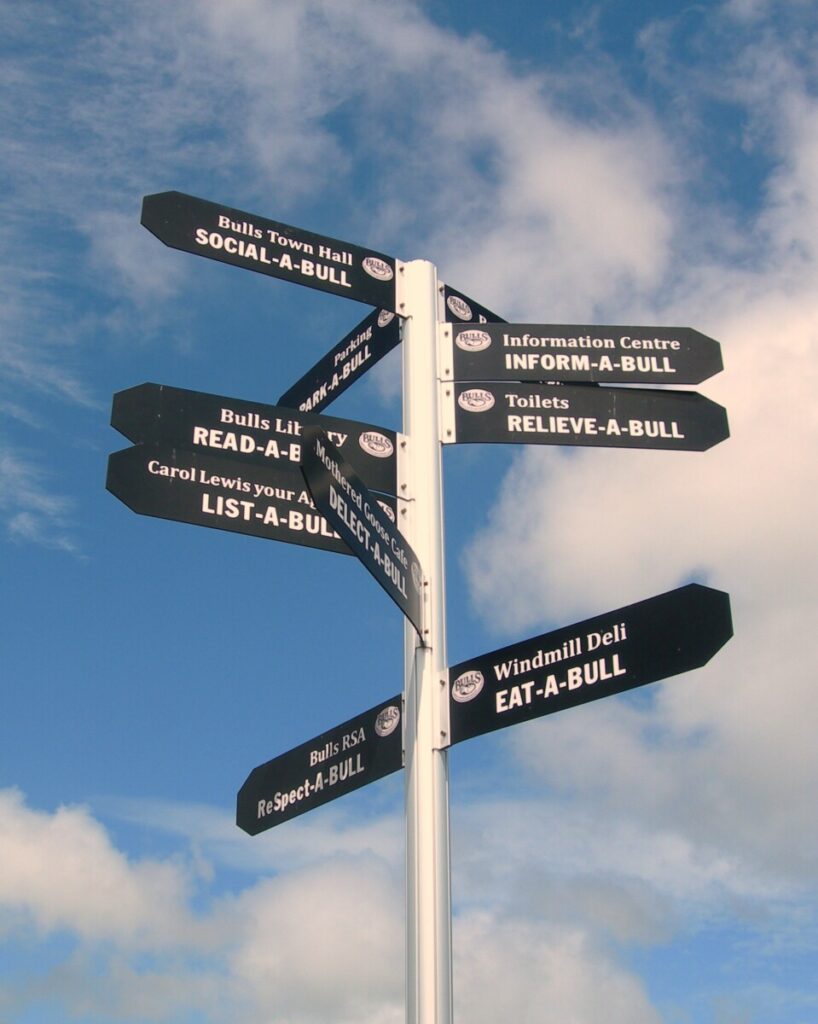
Bulls is a Rangitīkei highway town where State Highways 1 and 3 meet, about 28 km northwest of Palmerston North, with 2,055 residents at the 2023 census. It is known for a joke played at scale: since 1990, nearly every business and public building in town has taken a pun sign built on the town’s own name, from Const-a-bull police station to Cure-a-bull medical centre.
Ngāti Apa land, long before the puns
For centuries the Rangitīkei was home to Ngāti Apa, descendants of the Kurahaupo waka, with settlements along the Rangitīkei River. Early in the 19th century Te Rauparaha, campaigning with allied iwi, changed the balance of power across the lower North Island. Parewahawaha Marae in Bulls is the meeting ground of Ngāti Parewahawaha, a hapū of Ngāti Raukawa, and the locality carries two recorded Māori names, Te Ara Taumaihi and Ō-hine-puhiawe. European settlers arrived in the Rangitīkei during the 1840s, and the settler town took its name from James Bull, credited with opening its first general store in 1862: first Bull Town, then Clifton, then Bulls at the urging of Sir William Fox.
A secondhand book, and a committee that made the rule
In 1989 Graeme Platt and others formed the Bulls Enterprise Committee after the town’s council was amalgamated into Rangitīkei. In 1990 Earl Funnell, browsing a secondhand bookshop in Palmerston North with his wife Mildred, found Richard Ernest Gregory’s 1985 book A Lot of Bull and brought a pun branding idea to the committee. A logo competition was won by Doug Bettridge.
The rules were strict: every pun had to be registered at the information centre, meant to stop double ups, and every sign had to be painted timber carrying the same bull image. The welcome sign reads, Herd of bulls? It’s a town like no udder. The police station is Const-a-bull, the church Forgive-a-bull, the medical centre Cure-a-bull, the town hall Social-a-bull and the public toilets Reliev-a-bull. Even McDonald’s and Subway joined in, as value-a-bull and sub-merge-a-bull.
Nearly universal, and hard to keep up
Graeme Platt says around 13,000 vehicles a day pass through Bulls on State Highway 1, and he says early business commitment to the scheme was nearly 100 percent, because nobody wanted to be the odd one out. Bulls is twinned with Cowes, England, and its marketing has also used the slogan, New Zealand gets its milk from Bulls.
By 2017 the Bulls Enterprise Committee had ceased to exist. Locals say newer shops now open without knowing the pun history, and that often nobody inducts them into the scheme that once got nearly everyone to join in.
Questions people ask about Bulls
Why is Bulls, New Zealand known for puns?
In 1990 Earl Funnell found a secondhand pun book and brought the idea to the Bulls Enterprise Committee, formed the year before by Graeme Platt and others. The committee set rules: every pun registered to avoid repeats, every sign painted timber with the same bull image.
What are some of the pun signs in Bulls?
The police station is Const-a-bull, the church Forgive-a-bull, the medical centre Cure-a-bull, the town hall Social-a-bull, the tourist information centre Inform-a-bull and the public toilets Reliev-a-bull. Even national chains joined in, including McDonald's as value-a-bull.
Who lived in the Bulls area before European settlement?
For centuries the Rangitīkei was home to Ngāti Apa, descendants of the Kurahaupo waka. Early in the 19th century Te Rauparaha's campaigns, with allied iwi, changed the balance of power in the lower North Island. Bulls hosts Parewahawaha Marae, the meeting ground of Ngāti Parewahawaha, a hapū of Ngāti Raukawa.
Is the pun branding scheme still active in Bulls?
Partly. The Bulls Enterprise Committee that set the rules and registered each pun had ceased to exist by 2017. Locals say newer shops now open without knowing the history, and that often nobody inducts them into the scheme.