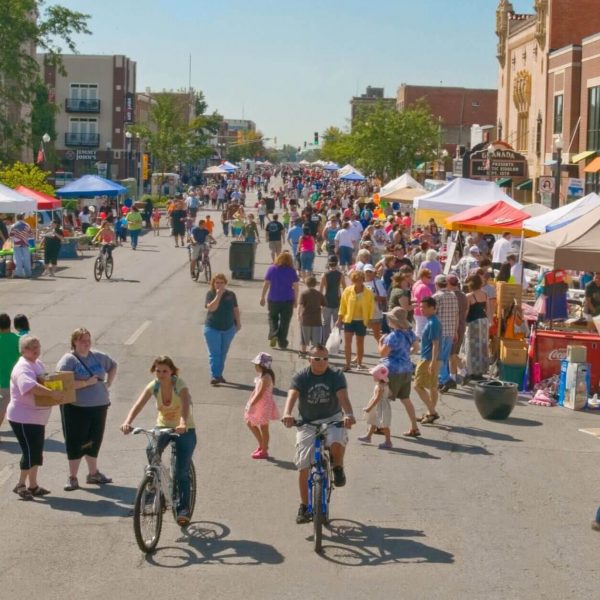
How Emporia earned the score
Population 24,139 (US Census 2020).
Situation Emporia was a small town with an excess of dirt roads around the city, set within the Flint Hills tall native prairie.
Action A small group of friends started racing several hundred miles on gravel roads, founding the Dirty Kanza in 2006 with 34 participants.
Result Bikers took note, and the all dirt road race that grew from it now draws close to 5,000 riders from more than 50 countries and sustains the town.
Let’s Meet Emporia, Kansas
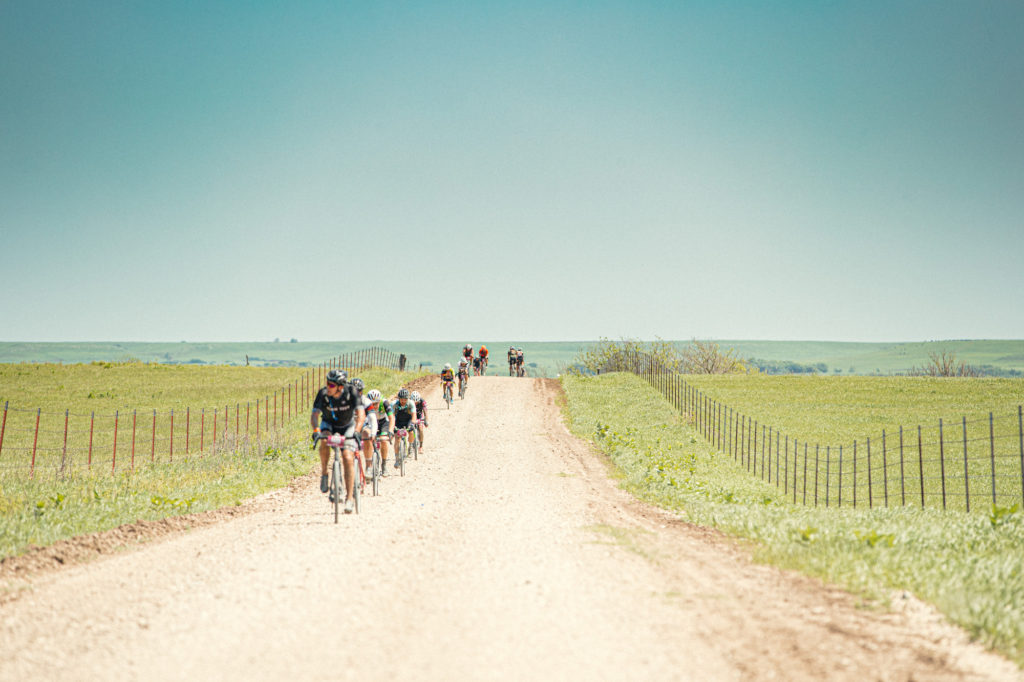
Emporia, Kansas is a prime example of a city heavily capitalizing on the biking community and tourism. The surrounding Flint Hills offer miles of challenging gravel roads to ride on. The fact that you are surrounded by one of the rarest ecosystems in all of North America, tall native prairie, does not hurt things either.
The situation Emporia started from was simple. It was a small town with an excess of dirt roads around the city. That excess of gravel, which many places would treat as a liability, turned out to be the raw material for a nationally known identity. A small group of friends started racing several hundred miles on those gravel roads. Bikers took note of the feat, and naturally, being competitive, they started an all dirt road bike race that now sustains the town.

Dirty Kanza, the world’s premier gravel grinder
Now called Unbound Gravel and presented by Shimano, the event started as the Dirty Kanza in 2006 under founders Jim Cummins and Joel Dyke with 34 participants. By 2019 it had grown to around 3,400 riders. The event was renamed Unbound Gravel in 2020, and it is now produced by Life Time as the 20th anniversary edition approaches. The 2026 edition runs five distances (25, 50, 100, 200, and 350 miles) over four days from May 28 to 31, drawing close to 5,000 riders from more than 50 countries. For a city of 24,000 that is not a small number. The Emporia Regional Development Association reports that Unbound Gravel week brings roughly 12,000 visitors and $5 million to Emporia.
- The average household income in Emporia is approximately $47,000.
- At a conservative $350 per participant in race fees and local spending, 5,000 riders represent over $1.7 million in direct event revenue.
- Emporia also hosts 8 additional bike races annually.
- The Gravel Cycling Hall of Fame holds its annual induction ceremony in Emporia.
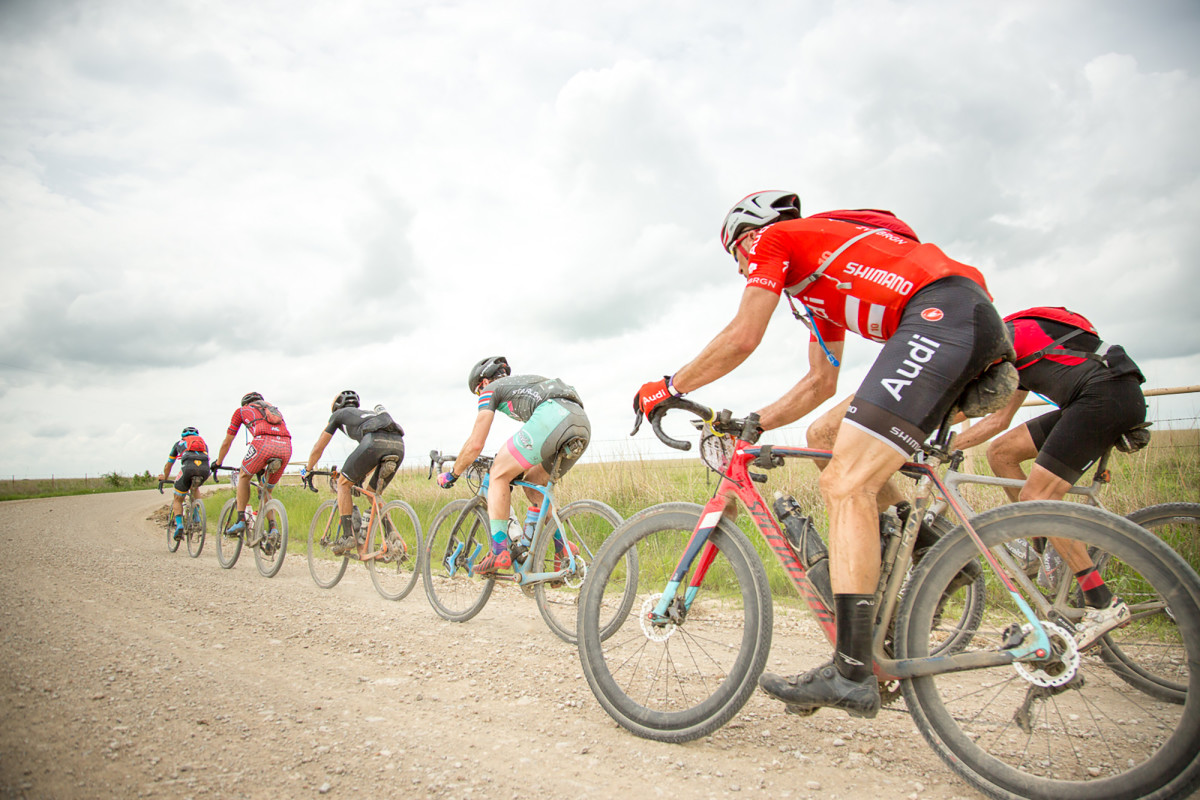
The great thing about becoming a biking town is that it draws people year round, not just for races but for destination riding. The Flint Hills gravel network is the draw; the town is the base. Towns like Cuyuna, Minnesota, Bentonville, Arkansas, and Canmore, Alberta have followed the same playbook of building a visitor economy around riding.
Result
People come from all over the country to attend these events. It is not just money circulated through the town but out-of-town money from nearby big cities like Kansas City. That distinction matters, because new dollars arriving from outside the region are what actually grow a local economy rather than simply recirculating what is already there.
Niche bicycle businesses
Just like some of these amazing small towns, like Leavenworth, Washington, businesses tuned to your market niche begin appearing. For example, there are several bike shops in town, specialty biking campgrounds, and dedicated gravel-oriented food stops.
Ancillary businesses
Then of course you have the general ancillary businesses like hotels, diners, and gas stations. Everyone needs those staples. Emporia’s lodging supply includes a Hampton Inn, Fairfield by Marriott, and Holiday Inn Express, adequate for ordinary weekends and stretched to the limit during Unbound Gravel week.
New life into old attractions
Big biking events like this also help support other local attractions. If well advertised, people from out of town are inclined to visit local sites. The William Allen White House, for example, a Gilded Age mansion of a famous Kansas writer and editor, benefits from the foot traffic gravel week brings to town.
How to capitalize further
Emporia continues to grow into the needs of the gravel community. A hostel would give younger riders a place to congregate, meet new people, and make memories. Great memories are what keep people coming back. A permanent community plaza with outdoor seating, food truck provisions, and a casual post-ride gathering space would extend daily dwell time beyond the race calendar.