How Copper Harbor earned the score
Population 108 permanent residents (US Census 2020, Copper Harbor CDP), the northernmost town in Michigan at the tip of the Keweenaw Peninsula where US-41 ends.
Situation A former copper-mining village at the end of an eight-hour drive from Detroit, in an economically hard spot, needing a sustainable income that a community of 100 cannot generate on its own residents.
Action The Copper Harbor Trails Club built and stewarded roughly 35 miles of purpose-built singletrack over twenty-plus years, earned an IMBA Silver Level Ride Center designation, and stacked recurring multi-day events on top of it.
Result Around 20,000 visitors a year to a town of 108, a ratio on the order of 180 visitors per resident, supporting a visitor economy the case study record puts in the low millions of dollars.
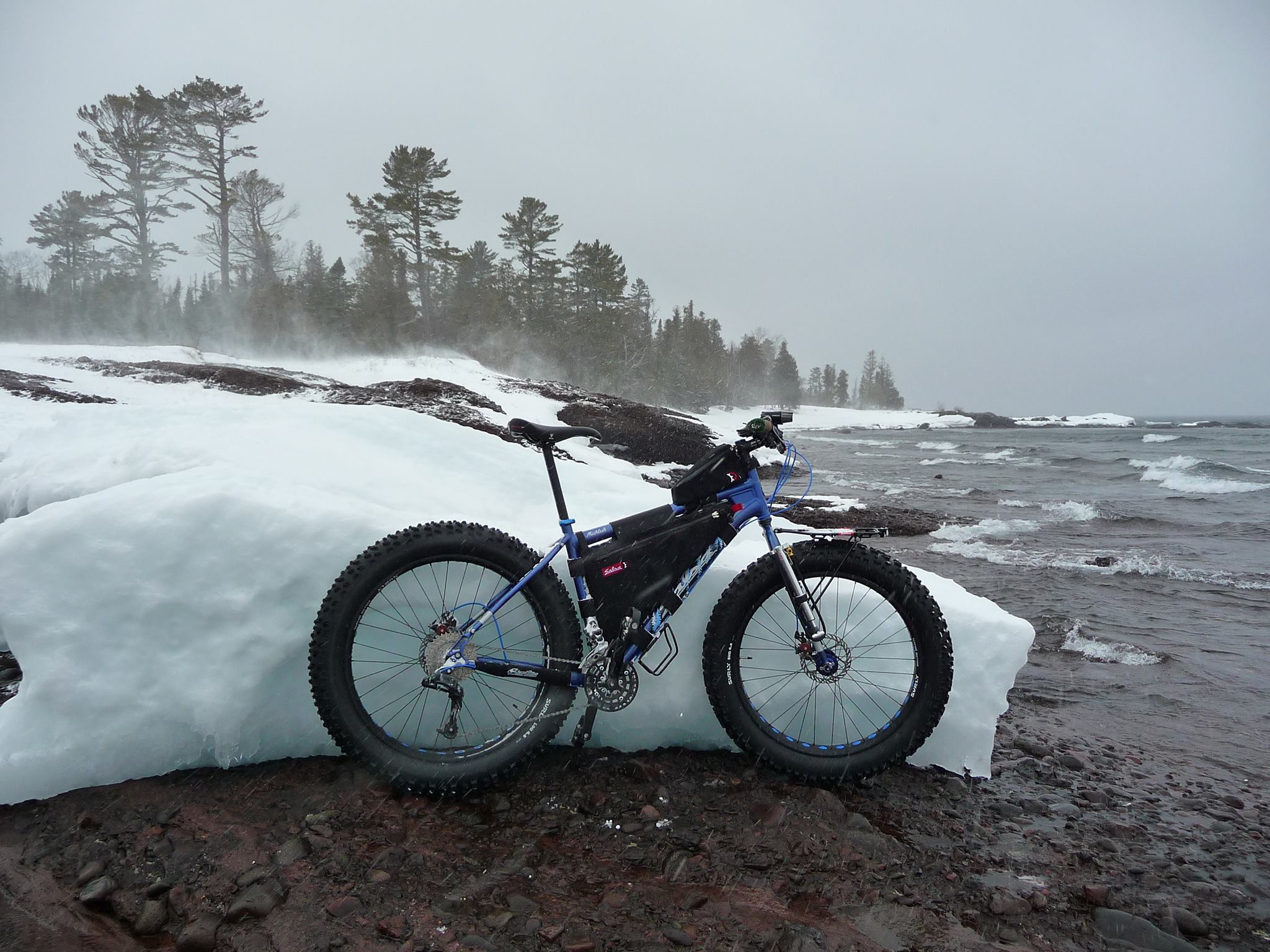
Let’s Meet Copper Harbor, Michigan
Copper Harbor is the northernmost town in Michigan, sitting at the tip of the Keweenaw Peninsula where US-41 ends. The 2020 census recorded a permanent population of 108. The town draws around 20,000 visitors a year. That ratio, somewhere on the order of 180 visitors per resident, is what gets Copper Harbor talked about in tourism circles. The reason for the ratio is not the lighthouse, not Fort Wilkins, and not the ferry to Isle Royale. It is the mountain bike trails.
An IMBA Silver Level Ride Center designation, 35-plus miles of purpose-built singletrack, and three annual multi-day events have turned a former copper-mining village at the end of an eight-hour drive from Detroit into a destination that Outside Magazine has covered repeatedly. The story is the cleanest example in the field study of a tiny, remote town building a tourism economy from a single piece of recreation infrastructure that other communities cannot easily replicate.
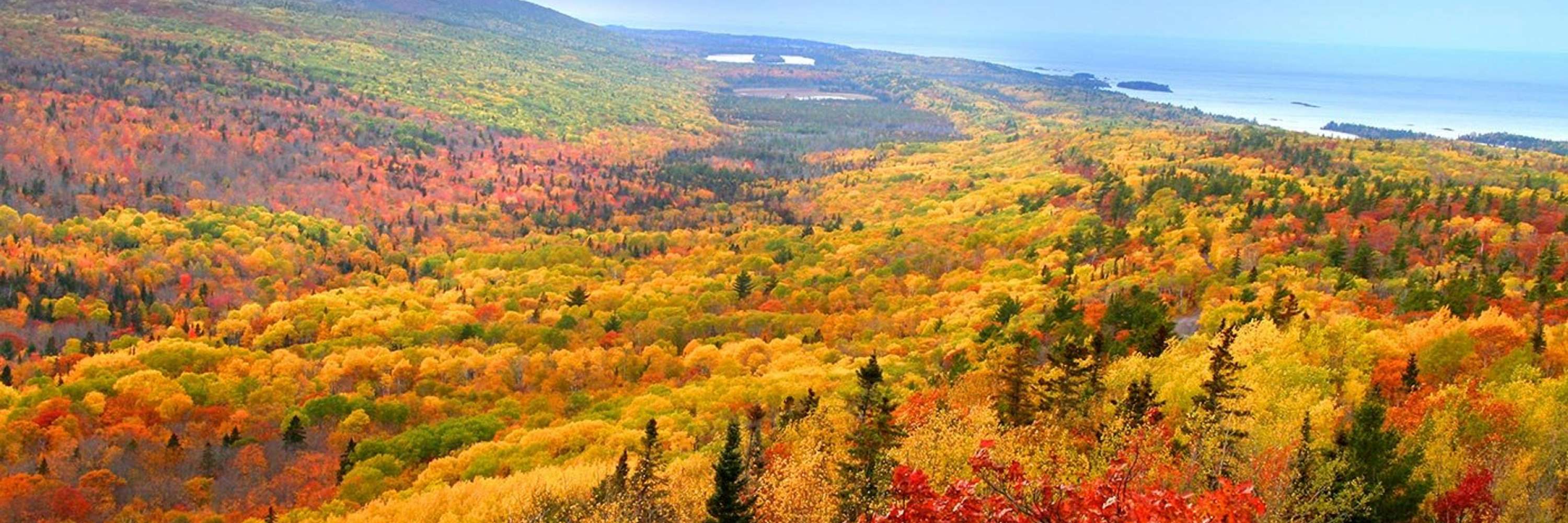
History
The Keweenaw Peninsula was Ojibwe territory before European settlement. The 1842 Treaty of La Pointe, which took effect in 1843, formally ceded the western Upper Peninsula to the United States. The town that became Copper Harbor opened that same year as the first mineral land agency for the entire Lake Superior District. Captain Walter Cunningham was appointed by the United States Department of War as a Special Agent and opened his office, later called the “Government House,” on Porter’s Island just opposite present-day downtown.
The copper rush followed immediately. In 1844 the Pittsburgh and Boston Copper Harbor Mining Company, formed by John Hayes of Cleveland, began excavating pits near Hayes Point. The operation struck a major copper lode in 1845, and the Pittsburgh and Boston mine was one of the first in Michigan. Other mines followed within a few years, including the Central Mine and the Cliff Mine. By 1870 the local copper resources around the harbor itself had been largely worked out, and the boom shifted south to Calumet and Hancock. The Copper Country economy, once the largest copper-producing region in the world, slowly drained out of the Keweenaw across the next century. The harbor settlement that began as a federal mineral agency became, by the late twentieth century, a summer-only outpost.
Copper Harbor was not officially organized as a census-designated place until the 2010 census, which is the technical statement of how recently it became a “town” in any formal sense. The population stayed around 100. A community of 100 cannot run a year-round retail economy on its own residents; the question that defined modern Copper Harbor was whether outsiders would show up and, if they did, what they would be coming for.
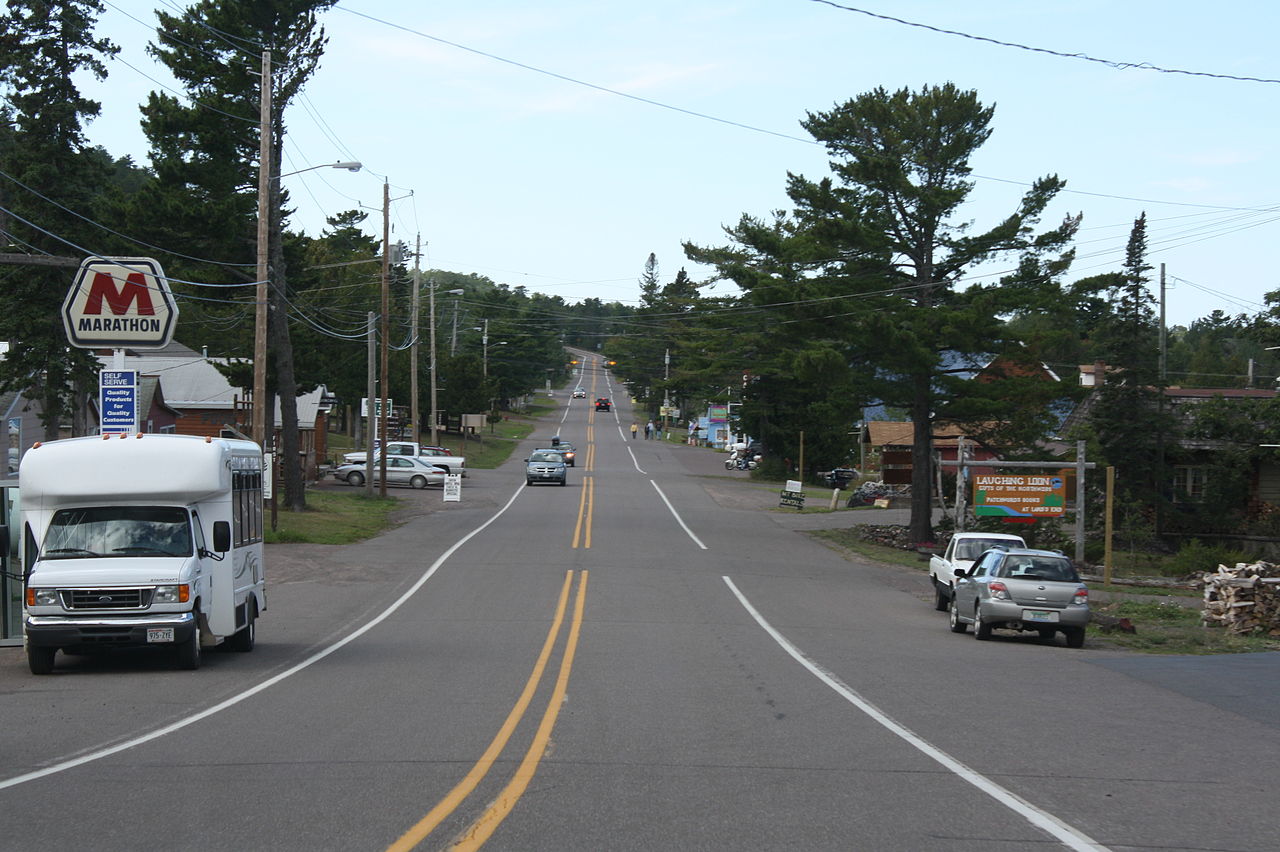
Copper Harbor’s Creative City Development
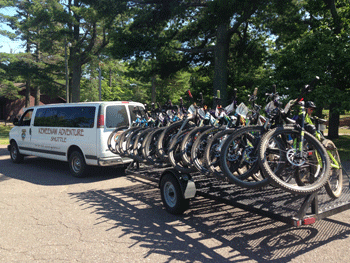
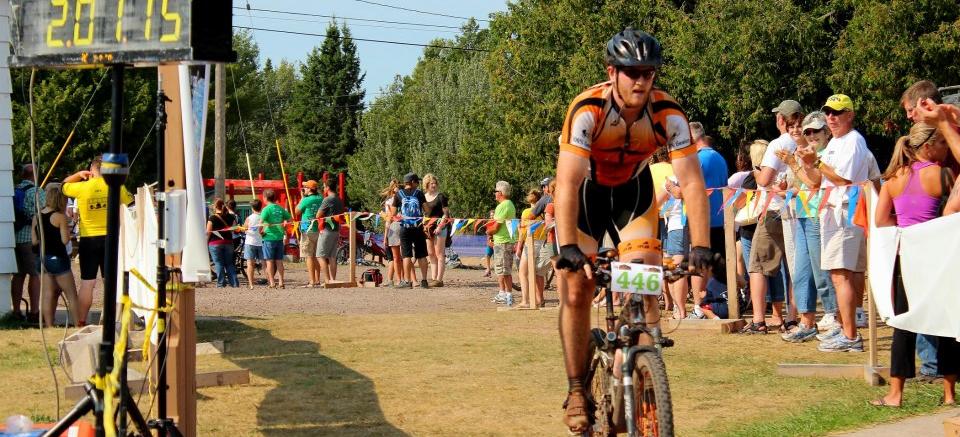
The answer turned out to be mountain bikes. The Copper Harbor Trails Club began building purpose-built singletrack in the surrounding state forest land in the late 1990s and early 2000s, drawing on the topography that the copper mines had left behind: stamp-sand piles, exposed bedrock outcrops, hardwood forest, lake views. The trail network grew to roughly 35 miles of marked singletrack, with progressive flow lines, technical descents, and a full beginner-to-expert ladder. In 2011 the International Mountain Bicycling Association awarded Copper Harbor its Silver Level Ride Center designation, one of the first towns to earn it. Keweenaw Adventure Company runs the shuttle service from town up to the trailheads on Brockway Mountain, with day passes available through the Memorial Day weekend through mid-October season.
The trail system and the IMBA designation
The IMBA Silver Ride Center designation is the brand asset that turned a regional trail network into a national destination. Within a roughly 250-mile radius, no other town carries the certification. The nearest comparable mountain bike destinations are Marquette and Gwinn, both two-plus hours south, and neither has the same combination of trail length, vertical drop, and remote-tip-of-the-peninsula character. Copper Harbor’s location is its biggest asset and its biggest constraint: the eight-hour drive from Detroit filters out casual day-trippers but rewards riders who plan a multi-day trip.
The recurring events
The trails alone would generate some traffic. What turned Copper Harbor into a destination was stacking events on top of the trail system. The Copper Harbor Trails Fest, a 3-day festival on Labor Day weekend, hit its thirty-third edition in 2026. Rough Stuff Rally, a 3-day enduro and gravity event held in July, ran its fourth edition in 2026. Ride the Keweenaw, a 3-day event over Memorial Day weekend, opens the season. Thursday Night Group Rides through the summer are an informal recurring weekly anchor. Four to five recurring multi-day events in a town of 108 is an unusual density.
Bike-friendly lodging and ancillary services
copperharbor.org lists seventeen lodging properties across “Downtown,” “Edge of Town,” and “Campground” categories. Keweenaw Mountain Lodge is the highest-profile property, with an active TripAdvisor presence and a 2026 hotel-review listing. Aqua Log Cabins promotes an all-inclusive package that includes a pontoon boat, kayaks, paddleboards, and bikes. Most of the rest are cabins, B and Bs, and campgrounds. The town does not have a 4-star property, but the existing inventory is calibrated for the segment that actually drives Copper Harbor’s economy: cyclists who want a bed, a place to wash gear, and a beer afterward.
By the Numbers
The 2026 Visitor Information Score for Copper Harbor came out at 80.6 of 100, B-minus grade, with a 1.14 uniqueness multiplier reflecting the IMBA designation and the genuinely one-of-a-kind tip-of-the-Keweenaw geography. The category leader was Brand at 75.3, the laggard was Anchor at 62.9. The downtown vitality and curb-appeal categories are pending an in-person audit. TripAdvisor reviews for the major attractions cluster between 4.5 and 5.0 stars: Brockway Mountain Drive 4.7 over 639 reviews, Copper Harbor Bike Trail 5.0 over 61 reviews, Hunter’s Point Park 4.8 over 102 reviews, Fort Wilkins 4.5 over 337 reviews. Instagram engagement runs through two accounts: @visit_copper_harbor at about 12,000 followers and @copperharbortrailsclub at about 3,200 followers. For a town of 108 residents, the social volume is disproportionate.
Community Benefits
The 20,000 annual visitors represent a market that, on conservative per-trip spending estimates, runs into the low millions of dollars. The case study record cites a two-million-plus dollar visitor economy, and a quick check against the lodging count, the restaurant count (six restaurants serving 108 residents), and the trail-event attendance figures lines up roughly with that. The benefit to residents is that there is still a town. The Copper Country lost most of its mining-era settlements in the twentieth century. Copper Harbor did not, because the trails kept the lights on.
Why Other Towns Should Follow Copper Harbor’s Lead
There are three takeaways. First, the anchor was built rather than inherited. The Copper Harbor Trails Club did not find the trails on the ground; they cut and stewarded them over twenty-plus years. Second, the anchor carries a third-party certification. The IMBA Silver designation is what other destinations cannot quickly match; it is the version of an Ashland Shakespeare Festival or a Detroit Lakes Troll, the asset that defines a category. Third, the town stacked events on top of the asset. A trail network with no events is a regional draw. A trail network with three multi-day events and a weekly group ride is a destination. Most towns that try to mimic Copper Harbor stop at step one and wonder why nobody comes. The lesson is to keep going past the trailhead sign.