
What Kalkar is known for
Kalkar is a town on the Rhine in North Rhine-Westphalia, founded by Dirk VI of Cleves in 1230. Its church, St. Nicolai, holds one of Germany’s most significant late medieval sacral inventories. Kalkar is also known for a stranger landmark: a fast breeder nuclear reactor that three countries built and never switched on, now a theme park called Wunderland Kalkar.
A reactor three countries built, and never ran
From April 1973 West Germany, Belgium and the Netherlands built a 300 megawatt sodium cooled fast breeder reactor at Kalkar, on farmland at Hoennepel, a village merged into the town in 1969. The project met sustained protest: the first demonstrations came in September 1974, and a 1977 march drew about 40,000 people; German Wikipedia names the farmer Josef Maas of Hoennepel, known as Bauer Maas, as a symbol of the opposition. The plant was completed in 1985, and from then sodium coolant ran through its loops at a standby cost of over 5 million euros a month, but it never went online. The Chernobyl disaster of April 1986 was the tipping point, and on 21 March 1991 the federal research minister ended the project.
Never fuelled, never radioactive
The reactor’s fuel elements were barred from the reactor core, and the plant never went into operation, so the site never became radioactive. Fuel made for the reactor did not stay unused: it was transferred to France and converted to MOX fuel, and twelve blanket fuel assemblies of depleted uranium went to Hanford in the early 1990s. Because the site was never radioactive, a Dutch investor, Hennie van der Most, could buy it and open a theme park there in 1995, called Kernwasser Wunderland. It was renamed Wunderland Kalkar in early 2005.
A park built for families, not the grid
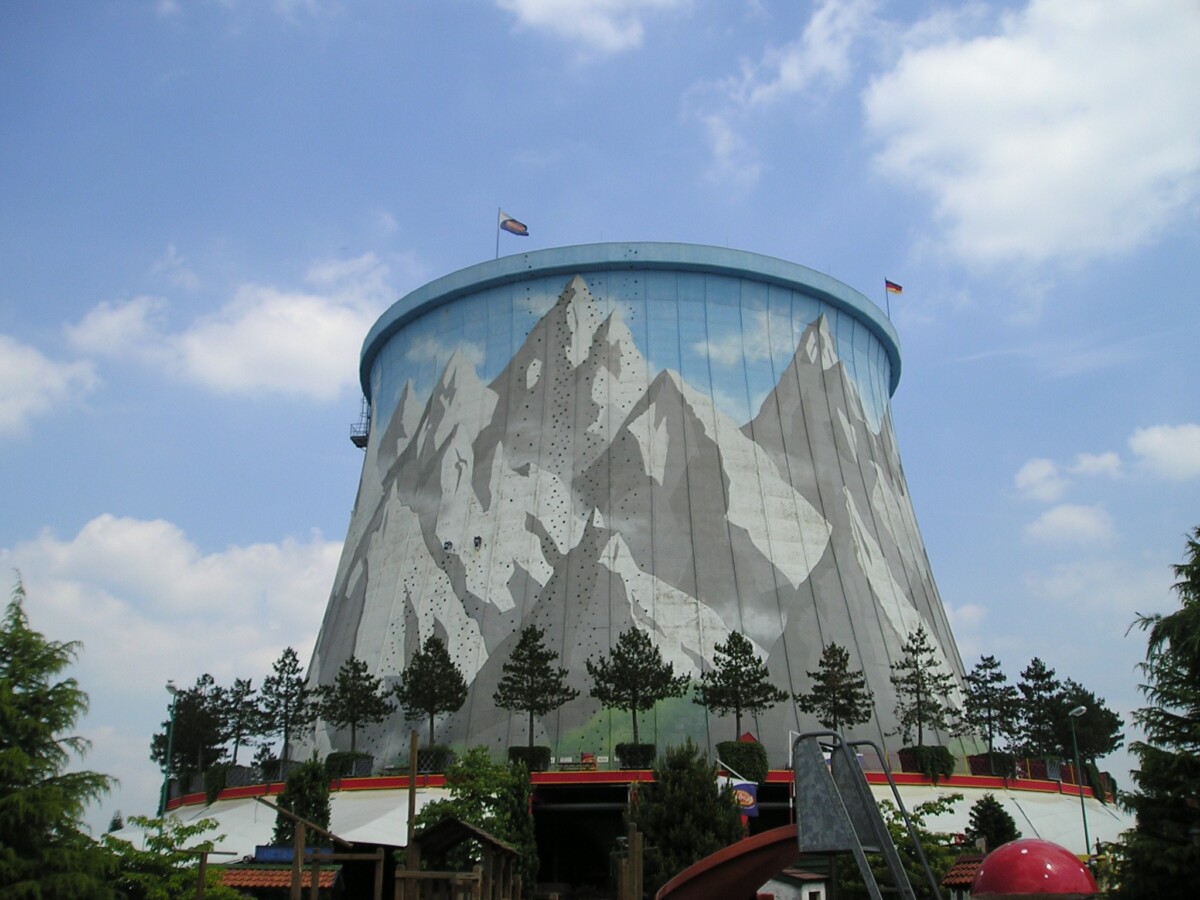
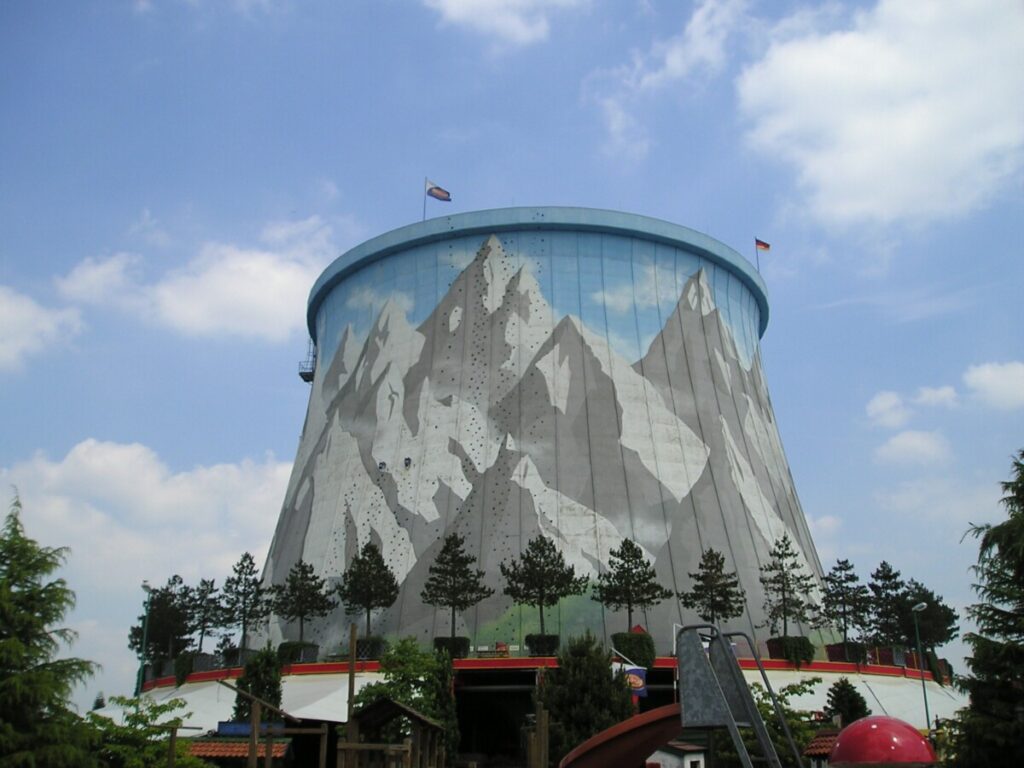
The former cooling tower now holds a 58 metre swing and a 40 metre climbing wall, and Guinness World Records lists Wunderland Kalkar as the first theme park built on the site of a former nuclear power plant. The resort reports about 600,000 visitors a year, with four restaurants, eight bars and six hotels, and it employs about 550 staff at peak season. In 2022 DeFabrique Holding of Utrecht took the park over after more than 25 years under van der Most, keeping the existing staff.
Questions people ask about Kalkar
Why is Kalkar known for a nuclear reactor?
From 1973 West Germany, Belgium and the Netherlands built a fast breeder reactor at Kalkar. Costs rose to about 7 billion German marks, and after sustained protest and the Chernobyl disaster, the government ended the project on 21 March 1991 without ever switching it on.
Was the Kalkar reactor ever radioactive?
No. Its fuel elements were barred from the reactor core, and it never went into operation, so the site never became radioactive. Fuel made for the reactor was later transferred to France and converted into MOX fuel, and other assemblies went to Hanford in the early 1990s.
What happened to the Kalkar reactor site?
In 1995 a Dutch investor, Hennie van der Most, opened a theme park called Kernwasser Wunderland on the site. It was renamed Wunderland Kalkar in 2005 and now reports about 600,000 visitors a year.
What can you do at Wunderland Kalkar today?
The park keeps the old cooling tower, which now holds a 58 metre swing and a 40 metre climbing wall. Guinness World Records lists it as the first theme park built on the site of a former nuclear power plant.