
What Ópusztaszer is known for
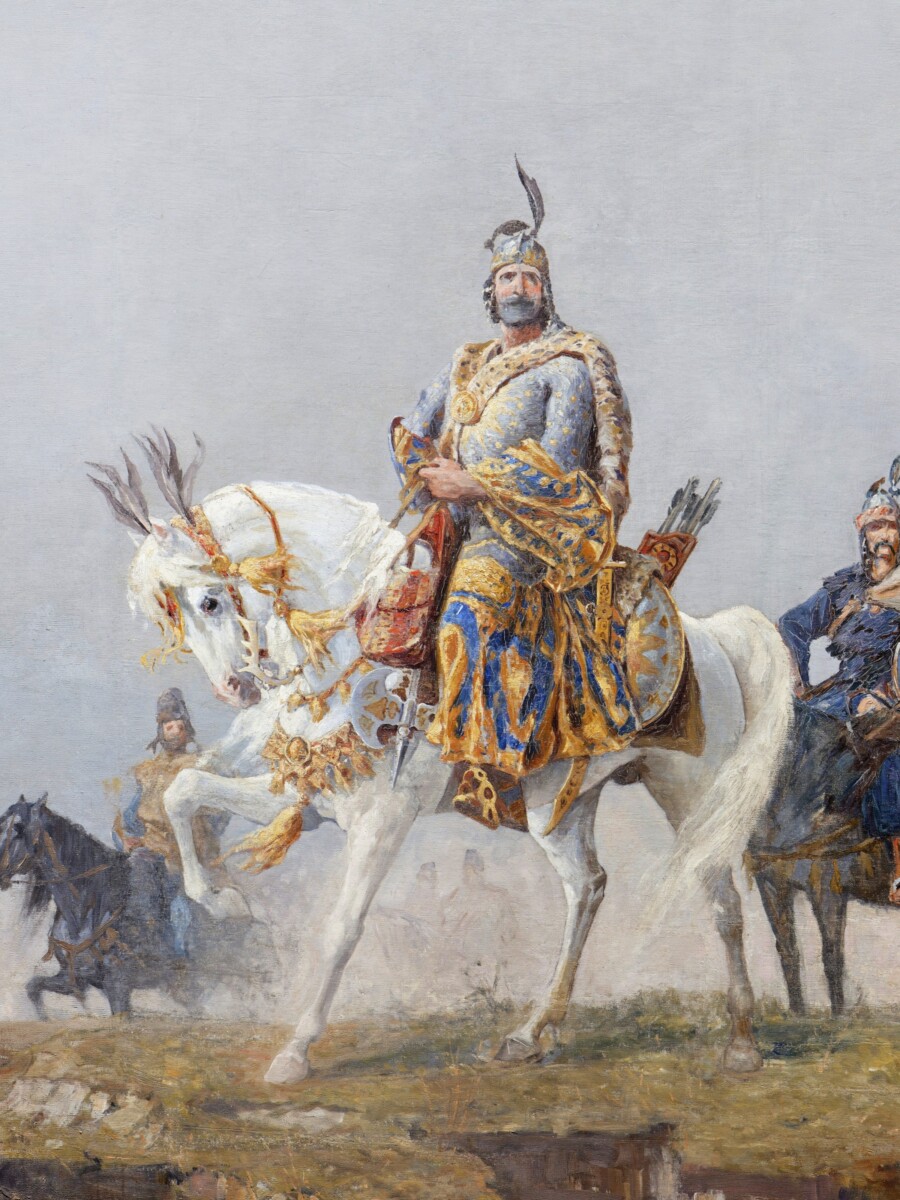
Ópusztaszer is a village on Hungary’s Southern Great Plain that gave up the name Sövényháza in 1974, while the state built a memorial park on the legend of a founding assembly the National Heritage Institute says no evidence supports. Since 1995 the park has shown the Feszty Panorama, a giant 1894 painting of the Magyar conquest.
A legend, not a record
Hungary’s tourism board presents Ópusztaszer as the place where, according to the medieval chronicler Anonymus, Árpád convened an assembly that founded the Principality of Hungary and enacted its first laws. Anonymus wrote around 1200, three centuries after the events he describes, and his chronicle became widely known only after Johann Georg Schwandtner published it in 1746. The National Heritage Institute’s own account gives no evidence for the assembly.
A monastery, then a monument
Long before the legend was commemorated, the Bor-Kalán clan built a monastery at Szer in the 12th century, once the richest and largest monastic institution on the Plain; the Tatars destroyed it during the Mongol invasion, and archaeologist Trogmayer Ottó excavated its church between 1970 and 1976. In 1896 Parliament enshrined the conquest’s millennium in Act VII and ordered a memorial in Act VIII; the Árpád monument, designed by Berczik Gyula with a statue by Kallós Ede, was inaugurated in 1897. Before 1945 the local population were landless servants and tanya dwellers of the Pallavicini estate, roughly 40,000 hold, about 23,000 hectares; in 1945 the Communist Party chose the neighbouring village of Pusztaszer as the symbolic start of its land reform, where Nagy Imre, then Minister of Agriculture, declared that land will belong to the one who cultivates it. After a 1970s decision to build a memorial park, Sövényháza became Ópusztaszer in 1974, and the park opened in 1982.
The panorama today
Since 1995 Ópusztaszer has shown the Feszty Panorama, The Arrival of the Hungarians, an 1894 canvas 15 metres tall and 120 metres long. World War II left only around 45 percent of it; Polish conservators won the restoration contract in 1991, and about 4 million people had seen the panorama by 2010. In 2012 the National Assembly made the park a national memorial site. Since 1978 an open-air ethnographic collection of 19 historical buildings has shown real peasant culture beside the legend, not as proof of it.
Questions people ask about Ópusztaszer
Why did Sövényháza change its name to Ópusztaszer?
The village gave up the name Sövényháza in 1974, while the Hungarian state was building a memorial park there on the legend of Árpád's founding assembly. The National Heritage Institute's own timeline places the renaming between the 1970s park decision and the park's 1982 opening.
Is the Árpád assembly at Ópusztaszer a real historical event?
There is no evidence for it. Hungary's tourism board presents it as the place where, according to the chronicler Anonymus, Árpád's assembly founded the Principality of Hungary. Anonymus wrote around 1200, three centuries after the events, and the National Heritage Institute says no evidence supports the assembly.
What is the Feszty Panorama?
The Feszty Panorama, The Arrival of the Hungarians, is an 1894 painted cyclorama 15 metres tall and 120 metres long, on display at Ópusztaszer since 1995. World War II left only around 45 percent of the original canvas, and Polish conservators restored it under a 1991 contract.
Who lived at Ópusztaszer before the memorial park?
Landless servants and tanya dwellers of the Pallavicini family's estate, roughly 40,000 hold, about 23,000 hectares. In 1945 the Communist Party chose the neighbouring village of Pusztaszer as the symbolic start of its land reform on that same estate.