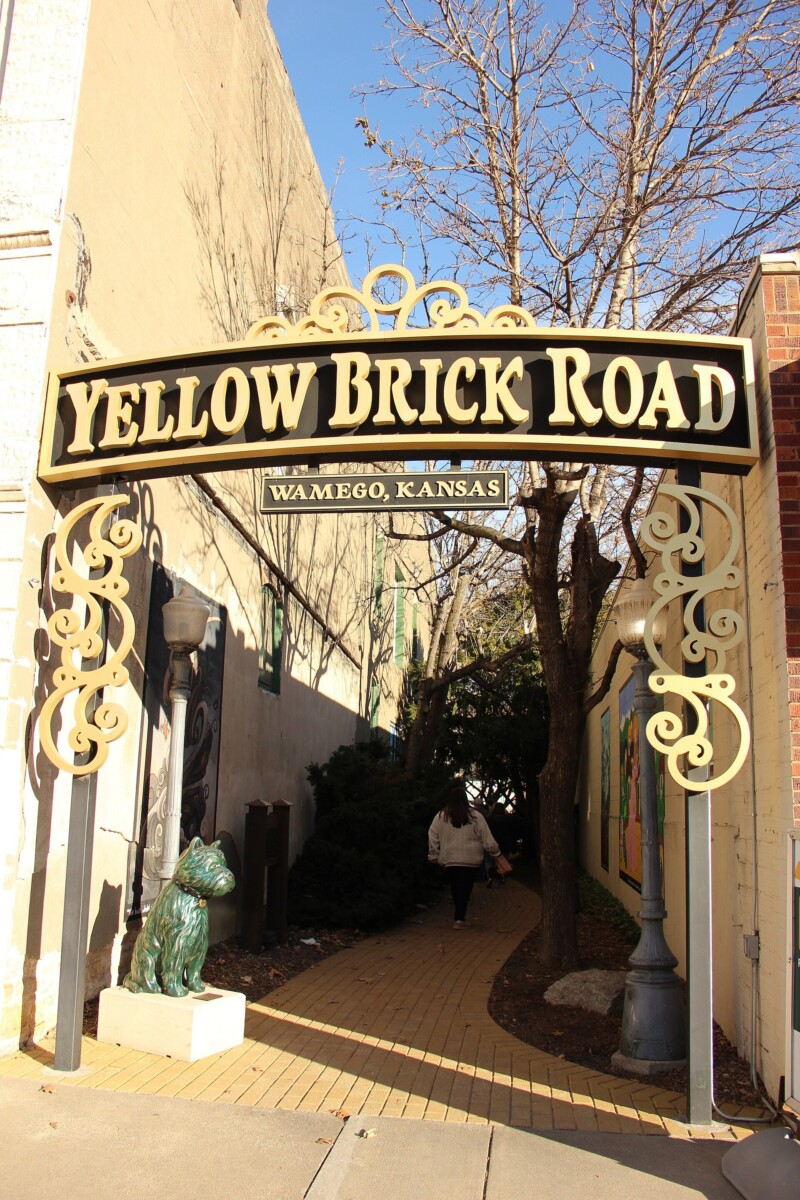

What Wamego is known for
Wamego is a Kansas town of 4,841 people at the 2020 census, named for a Potawatomi leader, and it is known for its Oz Museum. The museum began with a 1995 trial display of one collector’s Wizard of Oz memorabilia, which drew more than 20,000 visitors in three months. It now shows more than 25,000 artifacts on permanent loan from a second collector, Friar Johnpaul Cafiero.
Kaw land, and a leader forced west
The Kaw, or Kanza, had their primary village on the Kansas River near its confluence with the Big Blue from about 1790 to 1828. Their reservation had already been cut to 80,000 acres around Council Grove when they left Kansas for Indian Territory in 1873. On September 4, 1838, mounted militia forced 859 Potawatomi people from northern Indiana at gunpoint onto the march known as the Trail of Death; 42 died, about half of them children. A Potawatomi leader named Wamego was among those forced west, and a Potawatomi tribal history says he had been tricked into meeting U.S. officials and shackled in a wagon. The town was named for him in 1866.
A trial run at the Columbian Theatre
Wamego native Tod Machin began collecting Oz memorabilia in the early 1980s while attending Kansas State University. In 1995 part of his collection went on show at the Columbian Theatre, a building its own site dates to 1893 and credits to J.C. Rogers. Clark Balderson, vice president of the Columbian Theatre Foundation, championed a permanent museum, and the Foundation built it with a $100,000 Kansas Tourism Attraction Development grant, $400,000 in community funds and more than 5,000 volunteer hours. Kansas! Magazine dates the opening to fall 2003, while Wikipedia says the museum was founded in April 2004.
When the first loan ended
Machin’s memorabilia was on loan for only about five years, and when that loan ended the museum’s future was uncertain. Friar Johnpaul Cafiero, a Franciscan priest who has worked as a chaplain at Chicago’s Cook County Juvenile Detention Center, offered his own, much larger collection. His website says it grew over more than 50 years, beginning with his family’s tradition of watching the 1939 film together, and the Halloween costumes the five Cafiero siblings wore as Oz characters are part of it.
Oz around a borrowed collection
Wamego also has a cluster of Oz-themed businesses, among them the Oz Winery, Lincoln Street Station, Barleycorns and Toto’s Tacoz. The museum says OZtoberfest 2016 drew the largest crowds in the festival’s twelve-year history to that point, with more than 800 paid admissions in 12 hours of opening across two days. The draw is borrowed twice over, a collector’s loan and the world of a 1939 film, in a town named for a Potawatomi leader forced west in 1838.
Questions people ask about Wamego
Why does Wamego, Kansas have an Oz Museum?
Because a trial display drew a crowd. In 1995 part of Wamego native Tod Machin's Wizard of Oz collection went on show at the town's Columbian Theatre and drew more than 20,000 visitors in three months. The Columbian Theatre Foundation then built a permanent museum with a state grant, community funds and volunteer hours.
Whose collection is in the Oz Museum?
Friar Johnpaul Cafiero's. Tod Machin's memorabilia was on loan for only about five years, and when that loan ended Cafiero, a Franciscan priest, offered his own, much larger collection. The museum now shows more than 25,000 artifacts on permanent loan from him, including the Halloween costumes the five Cafiero siblings wore as children.
Who was Wamego?
A Potawatomi leader who was among those forced from northern Indiana on the 1838 Trail of Death; a Potawatomi tribal history says he was tricked and shackled in a wagon. He later signed the November 15, 1861 Treaty of the Kansas River Agency, his descendants were one of the founding families of the Citizen Potawatomi Nation, and the town took his name in 1866.
When did the Oz Museum in Wamego open?
Sources differ. Kansas! Magazine, published by the state tourism office, dates the opening to fall 2003. Wikipedia's Wamego article instead says the museum was founded in April 2004, citing a different source.