
What Steinbach is known for
Steinbach is a Manitoba city of 17,806 people at the 2021 census, founded by Mennonite settlers in 1874, and it is known for the Mennonite Heritage Village. The Manitoba Mennonite Historical Society founded the museum village in 1964, after historic buildings in the area were demolished, and it reported about 50,000 visitors in 2023.
Anishinaabe land and Treaty 1
The Anishinaabe hunted in and moved seasonally through this area after the Assiniboine and Cree left the wider region in the 1820s. Treaty 1 was negotiated at Lower Fort Garry and signed on August 3, 1871, after eight days of talks; about 1,000 Indigenous people attended, led by chiefs including Mis koo ke new, or Red Eagle, also known as Henry Prince. The treaty, signed by the Crown and the Anishinaabe, covers this part of southeastern Manitoba. The Métis village of Ste. Anne, founded in 1856, lay nearby.
The East Reserve and 18 families
In 1873 the Canadian government sent William Hespeler to recruit Mennonite settlers and set aside the East Reserve, slightly smaller than today’s Rural Municipality of Hanover, for Plautdietsch-speaking Mennonite immigrants from the Russian Empire. That year Mennonite leaders signed the Privilegium with the Canadian government, guaranteeing land, freedom of religion, private schools and exemption from military service. In the late summer of 1874, 18 families from the Borosenko colony in Ukraine, nearly all of them Kleine Gemeinde, a conservative Mennonite minority, reached Canada and took the reserve’s northeast corner, because the better land nearby had been settled a few months earlier.
A village of old buildings
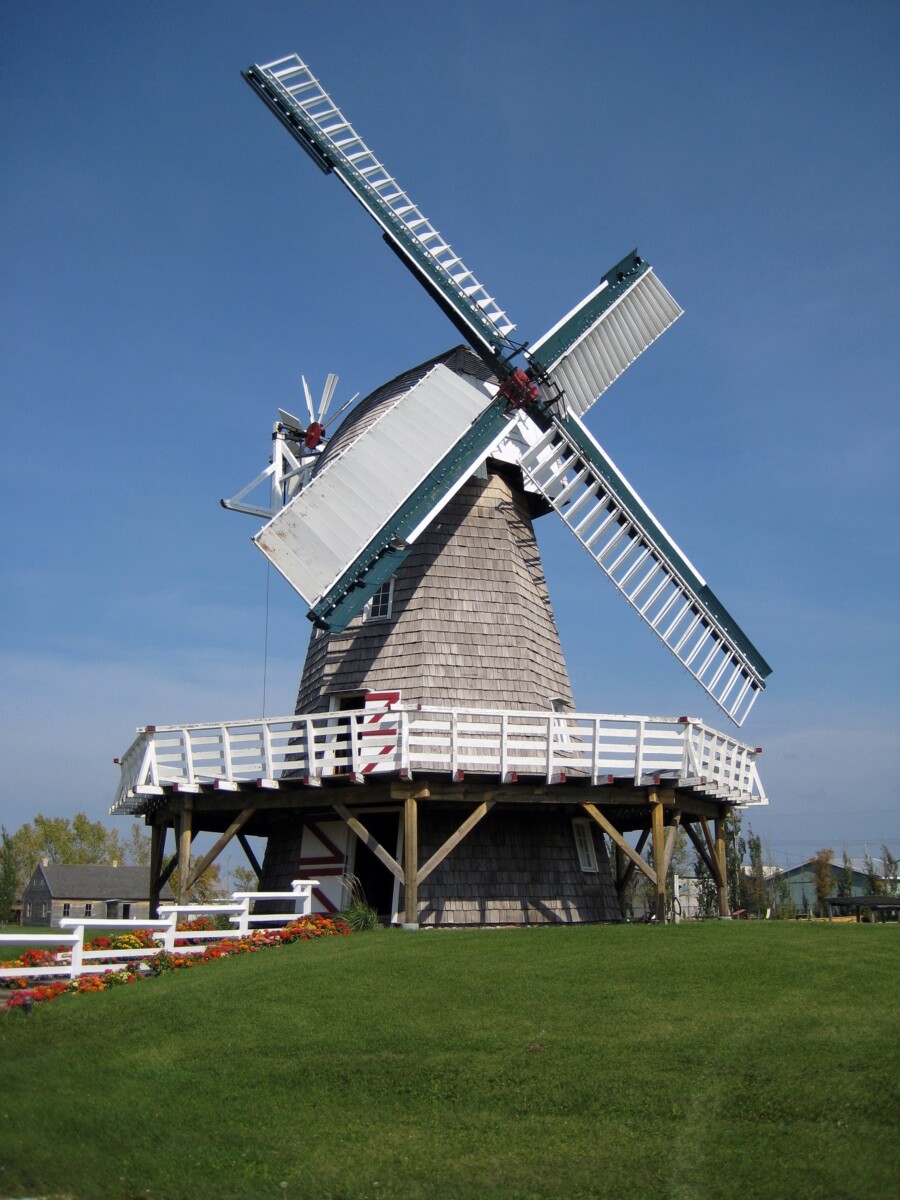
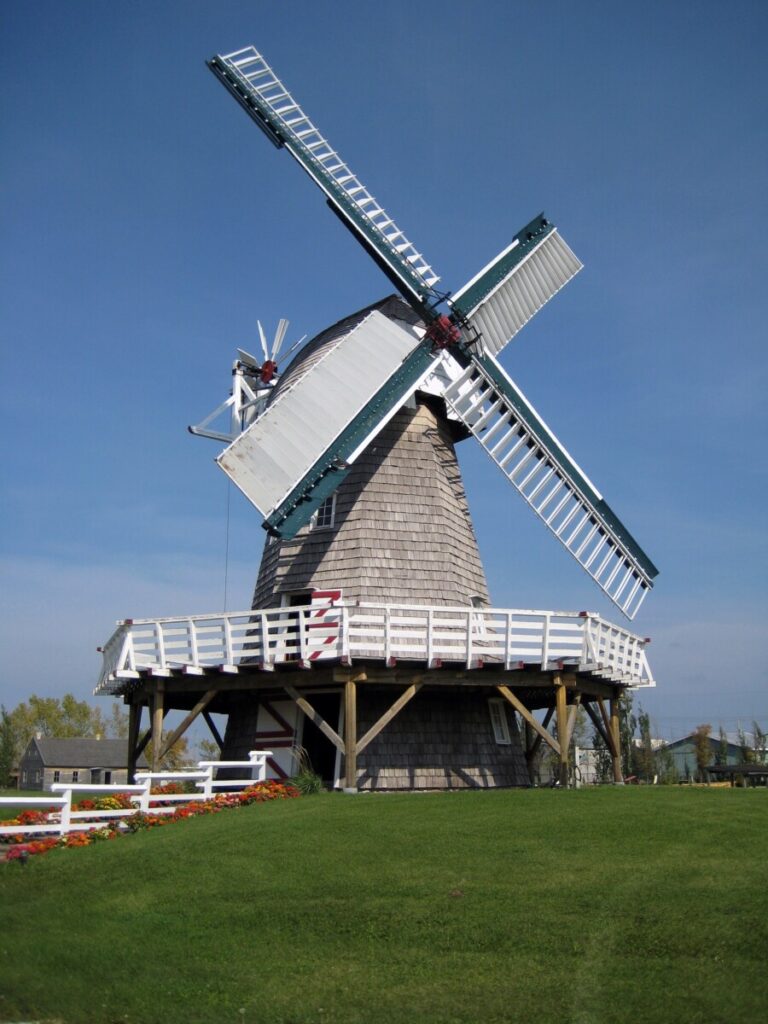
In the early 1960s, as historic buildings in the area were demolished, retired teacher John C. Reimer began to collect artifacts. The museum opened in 1967 as the Mennonite Village Museum and was renamed Mennonite Heritage Village in 1987. In 2000 arsonists destroyed its windmill, a recognized symbol of the city, and it was rebuilt in less than a year with the help of Dutch millwrights, as a replica of the original windmill built in Steinbach in the 1880s. The museum calls it one of the few working windmills in North America.
The village today
The village says it covers 40 acres with more than 30 historic buildings, is owned by about 400 members and is funded about 60 percent by its own services. In 2025 it reported more than 45,000 visitors, including 7,000 to 8,000 from outside Canada, and more than 300 volunteers. Gary Dyck, then its executive director, reported a 2023 deficit of about C$270,000.
The heritage it keeps is the Mennonites’ own. The Privilegium’s guarantees for the newcomers came in 1873, two years after the Anishinaabe signed Treaty 1 for this ground.
Questions people ask about Steinbach
What is Steinbach, Manitoba known for?
Steinbach is known for the Mennonite Heritage Village, a museum village the Manitoba Mennonite Historical Society founded in 1964. The village says it covers 40 acres with more than 30 historic buildings, and it reported about 50,000 visitors in 2023, about 10,000 of them from outside Canada.
Who founded Steinbach?
Eighteen Mennonite families, nearly all of them Kleine Gemeinde, a conservative Mennonite minority. They left the Borosenko colony in Ukraine, reached Canada in the late summer of 1874 and settled the northeast corner of the East Reserve. Johann Reimer was Steinbach's first schulz, or elected village mayor.
What was the Privilegium?
An agreement Mennonite leaders signed with the Canadian government in 1873, guaranteeing land, freedom of religion, private schools and exemption from military service. It came two years after the Crown and the Anishinaabe signed Treaty 1, which covers this part of southeastern Manitoba.
Does the Mennonite Heritage Village have a working windmill?
Yes. The museum calls its windmill one of the few working windmills in North America. Arsonists destroyed the windmill in 2000, and it was rebuilt in less than a year with the help of Dutch millwrights, as a replica of the original windmill built in Steinbach in the 1880s.
When did the Mennonite Heritage Village open?
It opened to the public in 1967 as the Mennonite Village Museum and was renamed Mennonite Heritage Village in 1987. Retired teacher John C. Reimer began collecting artifacts in the early 1960s, as historic buildings in the area were demolished, and the Manitoba Mennonite Historical Society founded the museum in 1964.