
What Khiva is known for
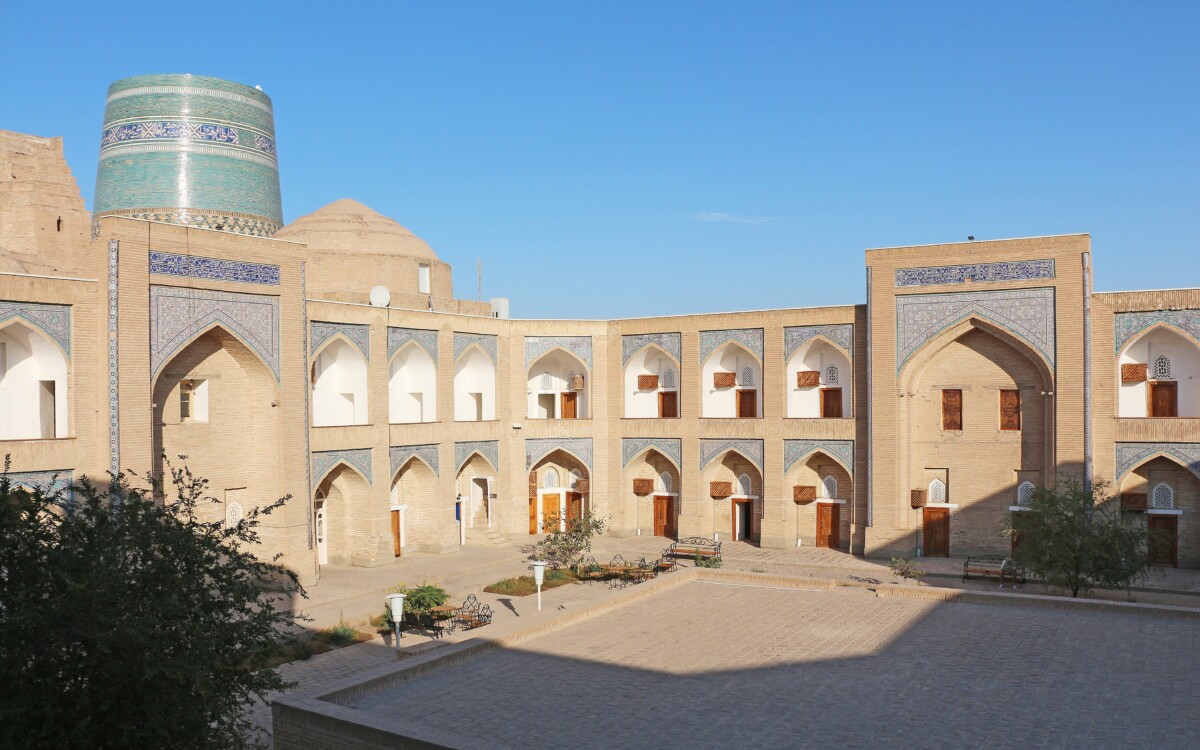
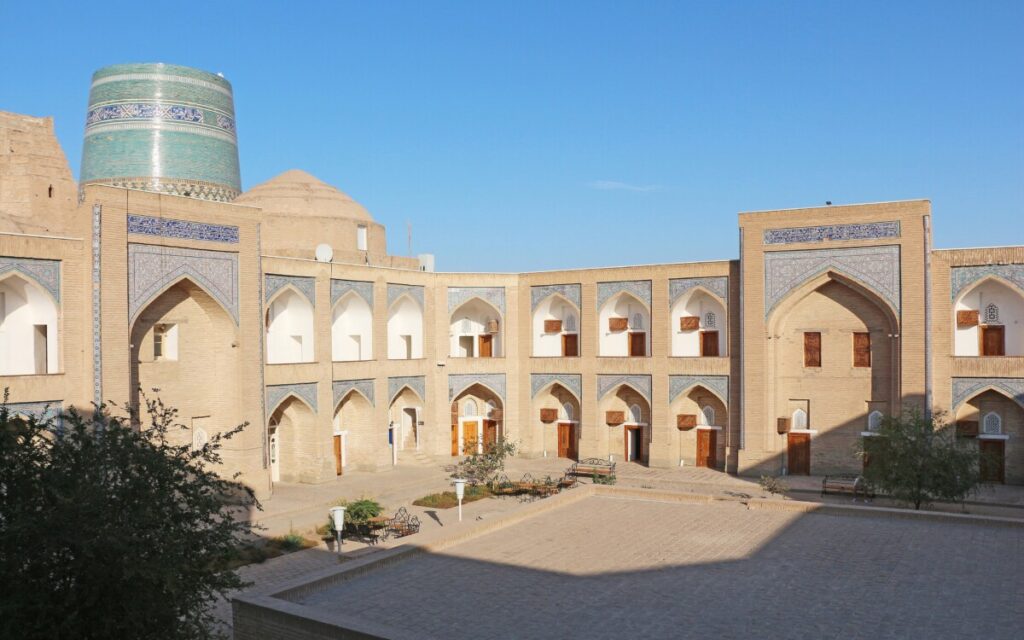
Khiva is an oasis city of about 100,000 on the Karakum’s edge, known for Itchan Kala, its ancient walled quarter. The quarter was largely cleared of its residents and restored into an open-air museum. In 1990 Itchan Kala became Uzbekistan’s first UNESCO site.
A caravan town with no caravans
Khiva appears in 10th-century records as a market town on the Khorezm oasis, intensively irrigated farmland west of the Amu Darya. Walled Itchan Kala prospered on caravan trade to Persia and Russia from about 1780 to 1850, and on one of Central Asia’s largest slave markets. The khanate ended in 1920.
The caravan route was dead. The oasis was not: it still grows cotton and Khorezm melons, and the town gins cotton and weaves carpets. But nobody crosses a continent for a cotton gin. What Khiva had was density: madrasas, mosques, minarets and mausoleums packed inside one ring of walls.
A museum-reserve by decision
The Soviet state built the museum on purpose. In the late 1960s planners declared Itchan Kala a museum-reserve and set about restoring its monuments. Before the 1990 listing the government moved residents outside the fortress walls to do it. That year Itchan Kala became Uzbekistan’s first UNESCO site and Central Asia’s earliest.
What the museum holds
Itchan Kala holds 51 monuments inside walls up to ten meters. Of Khiva’s roughly 100,000 residents, about 2,600 still live within them. An airport is thirty-five minutes away.
Why it worked
Khiva committed to one improbable identity and let nothing dilute it. The oasis still grows cotton and melons and still weaves carpets, but those trades do not bring visitors, so the state made preservation the product.
Moving residents outside the walls sharpened the effect, turning much of a working quarter into a single exhibit. The UNESCO listing certified the choice, and each step fed the next until a town reached by plane or train became worth the trip.
Questions people ask about Khiva
Why is Khiva, Uzbekistan famous?
Khiva is known for Itchan Kala, an ancient walled quarter restored into an open-air museum. It holds 51 monuments inside walls up to ten meters and became Uzbekistan's first UNESCO site in 1990.
How many people still live inside Khiva's walls?
Of Khiva's roughly 100,000 residents, about 2,600 still live inside the walls of Itchan Kala. Before the 1990 listing the government moved residents outside the fortress walls to restore the monuments.
When did Khiva's Itchan Kala become a UNESCO site?
In 1990 Itchan Kala became Uzbekistan's first UNESCO site and Central Asia's earliest. In the late 1960s planners had declared it a museum-reserve and set about restoring its monuments.
What did Khiva live on before tourism?
Khiva prospered on caravan trade to Persia and Russia from about 1780 to 1850, and on one of Central Asia's largest slave markets. Today the oasis still grows cotton and Khorezm melons, and the town gins cotton and weaves carpets.