How Fredericksburg earned the score
Population 11,178 (US Census 2020)
Situation A Hill Country town seventy miles west of Austin, founded by German settlers in 1846, looking to beautify a downtown without much money.
Action Stacked four creative city developments across forty years: the planter program, Wine Road 290, the National Museum of the Pacific War, and a five-festival calendar, on top of a German cultural inheritance and an 1846 Main Street.
Result The highest per-capita retail sales of any city in Texas, a year-round downtown economy, and a 2026 Visitor Impact Score of 87, Destination Leader band.
Let’s Meet Fredericksburg, Texas
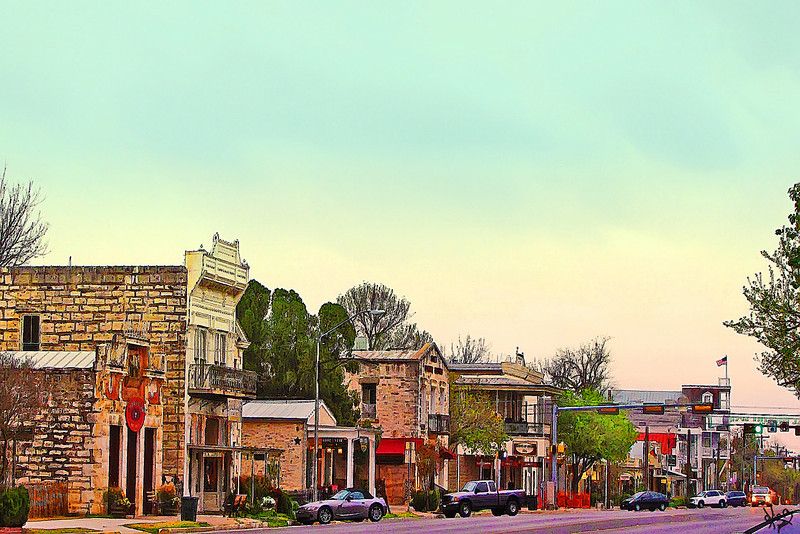
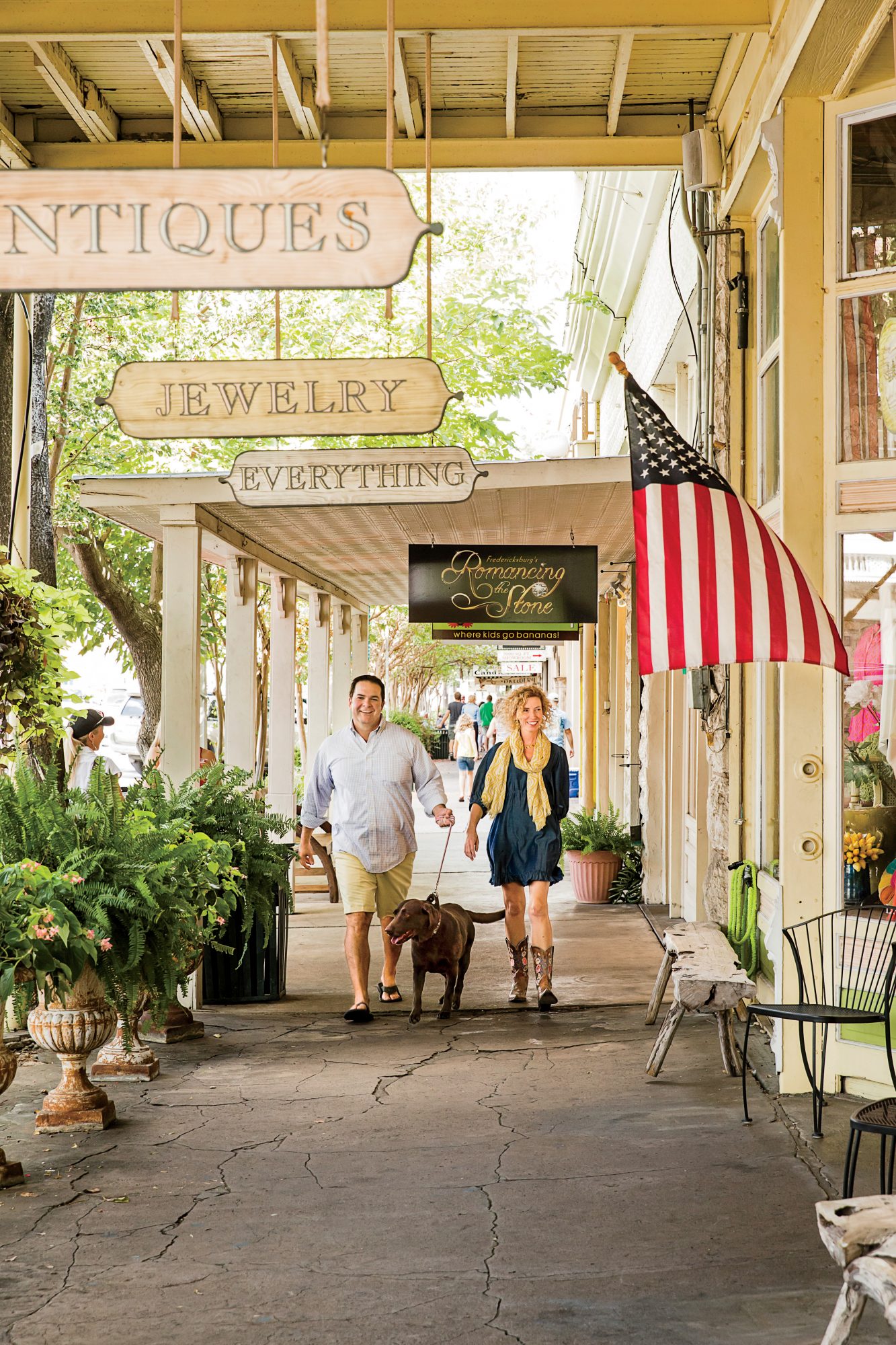
Fredericksburg is a Hill Country town of about 11,000 people, seventy miles west of Austin, founded by German settlers in 1846 and famous in tourism circles for one statistic: per capita, it posts the highest retail sales of any city in Texas. The original CCD case study on Fredericksburg leads with a small story, the one about a downtown chamber group buying up the local garden supply’s end-of-season inventory at a discount, lining Main Street with planters, and watching retail sales jump. That story is real, and it is in the right spirit, but it is also the smallest visible piece of a much larger tourism machine: more than 100 boutiques on Main Street, a wine trail that anchors the Texas wine industry, the second-best WWII museum in the country, peach orchards and lavender farms, and a German cultural inheritance that runs from the architecture to the language.
What gets the Roger Brooks tingle in Fredericksburg is the absence of any single dramatic pivot. Most CCD case studies are recovery stories: a railroad leaves, a mill closes, a town reinvents itself. Fredericksburg never crashed. It just compounded.
History
Fredericksburg was founded in 1846 by Baron Otfried Hans von Meusebach, the new Commissioner General of the Society for the Protection of German Immigrants in Texas, also known as the Mainzer Adelsverein. The settlers were a mix of liberal, educated Germans fleeing the political conditions that would erupt in the Revolution of 1848, and working-class Germans looking for land. Meusebach renounced his title on arrival in Texas and became known as John O. Meusebach; Barons Creek, which runs through town, is named for him. The town itself takes its name from Prince Frederick of Prussia, nephew of King Frederick William III and at the time the highest-ranking member of the Adelsverein.
Meusebach picked the site in 1845, walking sixty miles northwest from New Braunfels into a valley between two creeks and surrounded by seven hills. He bought 10,000 acres on credit and offered each settler one town lot plus ten acres of farmland. Lieutenant Louis Bene and surveyor Johann Jacob Groos built the road in from New Braunfels in December 1845. The first wagon train of settlers arrived May 8, 1846. The town was laid out by Herman Wilke with a wide central street, which is the same Main Street that still carries the town’s retail today. The Vereins Kirche, the first public building, anchored the original plat.
In 1847 Meusebach signed a treaty with the Penateka Comanche, brokered with the help of geologist Ferdinand von Roemer and Special Agent Robert Neighbors. The treaty was unusual in that it did not extinguish Penateka rights; both parties agreed to share the land. Meusebach paid the equivalent of about 70,000 dollars in today’s money in food, gifts, and trade goods. The treaty is one of the very few signed with Native American nations in the nineteenth century that was never broken. The Easter Fires Pageant, a long-running Fredericksburg tradition since 1946, retells the story of the treaty negotiations and has been one of the town’s older annual tourist draws.
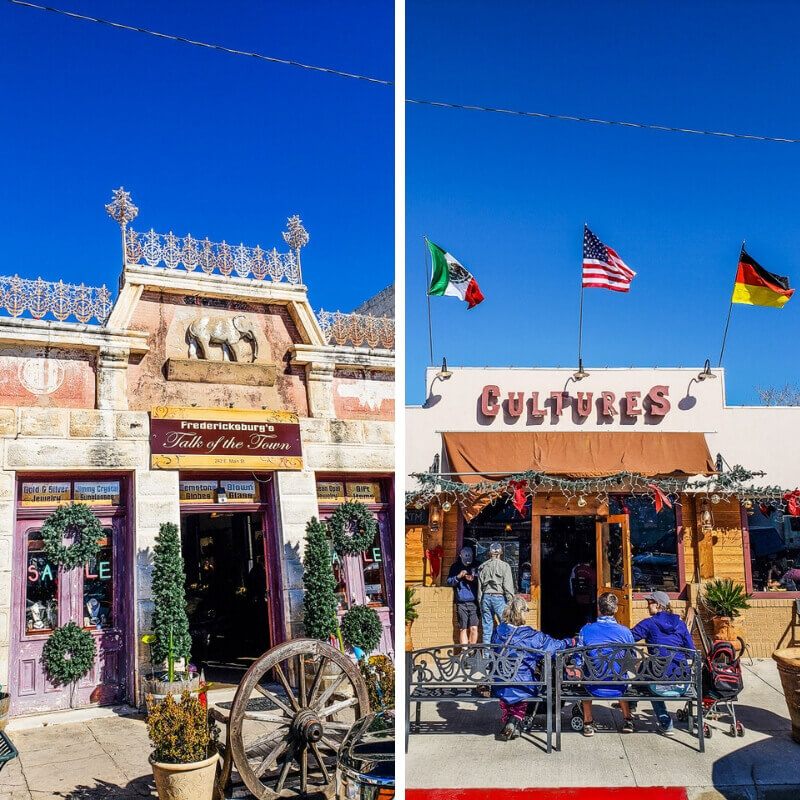
The German cultural inheritance shows up in the dialect: Texas German, a distinct variant spoken by the first generations of settlers who initially refused to learn English, is still studied by linguists. The town shares many cultural roots with New Braunfels, which Prince Carl of Solms-Braunfels had founded the previous year. Through the twentieth century Fredericksburg drifted away from a purely agricultural economy and toward tourism, agritourism, and retail, but the underlying cultural foundation, the architecture, the food, the Christmas markets, the Oktoberfest tradition, the Vereins Kirche, never went away.
Fredericksburg’s Creative City Development
The honest version of the Fredericksburg story is that the town stacked four creative city developments on top of each other across forty years. The original CCD case study highlights the smallest of them, the planter program, because it is the cheapest to copy. The other three are larger.
The planter program and the Roger Brooks insight
In the early 2000s, the downtown business association assembled a modest pot of donated funds and approached the local garden supply with a standing offer: at the end of every growing season, they would buy any chipped, cracked, or out-of-style large planters at a discount. The deal converted unsellable end-of-season inventory into a few thousand dollars of revenue for the garden supply and a truckload of large planters for downtown. The merchants planted them. Local Boy and Girl Scout troops, football teams, and Rotary clubs handled the seasonal maintenance. Within a couple of years, you could not photograph a downtown Fredericksburg storefront without a planter in the frame. Roger Brooks identified the program as a contributing factor in Fredericksburg’s per-capita retail leadership. The underlying insight is unsexy but durable: roughly 80 percent of consumer retail decisions are made by women, and curb-appeal investments calibrated for that audience pay back in measurable sales lift.
Wine Road 290 and the Texas wine trail
The bigger lift over the past two decades is the wine trail. Highway 290 east of Fredericksburg now hosts more than fifty wineries, the densest concentration in Texas and the only one with a genuine wine-trail identity. Wine Road 290 markets it as a single experience. Wine shuttles, group tours, and weekend tasting itineraries are bookable online through the official tourism site and through GetYourGuide. Texas Hill Country wine is functionally synonymous with Fredericksburg in travel media; Wine Enthusiast has covered the region as one of the more interesting emerging wine regions in the country. See texastraveltalk.com for the wineries and lodging along the route.
The National Museum of the Pacific War
The National Museum of the Pacific War occupies the historic Nimitz Hotel, the boyhood home of Fleet Admiral Chester W. Nimitz. The museum is widely regarded as one of the best WWII museums in the United States. TripAdvisor rates it 4.8 over more than 3,900 reviews. It is the single highest-rated attraction in the Fredericksburg tourism inventory and the one that pulls a different demographic, history and military-interest visitors, into a town that would otherwise read as a wine and shopping destination.
The festival calendar
Five anchor festivals run through the year. Oktoberfest, in October, is a three-day event with a strong German cultural identity. Christmas Nights of Lights runs from mid-November through January. The Stonewall Peach JAMboree, in June, anchors the agritourism segment. Fredericksburg Food and Wine Fest, in October, threads the wine and culinary economies together. The Lavender Festival at Becker Vineyards opens the spring shoulder. Combined with Wine Road 290’s standing presence and the WWII museum’s year-round draw, the calendar leaves very few empty weekends.
By the Numbers
The 2026 Visitor Impact Score for Fredericksburg came out at 87, Destination Leader band, with a 1.12 uniqueness multiplier. The category leader was Stay at 96.3 and the laggard was Anchor at 77.1, which reflects the lack of a single iconic bookable signature experience even though the cumulative anchor inventory is strong. The downtown vitality and curb-appeal categories are pending an in-person audit. visitfredericksburgtx.com states “over 20 different hotel or motel options,” including the boutique Hangar Hotel, the Barons Creek Vineyards villas, and the Messina Hof winery B and B. TripAdvisor totals roughly 84,000 reviews for Fredericksburg properties across hotels, attractions, and restaurants. Visit Fredericksburg TX Facebook has roughly 142,000 likes; Instagram is around 65,000 followers; the secondary @fredericksburgtexas account is at about 42,000.
Community Benefits
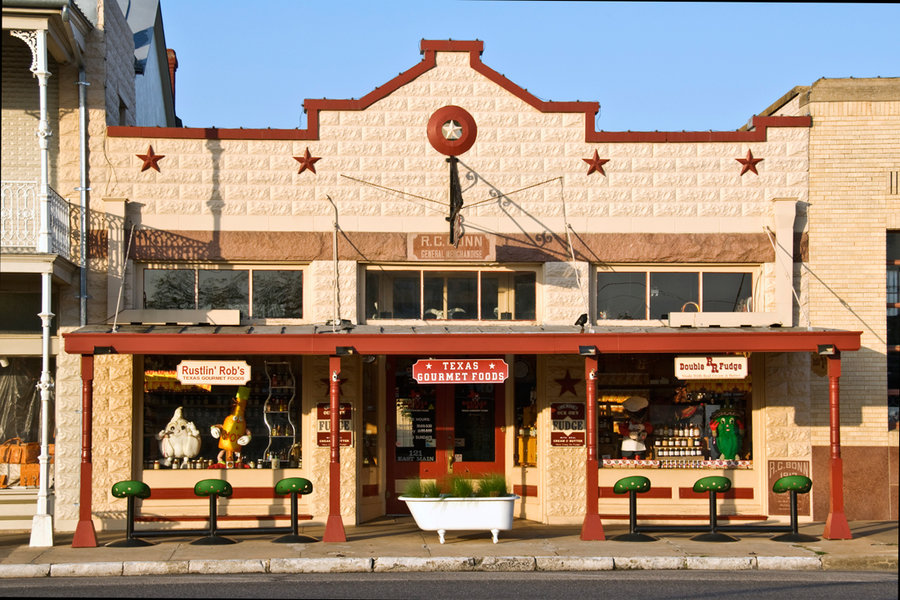
The compound effect of three to four overlapping creative city developments is that the town generates the highest per-capita retail sales in Texas, supports a year-round downtown retail economy, and runs a wage economy that does not depend on a single industry or a single anchor employer. The hidden risk in Fredericksburg’s model is the same risk that other high-performing tourism towns face: short-term-rental pressure on housing, traffic on weekends, and the gradual displacement of locally owned businesses by national operators. So far Fredericksburg has resisted that pattern more than most peers; the Main Street retail is still dominated by independents.
Why Other Towns Should Follow Fredericksburg’s Lead
The lesson from Fredericksburg is that small creative city developments compound. The planter program by itself is a curb-appeal trick. The wine trail by itself is a beverage industry play. The museum by itself is a regional history attraction. Stacked together over forty years, with a German cultural inheritance underneath them and an 1846-vintage Main Street holding them all in place, they generate the highest per-capita retail sales in Texas. The takeaway for other towns is not “buy planters.” The takeaway is “keep adding.” Pick the smallest credible creative city development that fits your budget this year, ship it, and then ship another one next year. Do that for forty years and the downtown will not look like the town you started with. Fredericksburg is the proof.