What Groom is known for
Groom is a Texas Panhandle town of 552 people at the 2020 census, on Interstate 40 along a stretch that was once Route 66. It is known for two roadside landmarks: a water tower deliberately set leaning, and a 190 foot cross visible for miles.
Land opened by war, not by chance
Plains Apaches lived in what became Carson County, and Comanches controlled the region until the 1870s. The Red River War of 1874, the extermination of the buffalo and the forced removal of the Comanche nation to Indian Territory opened the Texas Panhandle to ranching. In 1882 Charles G. Francklyn’s Francklyn Land and Cattle Company began a large scale ranching and farming venture in the area that ultimately failed. The town takes its name from B. B. Groom, the Kentucky cattleman who ran the ranch, whose own venture went bankrupt four years later. The Groom townsite itself was laid out in 1902 on the new railway.
A road that made and unmade the town
From 1926 Route 66 ran through Groom, and in the unpaved Jericho Gap east of town, local businesses profited from pulling cars out of the mud when it rained. The town’s population peaked at 808 in 1972. Interstate 40 was built along the old route in the 1960s, and Route 66 was officially decommissioned in 1985.
A water tower set off balance on purpose
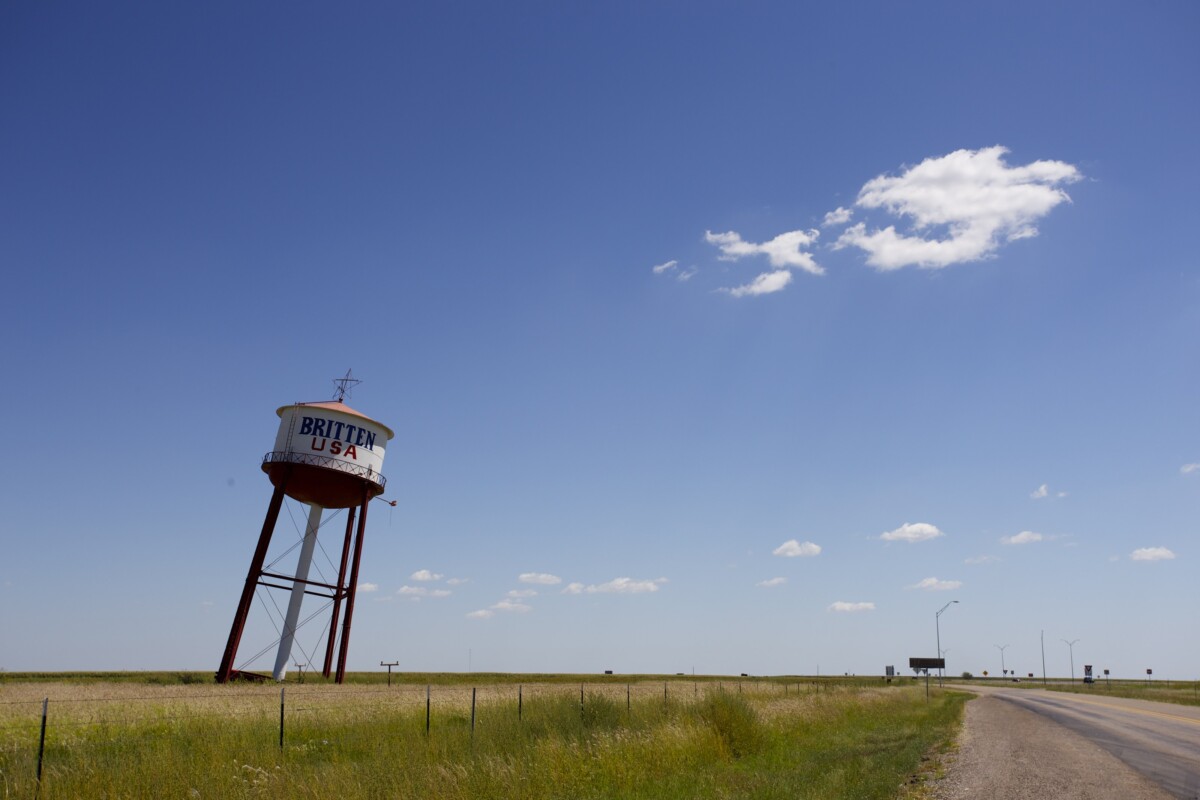
Around 1980 Ralph Britten bought a water tower facing demolition in Lefors, about 40 miles away, meaning to use it for water at his truck stop. When he found another way to store water, he set the tower leaning at roughly a 10 degree angle instead, its rear legs clear of the ground, its center of gravity kept inside its base so it cannot tip, and painted Britten USA on the side rather than his business name. The truck stop later closed after a fire; Britten, who lived from 1923 to 2000, did not name a business on the tower, and it has outlasted the stop that inspired it. The city still lights a star on top each Christmas.
A cross visible for twenty miles
A different kind of landmark stands nearby. Steve Thomas, an oil and gas engineer from Pampa, built the 190 foot Cross of Our Lord Jesus Christ, erected in July 1995. More than 100 welders framed it in two Pampa shops over eight months, borrowing design ideas from oil drilling rig masts, and the finished cross weighs 2.5 million pounds. Its site includes life-sized Stations of the Cross, a visitor center and an amphitheater, and about a third of a million people reportedly sign its guest book every year.
Questions people ask about Groom
Why is there a leaning water tower in Groom, Texas?
Truck stop owner Ralph Britten bought the tower from nearby Lefors around 1980 to store water. When he found another way to store it, he set the tower leaning at roughly a 10 degree angle instead, to catch the eye of drivers on the interstate.
Is the leaning water tower in Groom about to fall over?
No. The tower's rear legs do not touch the ground, but its center of gravity is kept inside its base, so the structure cannot tip. The lean is deliberate engineering, not decay.
What opened the Texas Panhandle to ranching near Groom?
The Red River War of 1874, the extermination of the buffalo and the forced removal of the Comanche nation to Indian Territory opened the land to the large ranching ventures that later gave Groom its name.
How big is the cross near Groom, Texas?
The Cross of Our Lord Jesus Christ stands 190 feet tall and weighs 2.5 million pounds. More than 100 welders built its steel frame in two Pampa shops over eight months before it was erected in July 1995.