What Hortobágy is known for
Hortobágy is a puszta settlement in eastern Hungary, recorded as Hungary’s largest village by area, at 284.6 square kilometres, with 1,286 residents at the 2021 census. UNESCO inscribed its landscape as a cultural pastoral heritage site in 1999. Each August the village hosts a bridge fair that was renewed in 1960 without the animal trading the law then banned.
From horse trading to a Hungarian first
Horse trading moved to the Hortobágy bridge in 1825, and cattle sales followed in 1846, and in 1892 the Debrecen council set a regular twice yearly livestock fair there. The nine-arched stone bridge was finished in 1833, and the area belonged first to Debrecen and then to Balmazújváros before becoming its own municipality in 1966.
The bridge fairs lost their importance before the Second World War, as animal husbandry on the plain changed. Hortobágy became Hungary’s first national park on 1 January 1973, and the park has grown from about 52,000 hectares at founding to nearly 82,000 hectares, Hungary’s largest protected area.
The camps this same plain also held
Between June 1950 and the summer of 1952, Hungarian authorities forced roughly 8,000 people, about 2,500 families from 451 villages and towns, into 12 closed camps in eastern Hungary. Other accounts put the total taken to the Hortobágy camps at about ten thousand, held between 1950 and 1953 without a legal verdict. The camps were dissolved by decree on 26 July 1953.
A memorial cross of welded railway rails, commemorating those deported to the camps, was erected in June 1990 near the Nine-arched Bridge by the Hungarian Political Prisoners Association, apart from the visitor offer.
Herders, real and performed
The revived fair now includes an annual gathering of shepherds, a shepherds’ parade and a wreath laying at the statue of the Shepherd Boy, timed to Saint Stephen’s day on 20 August. The 2024 fair drew 23,000 guests, after organisers replaced parking ticket sales with an admission ticket system, a change the local press called divisive.
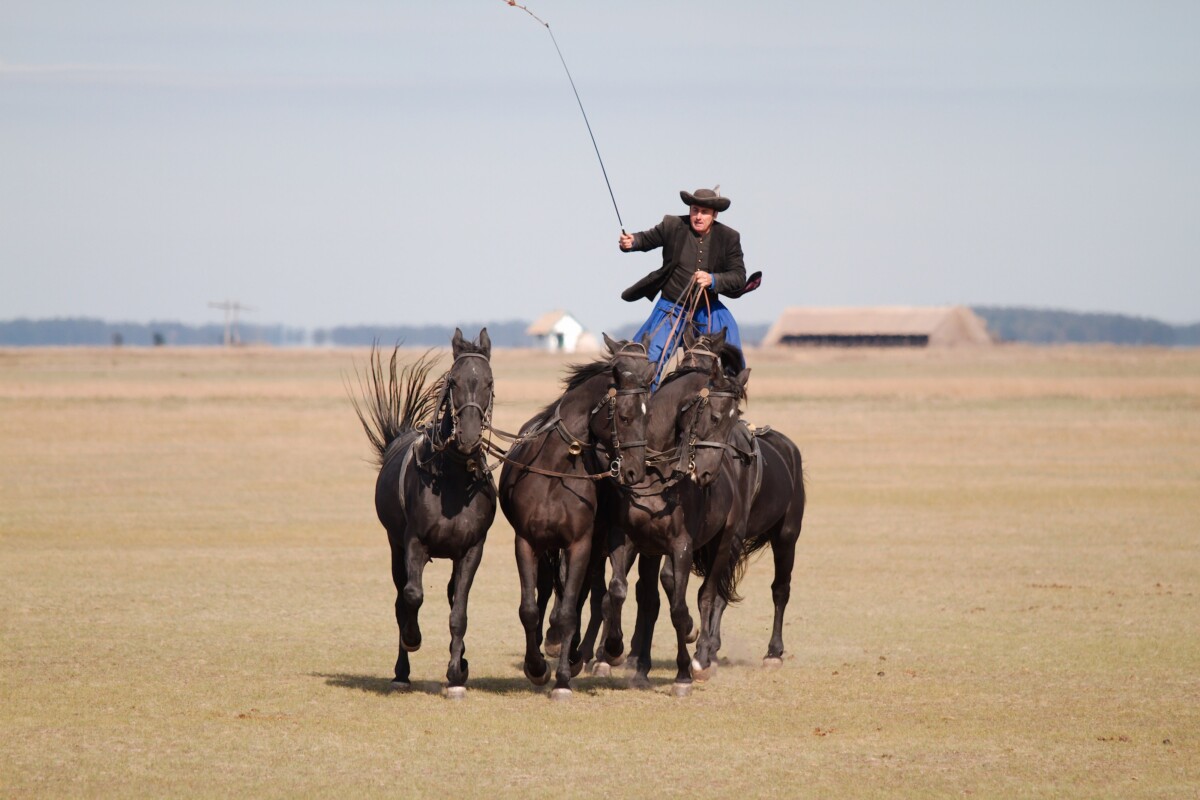
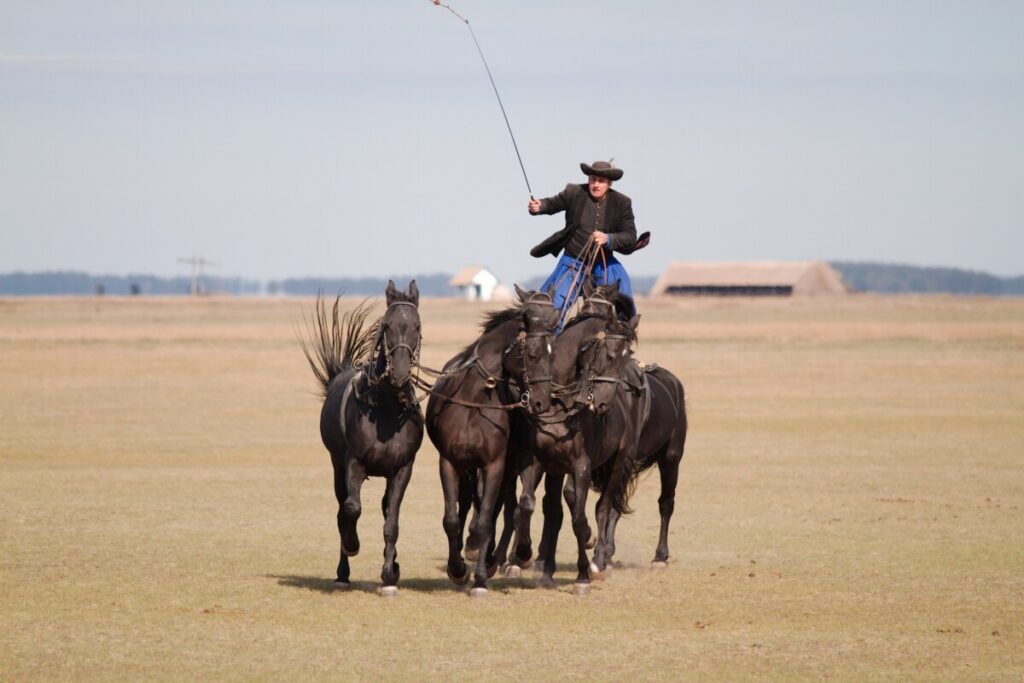
Not every tradition on show is old. The puszta ötös, a five in hand riding display, began with an early 1900s painting by the Austrian artist Ludwig Koch and was first performed by the Hungarian horseman Béla Lénárd; Hungarian equestrian sources call it a German idea rather than an old herdsman tradition.
Questions people ask about Hortobágy
Why is Hortobágy famous?
Hortobágy is Hungary's largest village by area, at the centre of a puszta landscape that became a national park in 1973 and a UNESCO World Heritage cultural landscape in 1999. Its August bridge fair, once for horse and cattle trading, now sells handicraft and folk art.
When was the Hortobágy bridge fair revived, and why were there no animals?
The fair was renewed in 1960 without its old animal trading, which the law then banned. Organisers aimed to boost tourism, and the revived fair has sold handicraft and folk art ever since, alongside a gathering and parade of shepherds.
What happened at the Hortobágy forced labour camps?
Between 1950 and 1953 Hungarian authorities forced between about 8,000 and 10,000 people into 12 closed camps on the Hortobágy plain, without a legal verdict. The camps were dissolved in 1953, seven years before the bridge fair was revived.
Is the puszta ötös riding display an old herding tradition?
Not entirely. The five in hand display began with an early 1900s painting by the Austrian artist Ludwig Koch and was first performed by Béla Lénárd. Hungarian equestrian sources call it a German idea, though grazing and herding on the puszta are genuinely old.