
What Gimli is known for
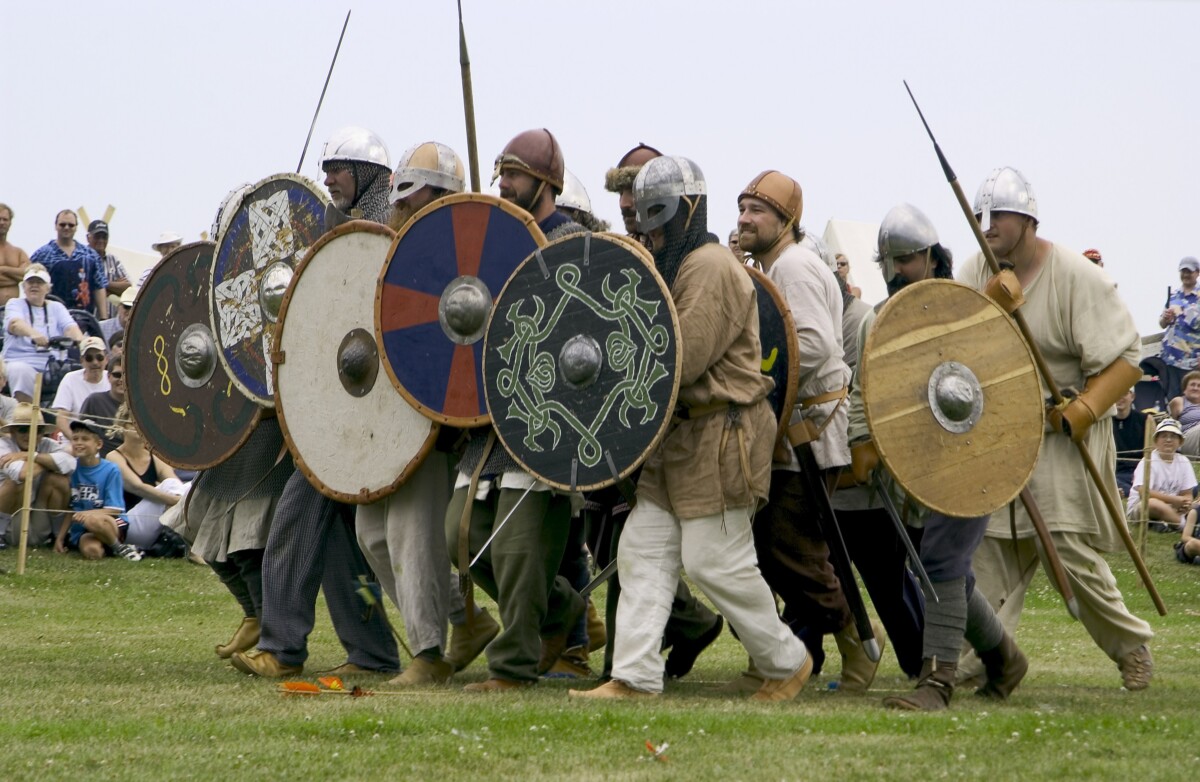
Gimli is a Lake Winnipeg town whose population centre had 2,345 people at the 2021 census, and it is known for Icelandic heritage: the Icelandic Festival of Manitoba moved here from Winnipeg in 1932, and a Viking statue was unveiled in 1967. Wikipedia describes Gimli as the cultural heartland of Icelanders in Manitoba and in Canada as a whole.
Cree and Saulteaux land
Small groups of Swampy Cree lived in scattered settlements along the Icelandic River before and during Icelandic settlement. In 1875 an order in council under the Dominion Lands Act set aside the New Iceland reserve, a tract running about 68 kilometres along Lake Winnipeg’s west shore, including Big Island, and the Big Island band joined Treaty 5 in 1876. That year, when three Icelandic families moved onto the banks of the Icelandic River, John Ramsay, a Saulteaux man, confronted them, because he and others believed the land was already theirs. He negotiated to keep his potato garden and tent on an Icelander’s land.
Smallpox
Smallpox arrived with the 1876 immigrants and struck the Cree far harder than the Icelanders: one band of fifty or sixty people was reduced to seventeen. By one account the 1876 to 1877 epidemic killed 102 Icelanders and roughly twice that number of Indigenous people. The New Iceland Heritage Museum now runs an exhibit on Ramsay built around the film A Song for John Ramsay.
A festival that moved to Gimli
The first Icelandic Festival Parade was held in Winnipeg on August 2, 1890, with Wilhelm H. Paulson as the festival’s first president. In 1932 the festival moved to Gimli as an experiment. Gimli was chosen for more outdoor space and weather shelter than Winnipeg’s parks, and for its nearness to the smaller Icelandic communities of Selkirk, Arborg and Hnausa. For the move, three Winnipeg Electric Co. buses cost C$125, and the Canadian Pacific Railway offered discounted fares of C$1.25 a person. The festival’s Fjallkona, or Maid of the Mountain, tradition began in 1924.
A Viking to stand beside
For Canada’s centennial, the Gimli Chamber of Commerce commissioned a Viking statue, designed by Gissur Eliasson of the University of Manitoba, built by sculptor George Barone and costing about C$15,000. Iceland’s president, Asgeir Asgeirsson, unveiled it in 1967, and a Viking Park was added around it in 2017. The harbour’s 977 foot seawall carries 72 murals of community history. The 2026 festival, its 137th, ran from July 31 to August 3, and organizers expected more than 20,000 visitors.
Wikipedia’s New Iceland article mentions no First Nations, Métis or Indigenous history at all. What it leaves out is the Cree and Saulteaux history under the reserve, from Ramsay’s garden to the smallpox.
Questions people ask about Gimli
Why is Gimli, Manitoba famous?
Gimli is the home of the Icelandic Festival of Manitoba, which moved there from Winnipeg in 1932, and of a Viking statue unveiled in 1967. Wikipedia describes the town as the cultural heartland of Icelanders in Manitoba and in Canada as a whole.
What does the name Gimli mean?
Gimli is an Icelandic variant of Gimle, a place in Norse mythology where the righteous survivors of Ragnarok are said to live. The town lies in the old New Iceland reserve, set aside along Lake Winnipeg's west shore in 1875.
When is the Icelandic Festival of Manitoba held?
Organizers chose August 2 as the festival date at a meeting on May 28, 1898, to mark both the first Icelandic celebration in North America in 1874 and Iceland's constitution of the same year. The 2026 festival, its 137th, ran in Gimli from July 31 to August 3.
Who built the Viking statue in Gimli?
The Gimli Chamber of Commerce commissioned it as a Canadian centennial project. Gissur Eliasson of the University of Manitoba designed it, sculptor George Barone built it, and it cost about C$15,000. Iceland's president, Asgeir Asgeirsson, unveiled it in 1967. A Viking Park was added around the statue on August 5, 2017.
Who lived in New Iceland before the Icelanders?
Small groups of Swampy Cree lived in scattered settlements along the Icelandic River before and during Icelandic settlement. In 1876 John Ramsay, a Saulteaux man, confronted Icelandic families who moved onto the river's banks, because he and others believed the land was already theirs. Smallpox that arrived with the 1876 immigrants struck the Cree far harder than the Icelanders.