How Crazy Horse Memorial earned the score
Population 1,864 in Custer, the nearest incorporated town. The Memorial itself is a private site with no resident population.
Situation The world’s largest mountain carving in progress draws 1.2 million visitors a year while still less than 20 percent complete, funded only by tickets and private gifts.
Action Sustained a multi-decade memorial sculpture project, begun in 1948, as a regional anchor attraction on the South Dakota sculpture trail.
Result 3.8 million dollars in annual ticket revenue and steady million-plus visitation, with room to grow the surrounding visitor economy.
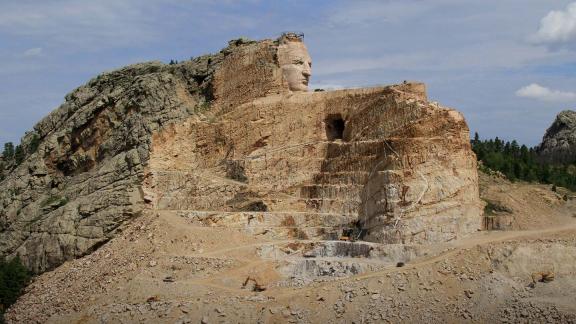
Let’s Meet Crazy Horse Memorial, SD
Crazy Horse. Where to start… The sheer immensity of the project and statue itself makes this post a big undertaking…
Crazy Horse Memorial is not a conventional town. It is a private memorial complex in the Black Hills of South Dakota, addressed at Crazy Horse, SD, but functioning as a visitor campus rather than a downtown. The nearest incorporated place is Custer, a town of roughly 1,864 people. There is no storefront corridor, no sidewalk spine, no commercial district here to walk. What there is instead is a mountain being carved into the shape of a man on a horse, and a steady stream of visitors coming to watch it happen.
The memorial was commissioned by Lakota elder Henry Standing Bear to honor Crazy Horse and Native American people, and the first blast on the mountain was fired on June 3, 1948, beginning a multi-decade carving effort led by sculptor Korczak Ziolkowski. Progress has been slow ever since. It is billed as the world’s largest mountain carving in progress, and it is still unfinished.
Crazy Horse, Future Wonder
Crazy Horse is going to be the next major wonder of the world. A wonder that will last for centuries and barring terrorism or other man made destructive force, should last for millenias. This is the equivalant of the pyramids of Giza. Even the Colusseum, as great as it truly is, I don’t think could last another millenia. Think aout that. 30 Generations of people have lived since the colusseum was built. If Crazy Horse could last for 2 Milennial like the Pyramids are on track to, South Dakota will have made itself an unlimited resource for 2000 years.
Wonder Status
I mean it should last, They are carving a mountain into a man on a horse. That will last a while.
Currently
Currently, Crazy Horse sits at less than 20% complete but in ticket admissions alone pulls in 3.8 million dollars in revenue a year from ticket admissions. 1.2 million people stopped in to see Crazy Horse last year which gives the town and park a chance to make money and capitalize. The carving is funded by ticket revenue and private contributions, not federal or state money, which is why the pace is tied so directly to the people who show up at the gate.
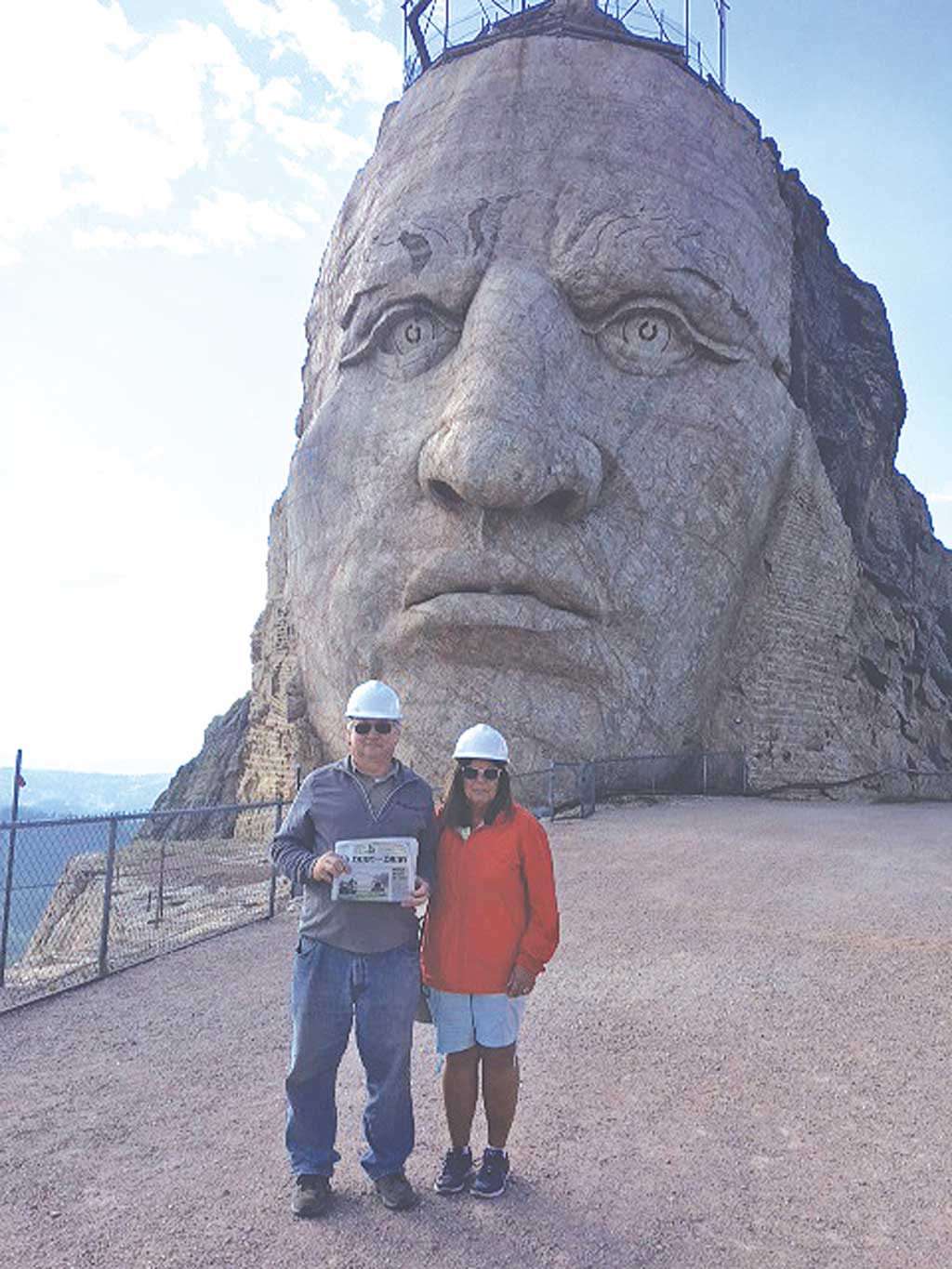
New Possible Industries
Because of Crazy Horse, every single one of these businesses has a better chance of succeeding in their businesses because there simply is more money to go around. People want to come to see Crazy Horse, this is an optional life expenditure so they have disposable income. Give tourists a way to spend money and they will!
Bear with me as these are spitball ideas.
Make comfortable durable footwear for the outdoors, like you may see at a renaissance festival.
A whole vertically integrated industry with almost self explanatory sales pitch and higher perceived value.
Take part in native american rituals to “center” yourself, get rid of bad energy, and pamper yourself at a spa. Something like this could easily attract the Yogi/Hippie types!
Reference Menu
The outdoors and native american themes are present around Crazy Horse, why not share your traditions of health and let others learn and enjoy?
A walk through of how local people lived and in what conditions. How you how to identify flint, make bows and arrows, make traditional shelters of various local people, and how to identify local edible plants. It could even extend to cooking and demonstrations.
Hooking people’s interest in “what it could have been like” give you a chance to sell them on the opportunity to really learn and understand what it would have been like. This is done by giving them an experience and then let them buy something more to remember the experience by. Most museums do have gift shops at the exit…
Why Other Towns Should Follow Crazy Horse Memorial’s Lead
The wider context helps explain why the numbers hold up. The Black Hills monuments, Crazy Horse among them, bring in millions of travelers each year and the tourism spending follows them, and the South Dakota state tourism office positions the memorial as an anchor attraction on its sculpture trail. That is a lot of built-in demand for a site that is still less than a fifth carved.
Crazy Horse is going to be built. The money is coming from private funding. As a people around Crazy Horse, people should be ready to capitalize on the well over 1.2 million people that will visit after it is completed.