
What Mata Ortiz is known for
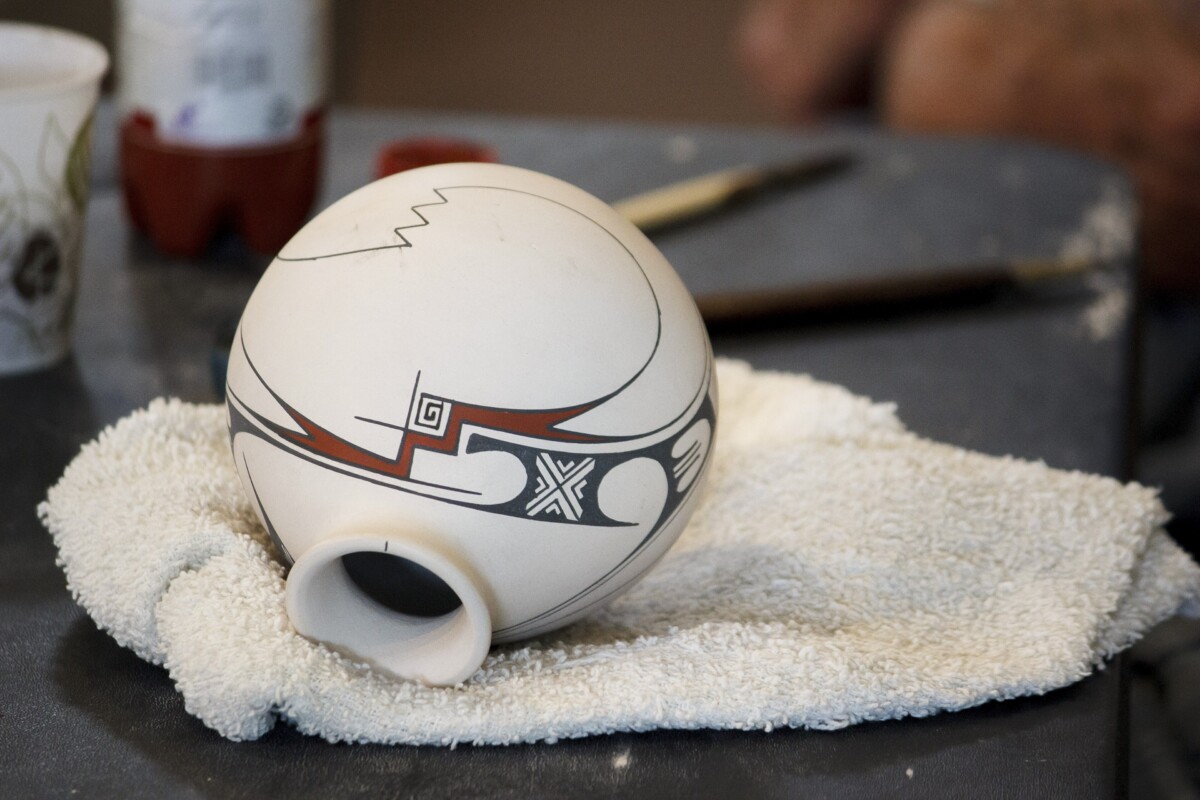
Mata Ortiz is a village of fewer than 1,200 people on a fading rail line in the Chihuahuan Desert. It rebuilt an extinct pottery tradition from broken shards and became a place collectors cross a border to reach. More than 300 households now live by clay.
A rail stop in decline
Mata Ortiz began as a railroad stop in the Chihuahuan Desert, named for a 19th-century officer. As rail traffic faded, so did the timber mill, farming and ranching that once supported it. It sat near the ruins of Paquimé, a Casas Grandes culture whose painted pottery had died out generations earlier. It was poor, remote and shrinking.
A dying rail village in one of the emptiest corners of northern Mexico had to make something the world would cross a desert to reach. To survive as more than a name on a map, that reason had to be manufactured, not inherited.
Pots from the shards
Juan Quezada Celado, a farmhand and rail laborer with barely any formal schooling, found Paquimé shards while gathering firewood. He taught himself clays, mineral paints, coil building and open firing. Then he taught the village, hundreds of households selling under its own name.
What the clay earns
Today more than 300 households in Mata Ortiz live by clay, and collectors and dealers cross the desert and the border to buy at the source. The village holds barely 1,200 residents and a single hotel, and the nearest airport is just over four hours away. None of it has slowed the trade.
Why it worked
Mata Ortiz committed to one improbable identity and built an economy on it. The town had no natural advantage, only a dead culture’s broken pots, one self-taught potter and a collector named MacCallum who sold his work outside.
The decisive move: Quezada refused to keep the craft to himself, and MacCallum refused to let it stay unseen. By teaching hundreds of households, he turned a private skill into a place, a name and a reason to travel, and each new potter made it harder to ignore.
Questions people ask about Mata Ortiz
Why is Mata Ortiz, Chihuahua famous?
Mata Ortiz is known for its pottery. The village rebuilt an extinct tradition from the broken shards of Paquimé, and more than 300 households now live by clay, with collectors and dealers crossing the desert and the border to buy at the source.
Who started the pottery of Mata Ortiz?
Juan Quezada Celado, a farmhand and rail laborer with barely any formal schooling, found Paquimé shards while gathering firewood. He taught himself clays, mineral paints, coil building and open firing, then taught the village.
What was Paquimé near Mata Ortiz?
Paquimé was a Casas Grandes culture whose painted pottery had died out generations earlier. Mata Ortiz sat near its ruins, and one man found its shards while gathering firewood.
How do you get to Mata Ortiz?
Mata Ortiz is a village of fewer than 1,200 people with a single hotel, and the nearest airport is just over four hours away. It began as a railroad stop named for a 19th-century officer.