
What Kolmanskop is known for
Kolmanskop is a ghost town of sand-filled houses on the edge of the Namib, with no residents and a single restaurant. It was abandoned in 1956 and reopened as a ticketed attraction in the 1980s. It draws 35,000 visitors a year.
A diamond town in the dunes
In 1908 Zacharias Lewala, a railway worker, found a diamond near Luderitz, and no one paid him. Within years it was among earth’s richest fields. The company built a town in the dunes, hospital and all, with no water. War and depletion began the decline, and richer fields opened south in 1928. The town was abandoned in 1956.
The site was never empty. It carries the name of Johnny Coleman, a Nama transport driver whose ox wagon stuck in these dunes in 1905, and at its peak the town employed about 800 local Namibians. What 1956 left was a liability, buildings filling with sand at the edge of one of the driest deserts on earth.
Charging admission to the decay
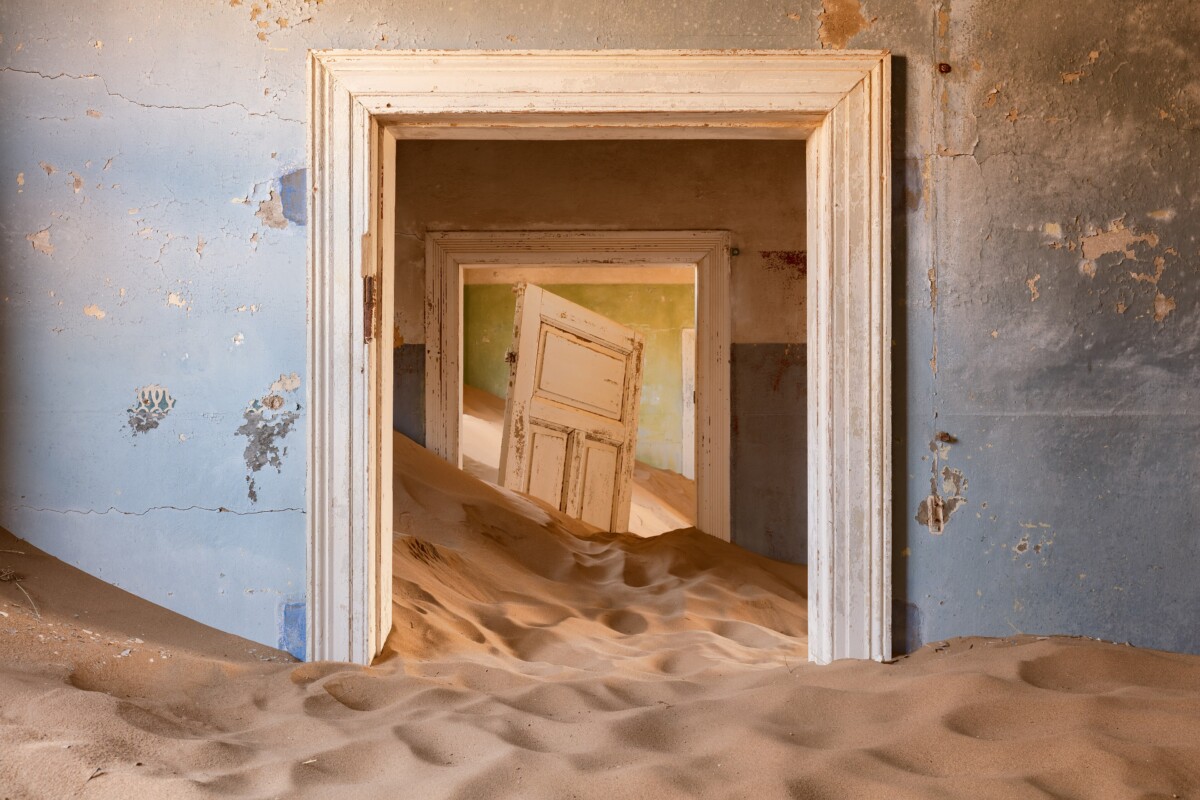
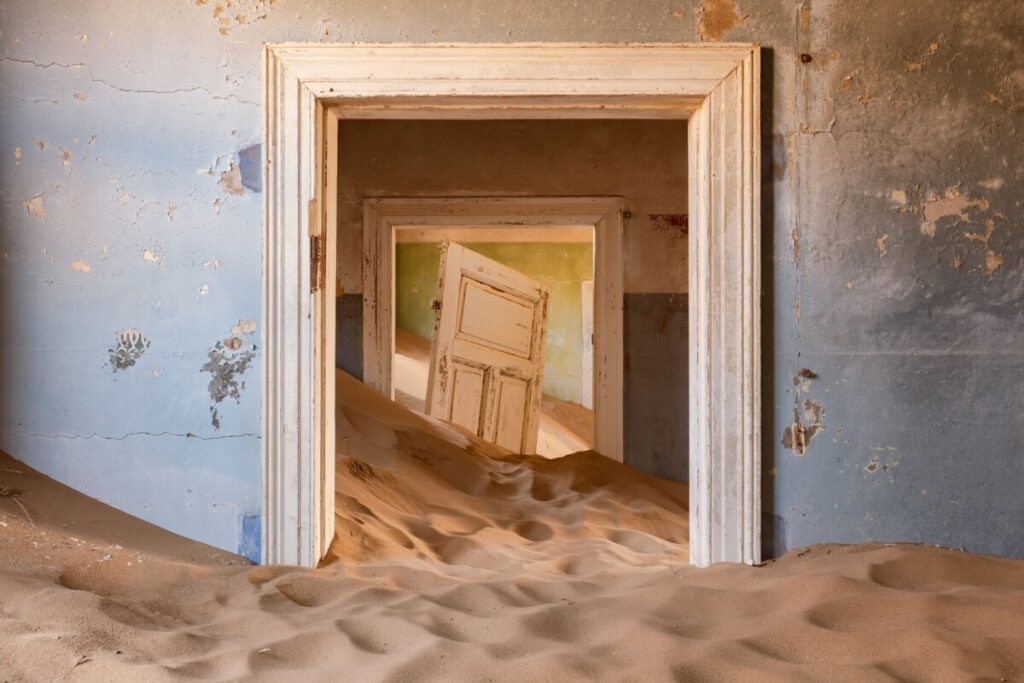
De Beers, which had abandoned it, made the ruin the product. In 1980 it restored part of the townsite, opened a museum and reopened Kolmanskop as pay-to-enter rather than clear it. Nothing hid the decay; the sand stayed where it lay. Since 2002 a private concessionaire, Ghost Town Tours, has sold tiered permits.
What the ruin earns
Visitors come to a town with no permanent residents. The draw is the Namib flooding room after room, with dunes up the walls of the old houses. It runs on one museum and one restaurant, and no one sleeps on site; the beds are 10 km away in Luderitz. The ruin sells itself.
Why it worked
Kolmanskop was abandoned first and monetised long afterwards. Most exhausted mining towns let the desert take them back for free; this one, one of several ghost towns gated inside the Sperrgebiet, kept the decay instead of erasing it and put a gate and a price on it.
The 24 years between abandonment and the first restored buildings are the point: the decay was not chosen in place of leaving, it was sold long after the leaving was done.
Questions people ask about Kolmanskop
Why is Kolmanskop, Namibia famous?
Kolmanskop is known as a ghost town of sand-filled houses on the edge of the Namib, with no residents and a single restaurant. Abandoned in 1956, it was reopened as a ticketed attraction in the 1980s and draws 35,000 visitors a year.
How did the diamond town at Kolmanskop begin?
In 1908 Zacharias Lewala, a railway worker, found a diamond near Luderitz, and no one paid him. Within years it was among earth's richest fields, and the company built a town in the dunes, hospital and all.
Can you stay overnight in Kolmanskop?
No one sleeps on site. Kolmanskop has no permanent residents, one museum and one restaurant, and the beds are 10 km away in Luderitz. A private concessionaire, Ghost Town Tours, has sold tiered permits since 2002.
Who reopened Kolmanskop as a visitor attraction?
De Beers, which had abandoned it, restored part of the townsite in 1980, opened a museum and reopened Kolmanskop as pay-to-enter rather than clear it. Nothing hid the decay; the sand stayed where it lay.