
What Villanueva de los Infantes is known for
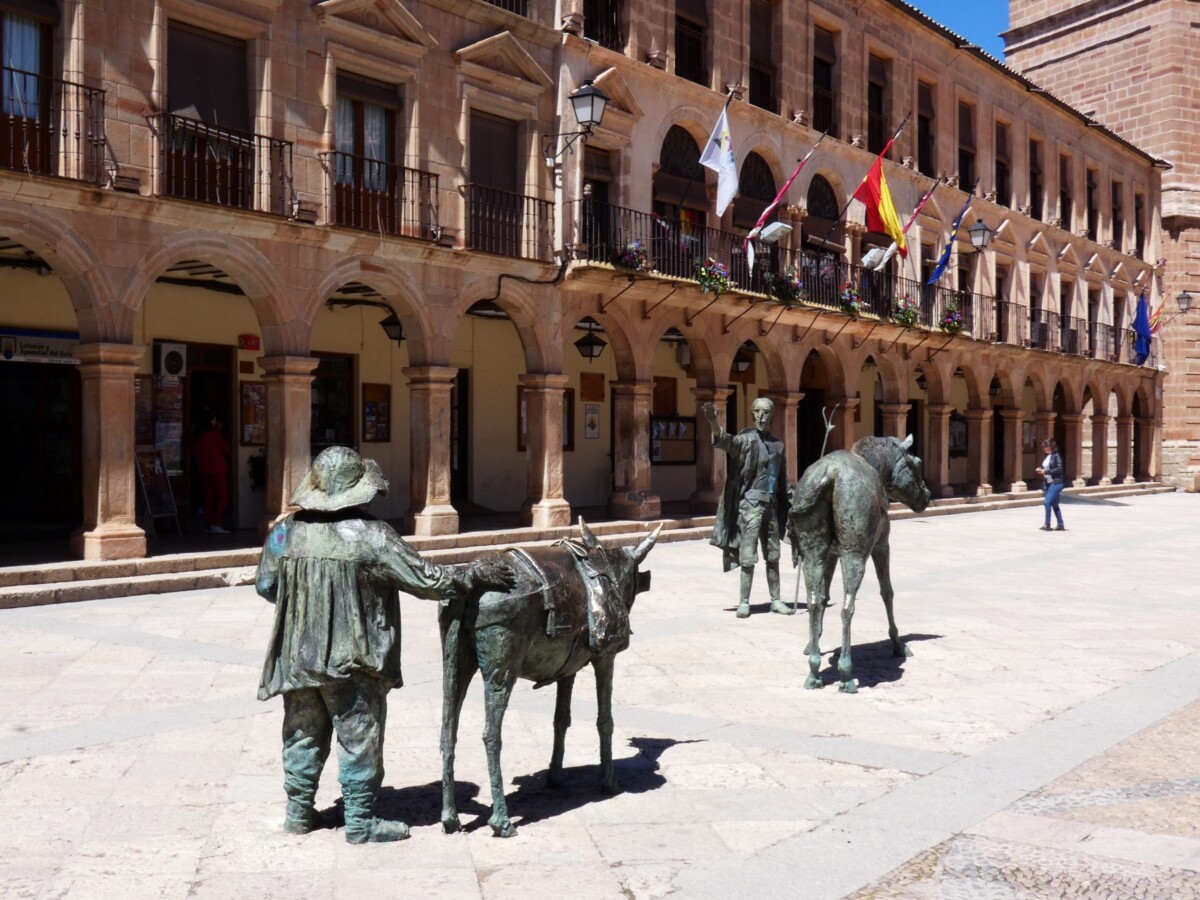
Villanueva de los Infantes is a Campo de Montiel farm town whose population fell from 10,386 people in 1950 to 4,785 in 2024. In 2005 it adopted a university study naming it the village Cervantes left unnamed in Don Quixote, and built a museum to make the case.
A town of blasoned houses
The town has more than 200 houses carrying heraldic coats of arms on their facades, and brands itself with the tagline Forjado por hidalgos, forged by noblemen. Castile’s blood-purity statutes shut converted Jews and Muslims and their descendants out of offices, colleges and orders, a history worth naming alongside the heraldry. A 1974 decree declared the town a conjunto histórico-artístico, and the writer Francisco de Quevedo died here in 1645 and was buried in the parish church of San Andrés.
The study that named a village
Cervantes never named Don Quixote’s village; Argamasilla de Alba had been considered it since 1605. In 2005 a Universidad Complutense de Madrid team tested 26 Campo de Montiel towns against 24 variables of distance and time, and concluded Villanueva de los Infantes was the only possible solution. The verdict arrived as the region was emptying: by 2020 only five of the Campo de Montiel’s 22 municipalities held more than 2,000 people.
A museum built on a verdict
The Casa de Rueda, a seventeenth century manor, reopened in July 2022 as a visitor centre, restored with more than 800,000 euros from the regional government. It houses a museum the town calls the first scientific museum in the world about the Lugar de La Mancha, and in 2025 a 622-volume Don Quixote library opened there to mark twenty years of the study. The tourism office logged 3,459 visits from March 31 to April 9, 2023, up 18 percent on the year before. The town’s pepper fair, running since 2003, set a Guinness World Record in 2016 for the largest pisto manchego, 1,254 kilos.
A dispute that stays open
Not everyone accepts the verdict. Luis Miguel Román Alhambra, president of the Sociedad Cervantina del Lugar de Don Quijote, argues the town cannot be the village and proposes Alcázar de San Juan instead. Jean Canavaggio notes that replications of the study have produced three candidate towns with different rankings, none imposing itself as the only one, and cites the novel’s own explanation: Cervantes withheld the village’s name so that all the towns of La Mancha might contend for it.
Questions people ask about Villanueva de los Infantes
Why is Villanueva de los Infantes famous?
Villanueva de los Infantes is known for adopting a 2005 university study that named it the unnamed village of Don Quixote, and for building a museum on that claim. The town also has more than 200 houses carrying heraldic coats of arms.
How was Villanueva de los Infantes chosen as Don Quixote's village?
In 2005 a Universidad Complutense de Madrid team tested 26 towns in the Campo de Montiel against 24 variables of distance and time described in Don Quixote, and concluded that Villanueva de los Infantes was the only possible solution.
Does everyone agree Villanueva de los Infantes is Don Quixote's village?
No. Luis Miguel Román Alhambra, of the Sociedad Cervantina del Lugar de Don Quijote, disputes the verdict and proposes Alcázar de San Juan instead. Jean Canavaggio notes that replications of the study have produced three candidate towns, none the only one.
What is the Casa de Rueda?
The Casa de Rueda is a seventeenth century manor that reopened in 2022 as a visitor centre and museum on the Lugar de La Mancha study. Since 2025 it has also housed a 622-volume Don Quixote library.