
What New Ulm is known for
New Ulm, a Minnesota city of 14,120 people at the 2020 census, is known for German heritage built to be visited: the Hermann Heights Monument, a Glockenspiel and an Oktoberfest held every October since 1981. A 2002 study found that 65.85 percent of residents reported German ancestry, the highest share of any city in the United States.
Wakzupata and the treaties
The Dakota called the site Wakzupata, village on the cottonwood. In the 1851 treaties of Traverse des Sioux and Mendota, Minnesota’s Dakota ceded most of their land for reservations promised in perpetuity, a promise the US Senate later narrowed to hold only at the discretion of the President, and an 1858 treaty forced 26 Dakota leaders to sell the northern half of what remained. The German Land Company of Chicago founded New Ulm in 1854.
The war of 1862
By the summer of 1862 a failed harvest, a harsh winter, depleted game and delayed annuity payments had left the Dakota facing starvation. The Dakota bands in the war that followed included the Mdewakanton, Wahpekute, Sisseton and Wahpeton. Dakota forces attacked New Ulm on August 19 and again on August 23. The Minnesota Historical Society gives the second battle’s toll as 32 townspeople dead, and 190 of the town’s 239 buildings were destroyed.
After the war a military commission sentenced 303 Dakota men to death. President Lincoln approved 39 for execution, one received a last minute reprieve, and on December 26, 1862, the US Army hanged 38 Dakota men at Mankato, the largest single day mass execution in American history. About 1,600 Dakota noncombatants, mostly women, children and elders, were interned at Fort Snelling, where nearly 300 died of illness and attacks by civilians and soldiers. In 1863 Congress abolished the Dakota reservations in Minnesota under an expulsion law that has never been repealed.
Heritage built to visit
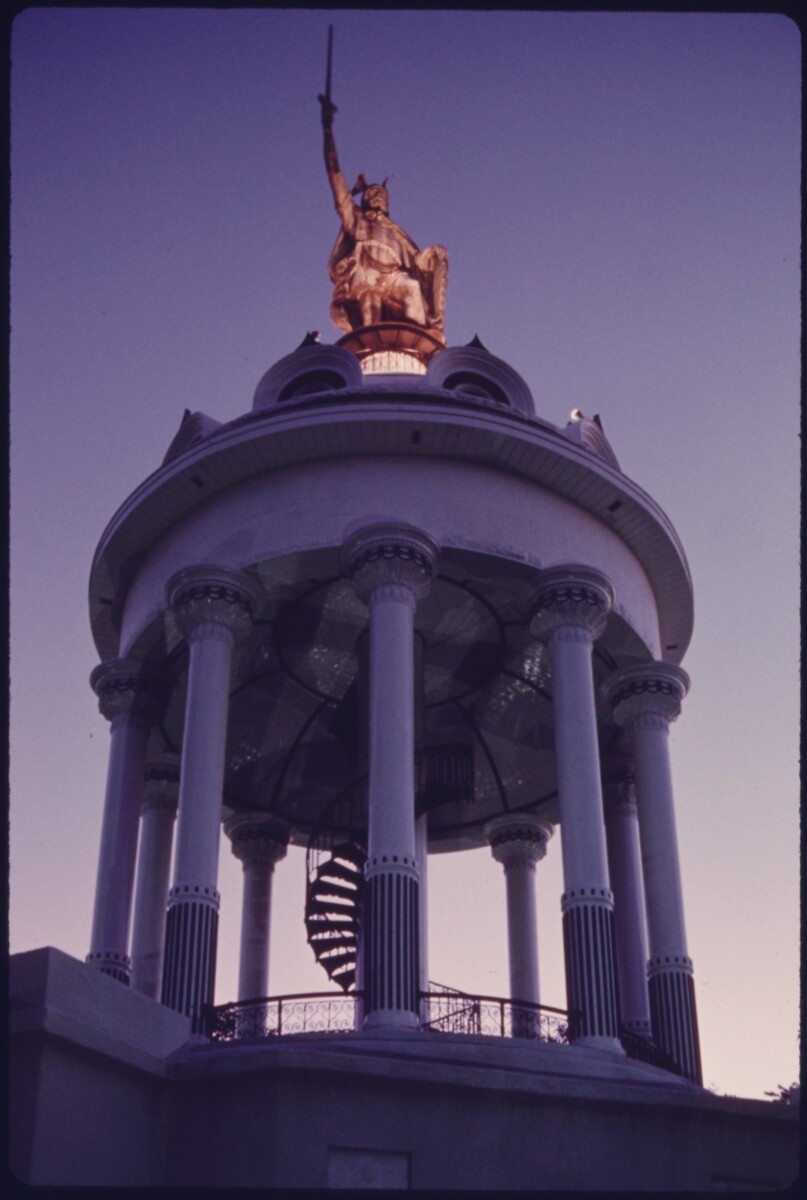
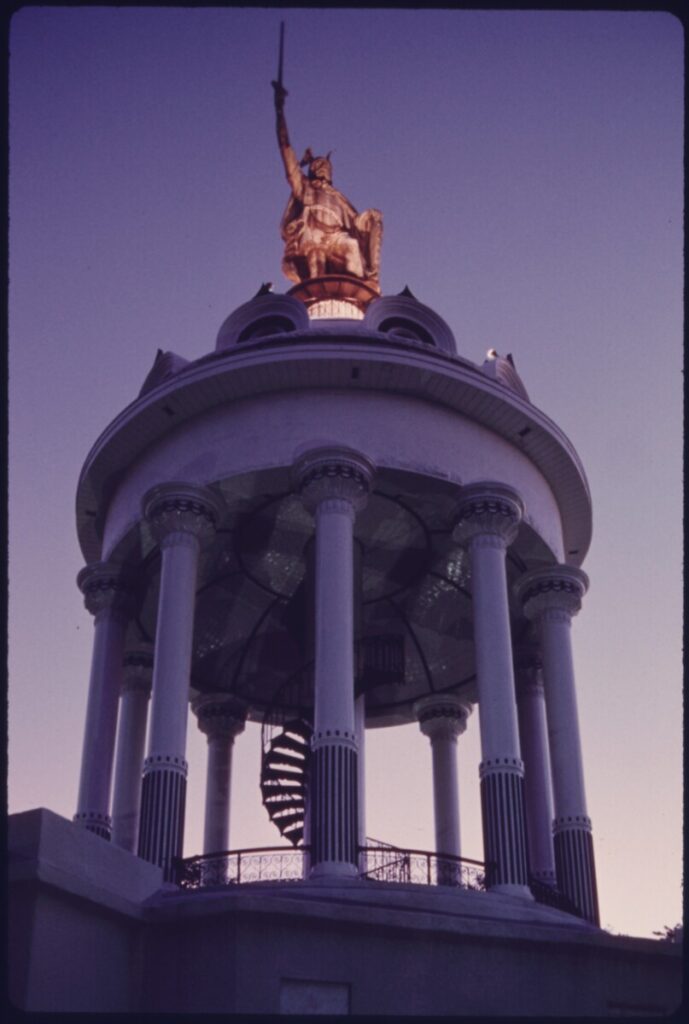
Julius Berndt, who led the Sons of Hermann’s New Ulm chapter, led the effort to build the Hermann monument: the cornerstone was laid in 1888, the copper statue arrived in 1890 and the monument was dedicated in 1897. It stands about 102 feet tall, and in 2000 Congress named it a symbol of all citizens of Germanic heritage. In 1980 a committee under Clara Schonlau dedicated a 45 foot Glockenspiel with 37 bronze bells cast in the Netherlands.
Twelve animated figures, each about three feet tall, rotate on the Glockenspiel to depict local history, among them a pioneer family, a brick mason, a miller, a beer drinker and a Dakota figure. That heritage stands on Dakota ground, and on the Glockenspiel the Dakota are one figure among twelve.
Questions people ask about New Ulm
Why is New Ulm, Minnesota so German?
The German Land Company of Chicago founded New Ulm in 1854, and in 1856 the Settlement Association of the Socialist Turner Society brought hundreds of colonists. A 2002 study found that 65.85 percent of residents reported German ancestry, the highest share of any city in the United States.
What is the Hermann Heights Monument?
It is a monument to Hermann, dedicated in 1897 after an effort led by Julius Berndt of the local Sons of Hermann chapter. It stands about 102 feet tall, with a 27 foot copper statue on a 70 foot iron column, and in 2000 Congress named it a symbol of all citizens of Germanic heritage.
What happened in New Ulm in 1862?
In the Dakota War of 1862, Dakota forces attacked New Ulm twice, and the second attack killed 32 townspeople, by the Minnesota Historical Society's count. After the war the US Army hanged 38 Dakota men at Mankato, and about 1,600 Dakota noncombatants were interned at Fort Snelling, where nearly 300 died of illness and attacks by civilians and soldiers.
When is Oktoberfest in New Ulm?
New Ulm has held an Oktoberfest celebration every October since 1981. It has also held a Bock Fest at the August Schell Brewing Company every year since 1987.
What does the New Ulm Glockenspiel show?
The 45 foot Glockenspiel, dedicated in 1980, carries 37 bronze bells. Twelve animated figures, each about three feet tall, rotate to depict local history, including a pioneer family, a miller, a beer drinker and a Dakota figure. A nativity scene replaces them from Thanksgiving through early January.