What Holambra is known for
Holambra is a São Paulo town founded on July 14, 1948, by Catholic Dutch immigrants. Today about 30 percent of residents are Dutch or of Dutch descent, and the town is known for Expoflora, its annual flower show, and for Veiling Holambra, the cooperative’s flower auction.
A colony bought from a meatpacker
Fazenda Ribeirão belonged to the Armour meatpacking company of Chicago before the purchase for Dutch settlement; no source records who lived or worked there earlier. In June 1948 colonization minister Jorge Latour closed an agreement with Armour’s director to buy 5,000 hectares. The emigration was coordinated by the Catholic Dutch Farmers’ union, KNBTB, with the Brazilian government’s consent, and brought about 650 migrants from North Brabant. Brazil was described as the only nation to allow the arrival of large groups of Catholics.
The cattle died, so the colony grew flowers
The plan was dairy cattle shipped from the Netherlands, but the imported cattle died of tropical disease, and some pioneers turned to flower growing instead. The failure sank the planned dairy factory, and many immigrants left for Paraná and Rio Grande do Sul. Gladiolus growing began in 1951, and cultivation expanded between 1958 and 1965; the cooperative opened a dedicated floriculture department in 1972. The first flower auction was held on April 3, 1989, on the Dutch reverse model.
An auction, a show and a windmill
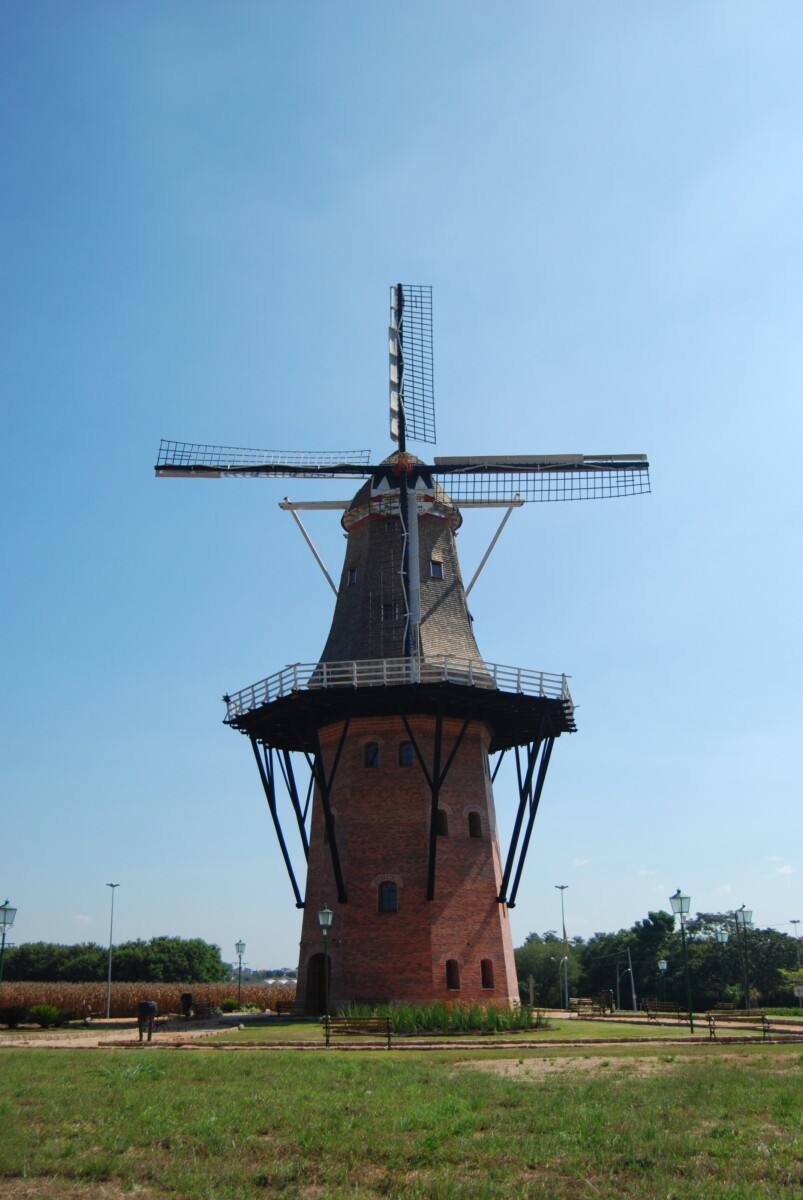
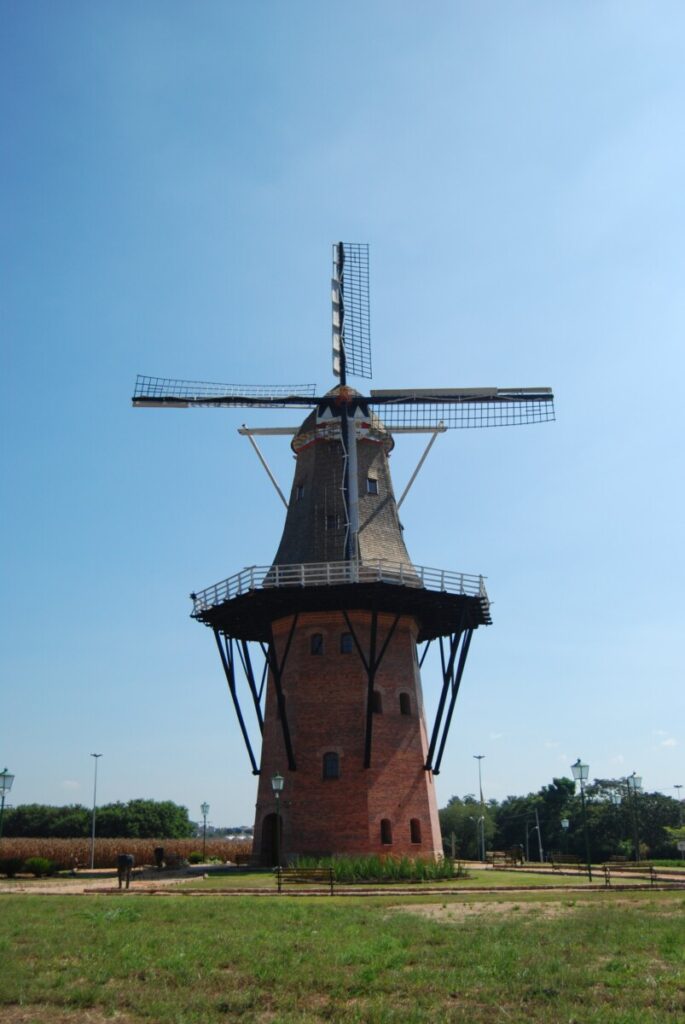
Veiling Holambra now holds more than 40 percent of the Brazilian domestic flower and plant market, trading about 3,000 trolleys a day. Expoflora, billed as the largest flower show in Latin America, began in 1981 and has been held nearly every year since, reaching its 43rd edition in 2026. It draws more than 300,000 visitors an edition, a promotional figure rather than an audited count. In 2008, for 60 years of Dutch immigration, the town raised a 38.5 meter windmill, called the tallest Dutch windmill in Latin America.
The Dutch identity, and who lives inside it
In a 1991 plebiscite, 98 percent voted for political autonomy, and Holambra received the Estância Turística tourist designation in 1998. The town of an estimated 15,596 people in 2024 still markets itself as Dutch, but only about 30 percent of residents are Dutch or of Dutch descent; most of the town lives inside a Dutch identity that is not, strictly, their own.
Questions people ask about Holambra
Why is Holambra, Brazil famous?
Holambra is known for Expoflora, billed as Latin America's largest flower show, and for Veiling Holambra, a major flower auction. The town was founded in 1948 by Catholic Dutch immigrants, and about 30 percent of residents today are Dutch or of Dutch descent.
Why did Holambra's colonists turn to growing flowers?
The colonists originally planned a dairy industry with cattle shipped from the Netherlands, but the animals died of tropical disease and the plan collapsed. Some pioneers turned to growing gladiolus instead, starting in 1951, and the colony became a flower town.
What is Expoflora?
Expoflora is a flower show billed as the largest in Latin America. It began in 1981 and reached its 43rd edition in 2026, drawing more than 300,000 visitors, a figure the organizers promote rather than an independently audited count.
Are most people in Holambra of Dutch descent?
No. Only about 30 percent of Holambra's residents are Dutch or of Dutch descent, even though the town markets a strongly Dutch identity built around its windmill and its flower auction. Most residents live inside a brand that is not, strictly, their own heritage.