
What Gladstone is known for
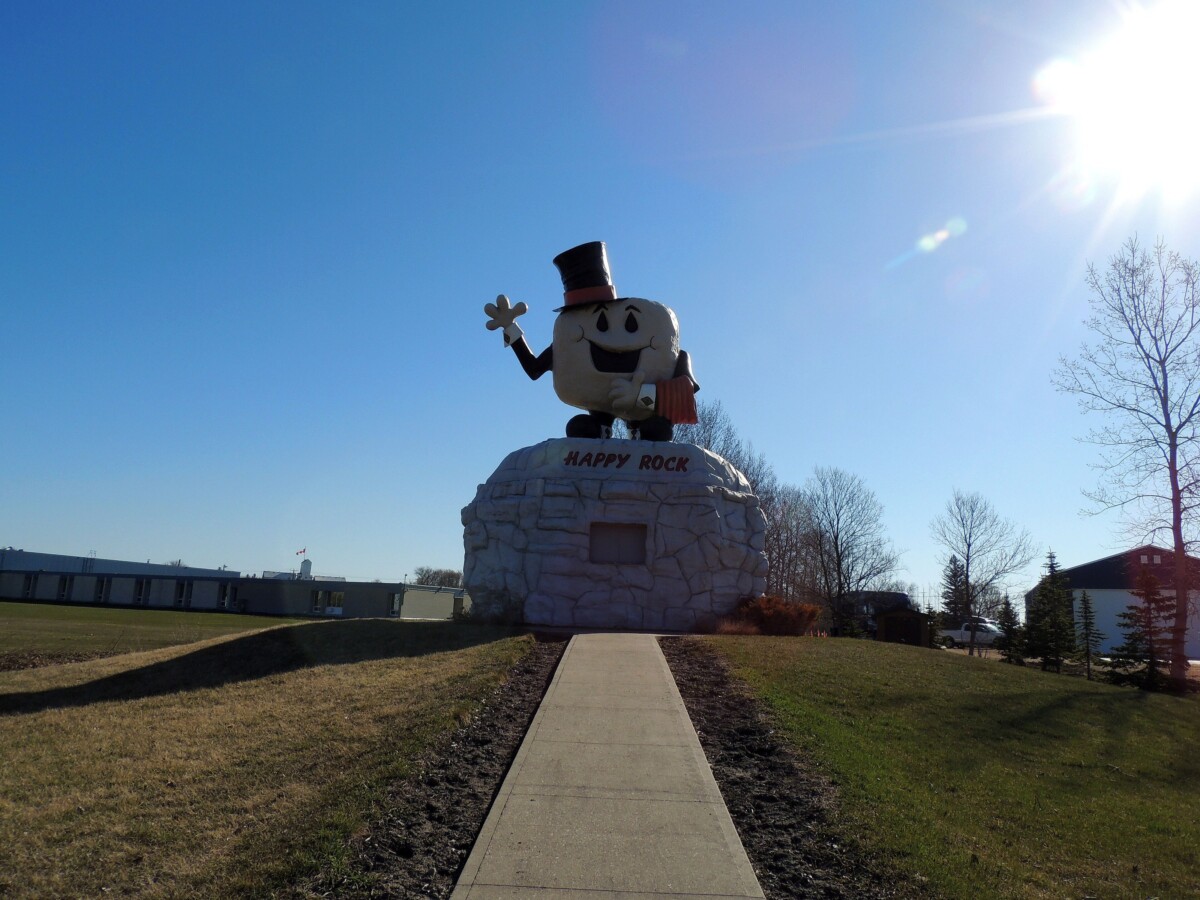
Gladstone is a Manitoba town of 928 people at the 2021 census, named in 1879 for British prime minister William Ewart Gladstone, and it is known for Happy Rock: a 36-foot fibreglass rock that officially opened as a tourist information centre on July 1, 1993.
Treaty 1, Treaty 2 and Sandy Bay
The Municipality of WestLake-Gladstone, formed when Gladstone amalgamated with Westbourne and Lakeview in 2015, says it is located on Treaty 1 Territory, the traditional territory of the Anishinaabeg, Cree, Dakota and Dene peoples and the homeland of the Red River Métis Nation. Canadian History Ehx instead places Gladstone on Treaty 2 land, traditionally occupied by the Anishinaabe, Cree and Ojibwe peoples. In 1871, after Treaty 1, Ojibway and French mixed blood members of the Portage Band petitioned for their own reserve. It was placed at a site named Whitemud, near present-day Westbourne. The community moved north in 1873, moved again in 1877 after a surveying error, and is now Sandy Bay First Nation.
From Third Crossing to Happy Rock
The settlement was first called Third Crossing, for the third crossing of a prairie trail over the Whitemud River. It was renamed Palestine in 1871 or 1872, by different accounts, then Gladstone, and it incorporated as a town on July 18, 1882. By the late 1970s it was already informally nicknamed Happy Rock, and Manitoba’s provincial government met local representatives to find ways to increase tourism.
A logo, then a statue
In 1984 the Chamber of Commerce held a logo contest for a mascot to represent Happy Rock. Jerry Wickstead, a student at William Morton Collegiate, won it with a black and white rock character holding a towel in one hand and waving with the other, and Happy Rock was registered as a trademark in 1988. Fundraising for the statue ran from 1991 to 1993 and included two bingo events, two Chamber banquet dinners and three cash prize draws, and Manitoba’s Community Places Grant Program covered up to 25 percent of the project’s total cost.
The rock today
F.A.S.T. Corporation of Sparta, Wisconsin, built the statue in fibreglass over about four months, from blueprints drawn by Winnipeg architects. It stands 36 feet tall, weighs about 3,000 pounds and cost nearly C$92,000. To mark a 2010 Canada Post stamp, volunteers repainted it and planted red, white and blue flowers around it, and the town put C$2,000 toward the work.
Gladstone had the nickname before it had the rock. Its first name, Third Crossing, marks a crossing of the Whitemud River; a reserve named Whitemud, sought in 1871, is now Sandy Bay First Nation. The Happy Rock story does not mention that.
Questions people ask about Gladstone
What is Happy Rock in Gladstone, Manitoba?
Happy Rock is a 36-foot fibreglass statue of the town's mascot. It officially opened as a tourist information centre on July 1, 1993. F.A.S.T. Corporation of Sparta, Wisconsin, made it from blueprints drawn by Winnipeg architects, for nearly C$92,000.
How did Gladstone, Manitoba get its name?
The settlement was first called Third Crossing, for the third crossing of a prairie trail over the Whitemud River. It was renamed Palestine in 1872, according to Wikipedia, or 1871, according to the Manitoba Historical Society, and in 1879 it became Gladstone, after British prime minister William Ewart Gladstone.
Who designed Happy Rock?
Jerry Wickstead, whom Canadian History Ehx identifies as a student at William Morton Collegiate, won the Gladstone Chamber of Commerce's 1984 logo contest with a black and white rock character holding a towel in one hand and waving with the other. Winnipeg architects drew the blueprints for the statue.
How big is Happy Rock?
Happy Rock stands 36 feet, or 11 metres, tall and weighs about 3,000 pounds, or 1,400 kilograms. It was built in fibreglass over about four months and cost nearly C$92,000; a provincial grant program covered up to 25 percent of the project's total cost.
What events does Gladstone hold?
The Gladstone Agricultural Fair is held on the second weekend of August and has included a pancake breakfast, pet parade, slow pitch tournament, 4H horse show and an Elks beef supper. The town also holds Third Crossing Museum Threshing Days and a summer farmers market from late July to early September.