What Foxton is known for
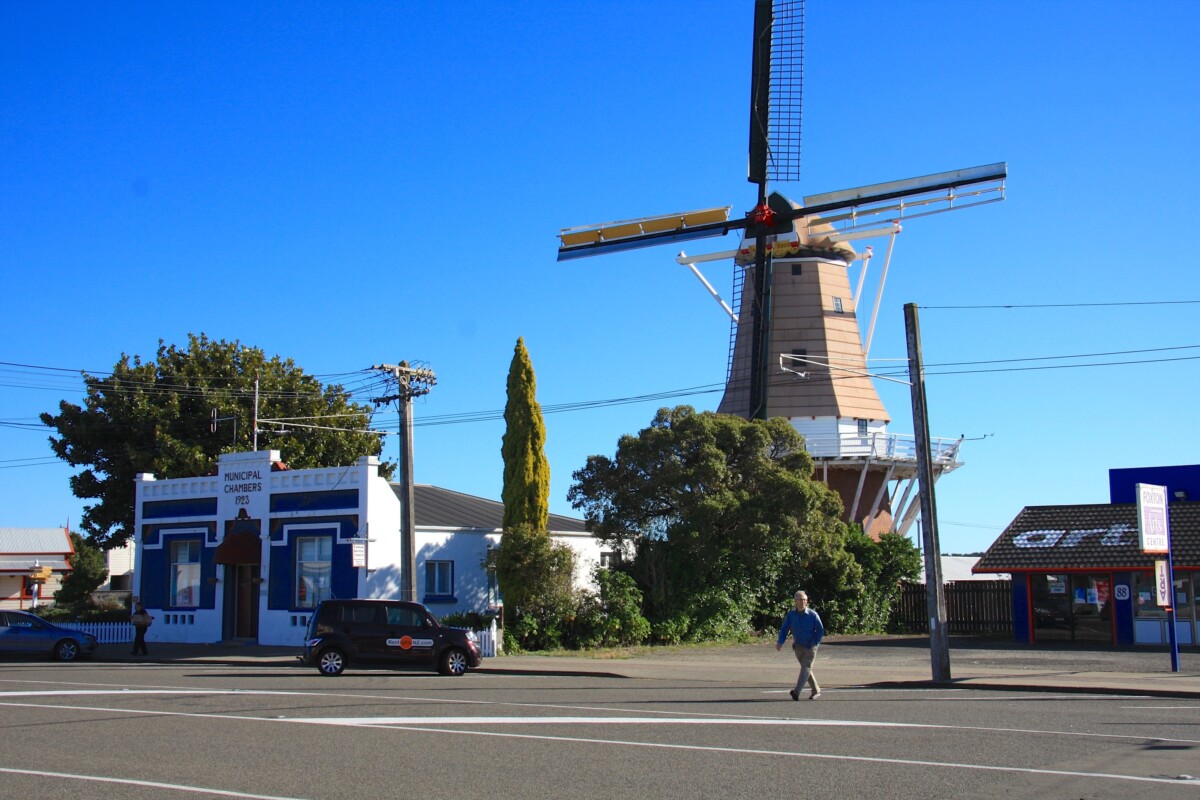
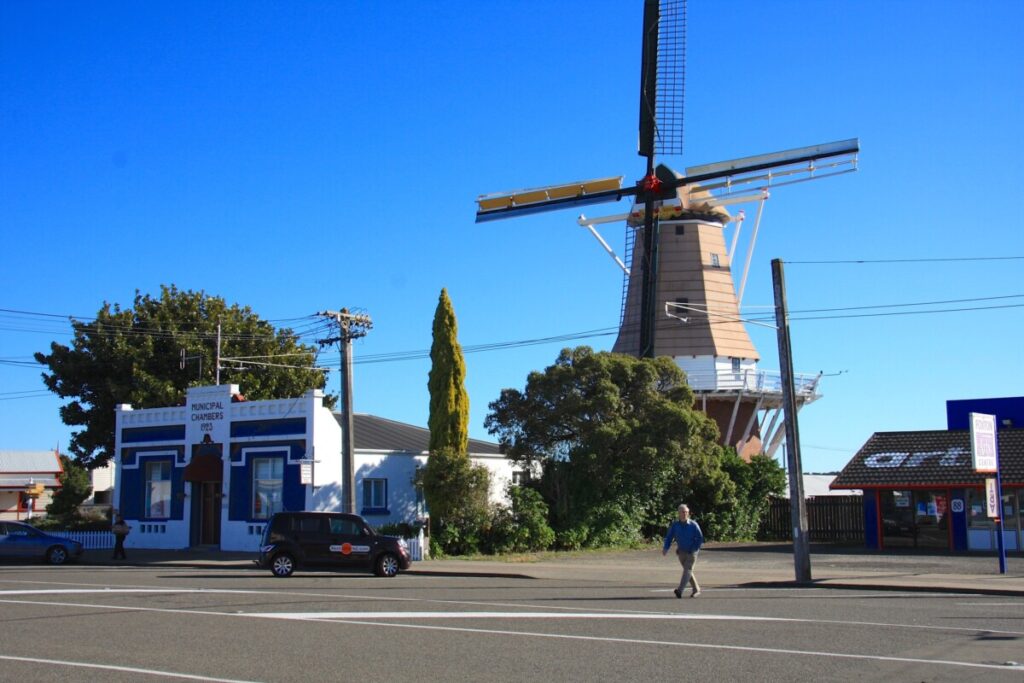
Foxton began as Te Awahou, a Māori settlement on the Manawatū River, occupied in the 1840s by Ngāti Ngarongo and Ngāti Takihiku, hapū of Ngāti Raukawa, under Ihakara Tukumaru. It became Foxton in 1866, named for the politician Sir William Fox. The town is known today for two things built beside each other: De Molen, a working Dutch windmill, and Te Awahou Nieuwe Stroom, a cultural centre shared by Dutch and Māori stories.
A port that flax built, and a river that left
Pākehā settlers moved downstream to Te Awahou after an 1855 earthquake destroyed the nearby settlement of Paiaka. Flax built the town’s early wealth: about 97,000 bales of flax fibre shipped out through Foxton in 1916 alone, bought mostly from Māori growers. The port had stopped functioning by 1942, and the railway branch closed in 1959.
In 1943 an unexpected flood breached the Whirokino Cut, a flood control spillway, and diverted the Manawatū River away from the Foxton loop; a commission of inquiry found the Ministry of Works responsible for the botched earthworks. In 2020, 77 years later, minister Shane Jones announced NZ$3.86 million toward regeneration including the loop, and Save Our River Trust chair Robin Hapi said parts of it still carried signs warning people not to touch the water.
Two Dutch immigrants, a model in a garage, and mostly volunteers
In 1987 Dirk van Til and Jan (John) Langen, two Dutch immigrants who had settled in Foxton, first talked about building a real Dutch windmill. Plans and specifications came from the Netherlands in 1988, and the project went to the council in 1990. Builder Cor Slobbe first built a 10 foot working model in his garage, then served as construction manager while the mill itself was built from New Zealand grown timber, mainly by volunteers.
De Molen, a working replica of a 17th century Dutch flour mill, opened on 13 April 2003. It reaches about 30 metres into the sky, mills stone ground flour on site, and its running gear, millstones and sail stocks came from Vaags Molenwerken of Aalten in the Netherlands.
A house built by three partners
Next door, Te Awahou Nieuwe Stroom opened in November 2017, a three way project of Horowhenua District Council, Te Taitoa Māori o Te Awahou Trust and the Dutch Connection Museum Trust. It holds the Oranjehof Dutch museum and the Piriharakeke Māori centre under one roof, and drew about 150,000 users a year as of 2018.
Oranjehof calls the Dutch in New Zealand the invisible immigrants, who integrated rather than stood apart, and says at least one in every 40 or so New Zealanders has some Dutch heritage or connections. At the 2023 census, 38.1 percent of Foxton’s own residents identified as Māori.
Questions people ask about Foxton
Why is Foxton known for a Dutch windmill?
In 1987 two Dutch immigrants who had settled in Foxton, Dirk van Til and Jan Langen, first talked about building a real Dutch windmill. Plans came from the Netherlands, and the mill, built mainly by volunteers, opened as De Molen on 13 April 2003.
What happened to Foxton's river and port?
Foxton's port had stopped functioning by 1942. In 1943 an unexpected flood breached a flood control spillway called the Whirokino Cut and diverted the Manawatū River away from the Foxton loop, a diversion later blamed on botched Ministry of Works earthworks.
What is Te Awahou Nieuwe Stroom?
Te Awahou Nieuwe Stroom is a cultural centre that opened next to the windmill in November 2017, built by Horowhenua District Council, Te Taitoa Māori o Te Awahou Trust and the Dutch Connection Museum Trust together. It houses the Oranjehof Dutch museum and the Piriharakeke Māori centre.
Who lived at Foxton before it was named after Sir William Fox?
Foxton began as Te Awahou, a Māori settlement on the Manawatū River occupied in the 1840s by Ngāti Ngarongo and Ngāti Takihiku, hapū of Ngāti Raukawa, under Ihakara Tukumaru. The settler town was renamed Foxton in 1866.