
What Consuegra is known for
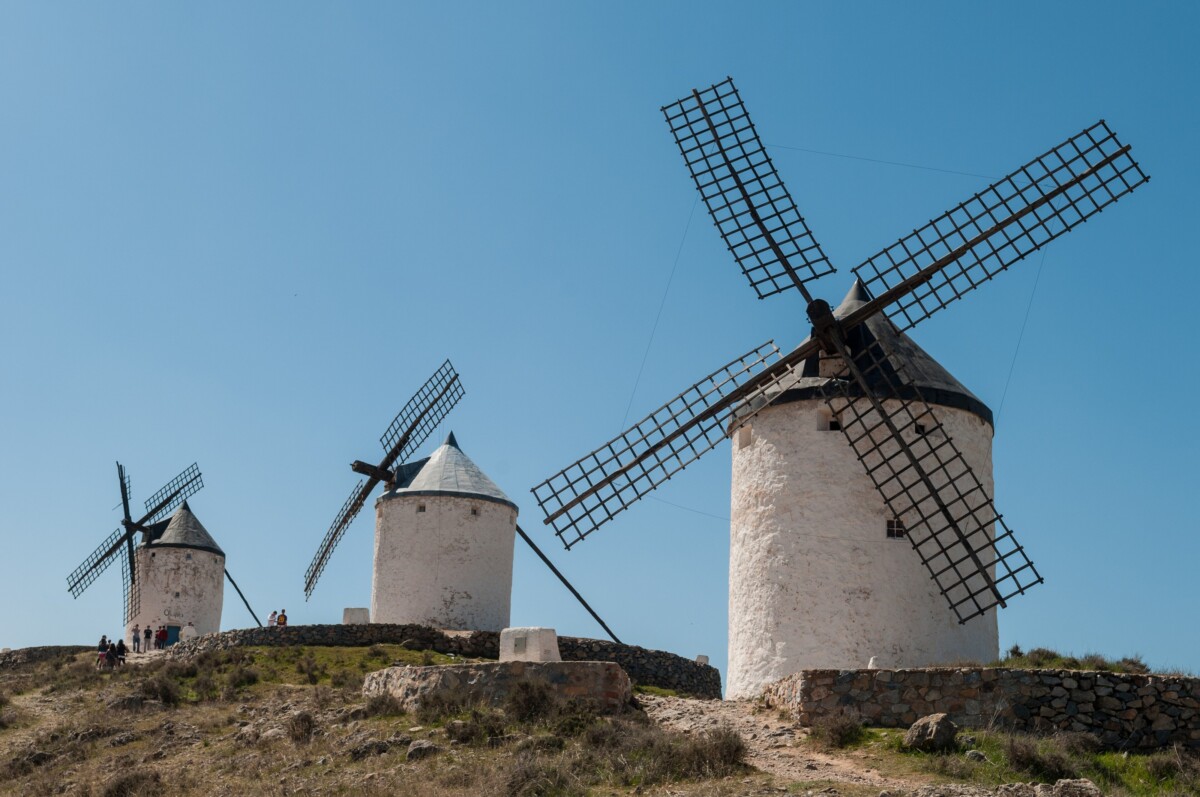
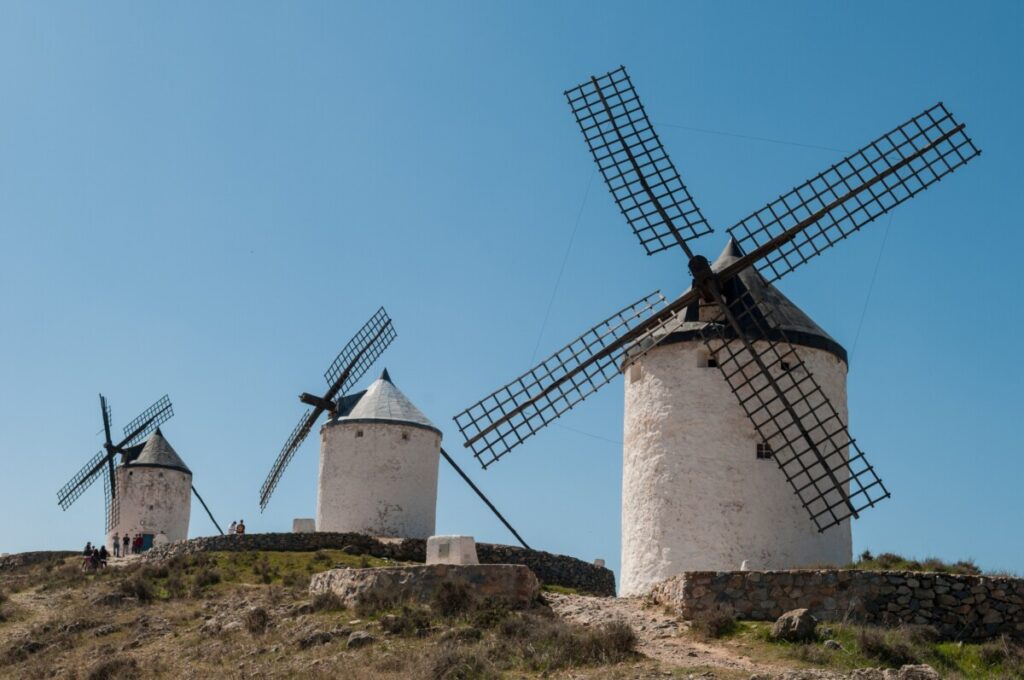
Consuegra is a La Mancha town of about 9,700 people as of 2024. It is known for twelve surviving windmills on the ridge above town, and for a saffron festival, the Fiesta de la Rosa del Azafrán, held every October since 1963.
A castle, and windmills named for their millers
The castle began as a 10th century Muslim fortress and, after the conquest, went to the Order of Saint John in the 12th century. Saffron itself was an Arab introduction to Iberia, its name from the Arabic az-zafaran. Of thirteen windmills that once ground grain on the ridge, twelve survive, restored and renamed for Cervantes or local tradition, not all of them for Don Quixote characters. Two keep their millers close: the mill now called Sancho was once known as La Tuerta, and the mill now called Mambrino was once La Zorra.
A hard harvest, an outsider's idea
Saffron takes about 250,000 flowers and 400 hours of handwork to make one kilo, picked between mid-October and early November. The monda, separating the stigmas by hand, was low-paid seasonal work done mostly by farm women, and not yet a reason to travel. In October 1962 an Austrian tourism director, Oskar Dignoes, saw the fields and proposed a festival.
A festival every October since 1963
Mayor Pedro Albacete del Pozo, credited as the soul of the festival, took up the idea with Francisco Domínguez as co-founder, and the first Fiesta de la Rosa del Azafrán opened on October 27, 1963. The festival is held every year on the last complete weekend of October, when the saffron flowers are harvested. Its touchstone is the 1930 zarzuela La rosa del azafrán, whose flower, as festival memory quotes it, is born at sunrise and dies at nightfall. The festival proclaims a Dulcinea, a lady chosen from among the young women of the town, and its 63rd edition ran in October 2025.
A small crop, and a rival's windmills
Campo de Criptana, another La Mancha town, also markets its own windmills as the scene of Don Quixote’s battle with the giants, contested marketing rather than fraud on either side. The whole crop stays small: the 2024 harvest across the entire four-province saffron designation came to 349.49 kilograms, with 170 of 250 registered producers taking part. The municipality reports about 300,000 visitors a year to the windmills.
Questions people ask about Consuegra
Why is Consuegra famous?
Consuegra is known for twelve surviving windmills on the ridge above town and for the Fiesta de la Rosa del Azafrán, a saffron festival held every October since 1963. The castle nearby began as a 10th century Muslim fortress.
Who started the Consuegra saffron festival?
In October 1962 an Austrian tourism director, Oskar Dignoes, saw Consuegra's saffron fields and proposed a festival. Mayor Pedro Albacete del Pozo took up the idea with Francisco Domínguez, and the first Fiesta de la Rosa del Azafrán opened on October 27, 1963.
What were Consuegra's windmills called before their current names?
Two of Consuegra's windmills carry their millers' memory under new names. The mill now called Sancho was once known as La Tuerta, and the mill now called Mambrino was once called La Zorra, before restoration gave the ridge its Cervantes-linked names.
Is Consuegra's saffron harvest large?
No. The entire protected saffron region across four provinces, of which Consuegra is part, harvested only 349.49 kilograms in 2024, with 170 of 250 registered producers taking part. Saffron itself takes about 250,000 flowers and 400 hours of handwork per kilogram.