What Winona is known for
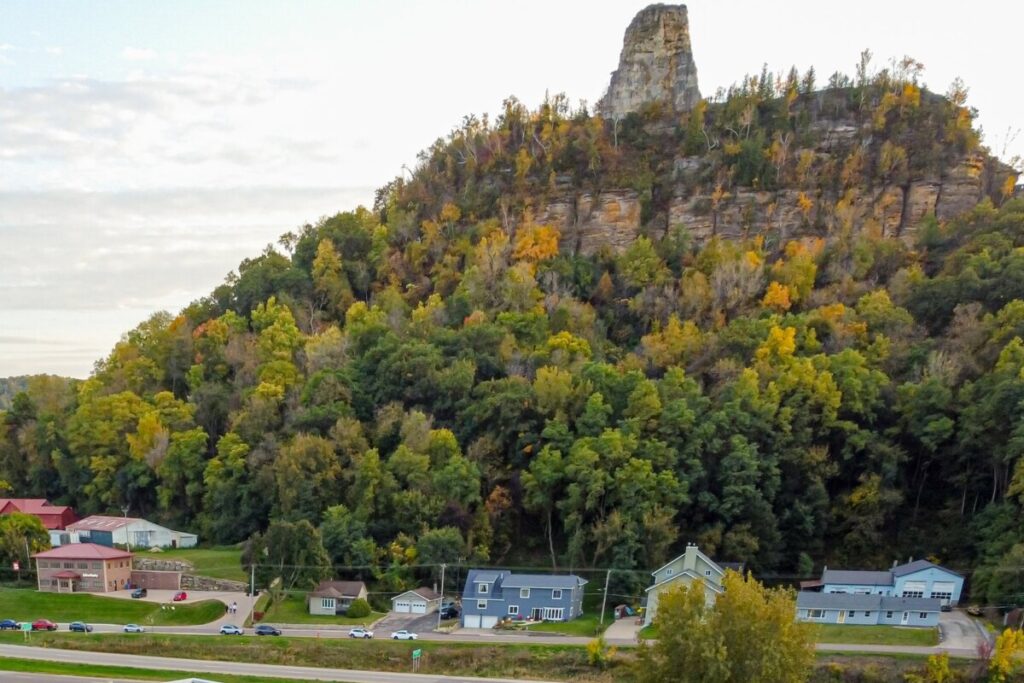
Winona is a Mississippi River city of 25,948 people at the 2020 census, set in the bluff country of southeastern Minnesota under the rock pinnacle called Sugar Loaf. It is known for stained glass. The city itself says Winona was dubbed the stained glass capital of the United States, and it still has a number of working studios.
A river town of mills and lumber
European immigrants settled the area in 1851, and the town grew on wheat milling and lumber. So many of its Polish settlers were Kashubians that Winona became known as the Kashubian Capital of America. The mills and the lumber trade belonged to their century. The question for a river town was what would carry it after them.
A trade that stayed and multiplied
The answer grew out of one shop. After World War II, the father of Jim Hauser started a business repairing stained glass windows in small churches. Hauser Art Glass joined Philadelphia’s Willet Studios in 1977, and the city describes the combined firm as the largest stained-glass enterprise in the country. In 2006 it employed about 70 artists, and the smaller glass studios in Winona were founded mainly by its former workers.
The glass is also on the street. Tiffany Studios of New York made all of the stained-glass windows of the WNB Financial building, the main window of the Merchants Bank building came from Mosaics Art Shops of Minneapolis, and in 2019 Willet Hauser designed and donated the stained glass panels in the Levee Park archway.
Art built on the river
Winona added to the craft rather than relying on it alone. The Minnesota Marine Art Museum opened on July 27, 2006, with an initial collection on loan from Mary Burrichter and Bob Kierlin, the founder of Fastenal, and it specializes in art inspired by water. The Great River Shakespeare Festival has staged several simultaneous productions each summer since 2004, now in the city’s historic Masonic Temple.
Explore Minnesota’s county tables put visitor spending in Winona County at $96.7 million in 2024, supporting 1,411 jobs. The figure is the county’s, not the city’s alone.
Why it worked
Winona did not invent a theme. It kept a trade that was already there and let it multiply: one repair shop became the country’s largest studio, and its workers opened their own. The windows are real, the studios still work, and the claim on the city’s own website rests on both.
That is the transferable part. A town’s most credible draw is often a working trade its own residents practice, and the job is to make it visible on the street, as Levee Park does, and to build a calendar of art around it.
Questions people ask about Winona
Why is Winona, Minnesota called the stained glass capital?
The city says Winona was dubbed the stained glass capital of the United States. It is home to Willet Hauser, which the city calls the largest stained-glass enterprise in the country, and to smaller studios founded mainly by its former workers.
What is the population of Winona, Minnesota?
Winona had 25,948 residents at the 2020 census. It sits on the Mississippi River in the bluff country of southeastern Minnesota, under the rock pinnacle called Sugar Loaf.
What museums and festivals are in Winona?
The Minnesota Marine Art Museum opened in 2006 and specializes in art inspired by water. The Great River Shakespeare Festival has staged several productions each summer since 2004, now in the historic Masonic Temple.
How much do visitors spend in Winona County?
Explore Minnesota's county tables put 2024 visitor spending in Winona County at $96.7 million, supporting 1,411 jobs. The figure covers the whole county, not the city alone.