How Stillwater earned the score
Population About 19,394 (US Census 2020).
Situation A St. Croix River lumber capital whose sawmill economy walked away a hundred years ago, unlike most river towns that died with their mills.
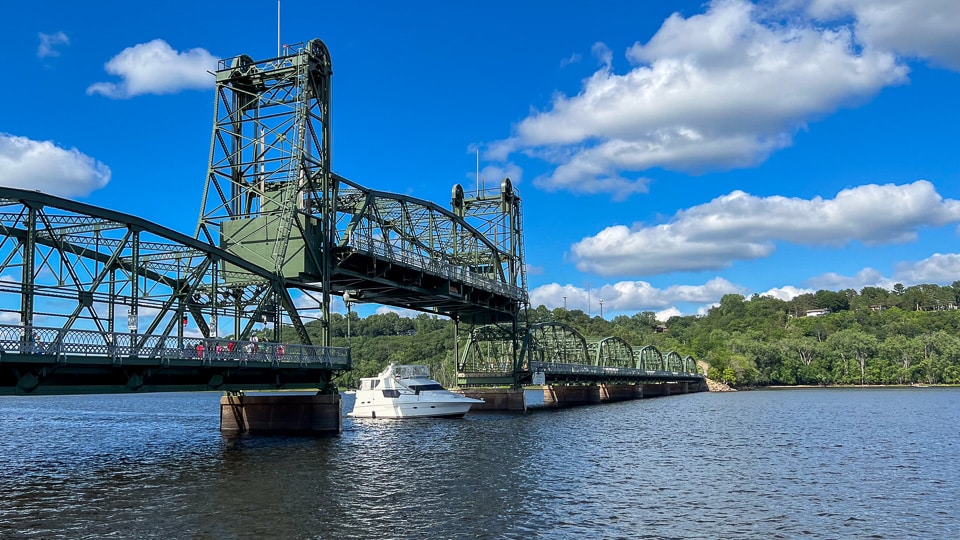
Action Preserved the historic downtown and lumber-baron buildings, converted the 1931 lift bridge into a five-mile trail loop, and stacked a full festival calendar led by 91-year-old Lumberjack Days.
Result A Forbes prettiest-town listing, a year-round visitor economy, and an Instagram audience of about 32,000 that markets the town for free.

Let’s Meet Stillwater, Minnesota
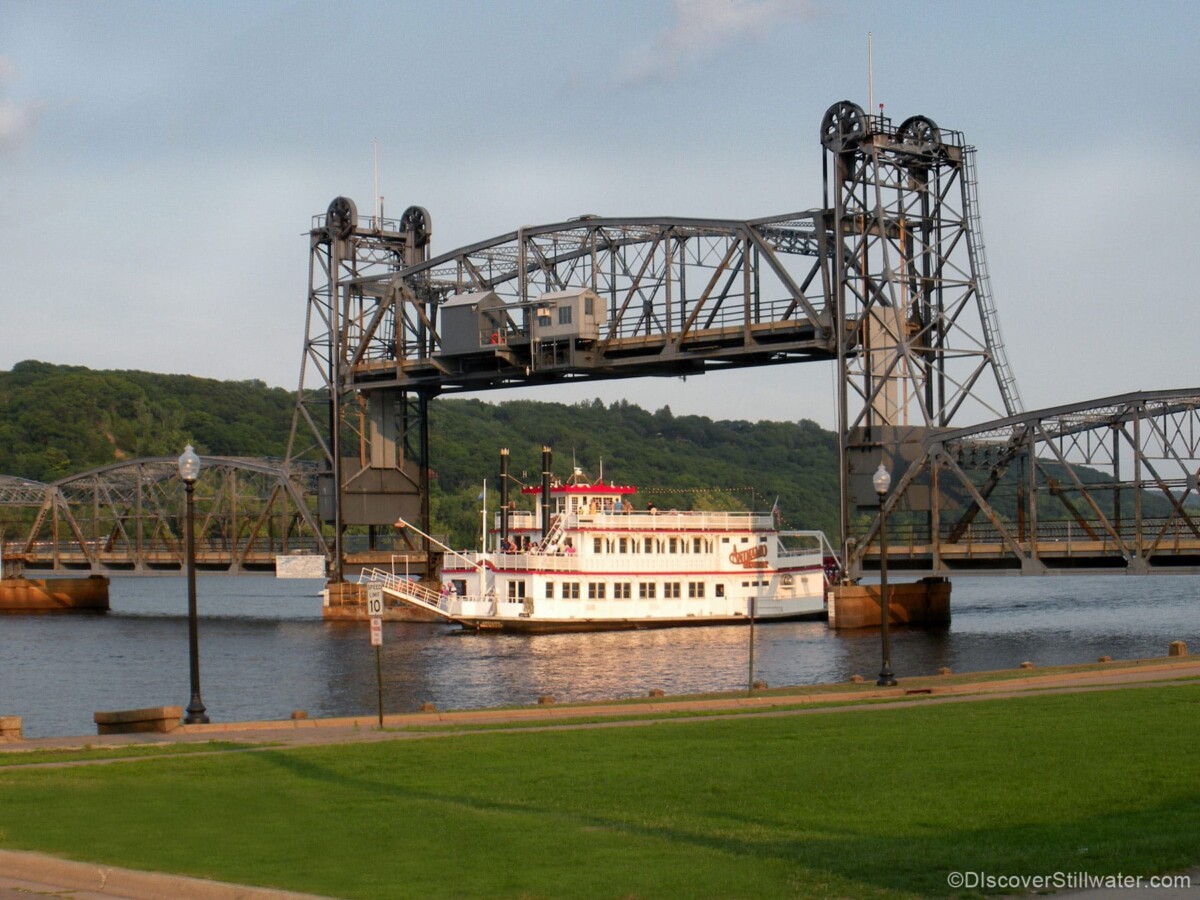
Stillwater is the kind of town that anyone driving in from the west reaches by way of the river, not the highway. The downtown is a single steep slope dropping into the St. Croix, a lift bridge with a vertical-rise center span carrying a pedestrian trail across to Houlton, Wisconsin, and a working waterfront that has been more or less continuously photographed since the 1860s. The population is about 19,400, and the town has the unusual distinction of being recognized as the “Birthplace of Minnesota” because the 1848 territorial convention that started Minnesota’s path to statehood was held at the corner of Myrtle and Main Street.
What gets a tourism writer’s attention here is that the lumber economy that built the town went away a hundred years ago and Stillwater is still standing. Most St. Croix River sawmill towns are not. The reason is the lift bridge, the downtown that did not get bulldozed, and a steady set of festivals that turned a former timber capital into a year-round visitor economy. Forbes named Stillwater one of its prettiest towns in America for a reason.
History
The St. Croix Valley was Ojibwe and Dakota country, and on July 29 and September 29, 1837, the United States signed treaties with both nations to open the valley to settlement. The town that became Stillwater was founded on October 26, 1843, when four partners formed the Stillwater Lumber Company. The settlement preceded Minneapolis by several years and was incorporated as a city on March 4, 1854, the same day as Saint Paul.
The 1848 convention that began the process of admitting Minnesota as a state was held in Stillwater at the corner of Myrtle and Main, which is the basis for the “Birthplace of Minnesota” tagline that still runs across the lift bridge. As more evidence of the town’s nineteenth-century weight, the territorial convention chose three cities for three institutions: Saint Paul became the capital, the University of Minnesota was located at Minneapolis, and Stillwater was given the state’s first prison. The Minnesota Territorial Prison opened in 1853, and at one point held Cole, Jim, and Bob Younger, the three Younger brothers of the James-Younger Gang.
The economy ran on lumber through the second half of the nineteenth century. Logs floated down the St. Croix were collected at the St. Croix Boom Site, two miles upstream of town, and processed in Stillwater’s sawmills. The Stillwater Lumber Company was at one point among the largest mills in the country. Steamboats ran the river heavily between 1860 and 1890; David Swain operated a shipyard and engine works in town, and excursion boats with names like the Verne Swain and the Capitol ran passengers up and down the valley well into the twentieth century. A few descendants of that fleet still operate as event venues on the river today.
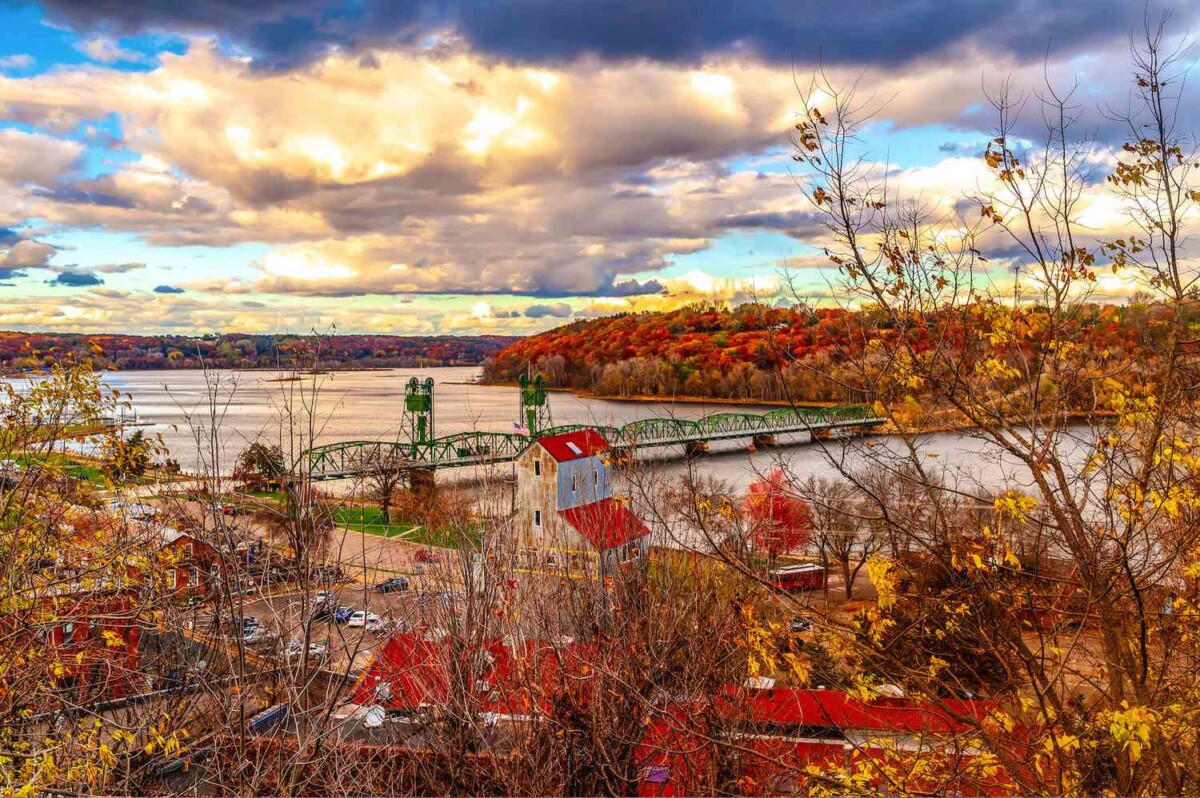
Two pieces of trivia anchor the modern story. On October 18, 1921, Charles Strite invented the automatic pop-up bread toaster in Stillwater; by 1926 the Toastmaster Company was selling a redesigned household version. In 1923 Nelson’s Ice Cream parlor opened, and Nelson’s still pulls TripAdvisor ratings around 4.8 with hundreds of reviews. In 1931 the lift bridge across the St. Croix was completed at a cost of 460,174 dollars, split equally between Minnesota and Wisconsin, and that bridge would do more for the town in the next century than the lumber industry ever did. The bridge carried Minnesota State Highway 36 until 2017, when it closed to vehicle traffic. In 2020 it became part of a five-mile loop trail running through Stillwater and Houlton, Wisconsin. The closure was the moment Stillwater stopped having a highway running through downtown and started having a destination running through downtown.
Stillwater’s Creative City Development
Stillwater did not have a single visionary the way Ashland had Angus Bowmer or Leavenworth had Project LIFE. What it had instead was a chain of small, defensive decisions over fifty years that added up to a tourism economy. The Victorian-era buildings the lumber barons left behind were never demolished and replaced. Many of them were converted into bed-and-breakfasts and boutique hotels. The downtown stayed downtown. The festivals were stacked one on top of another until the calendar was full.
Historic preservation and the downtown stock
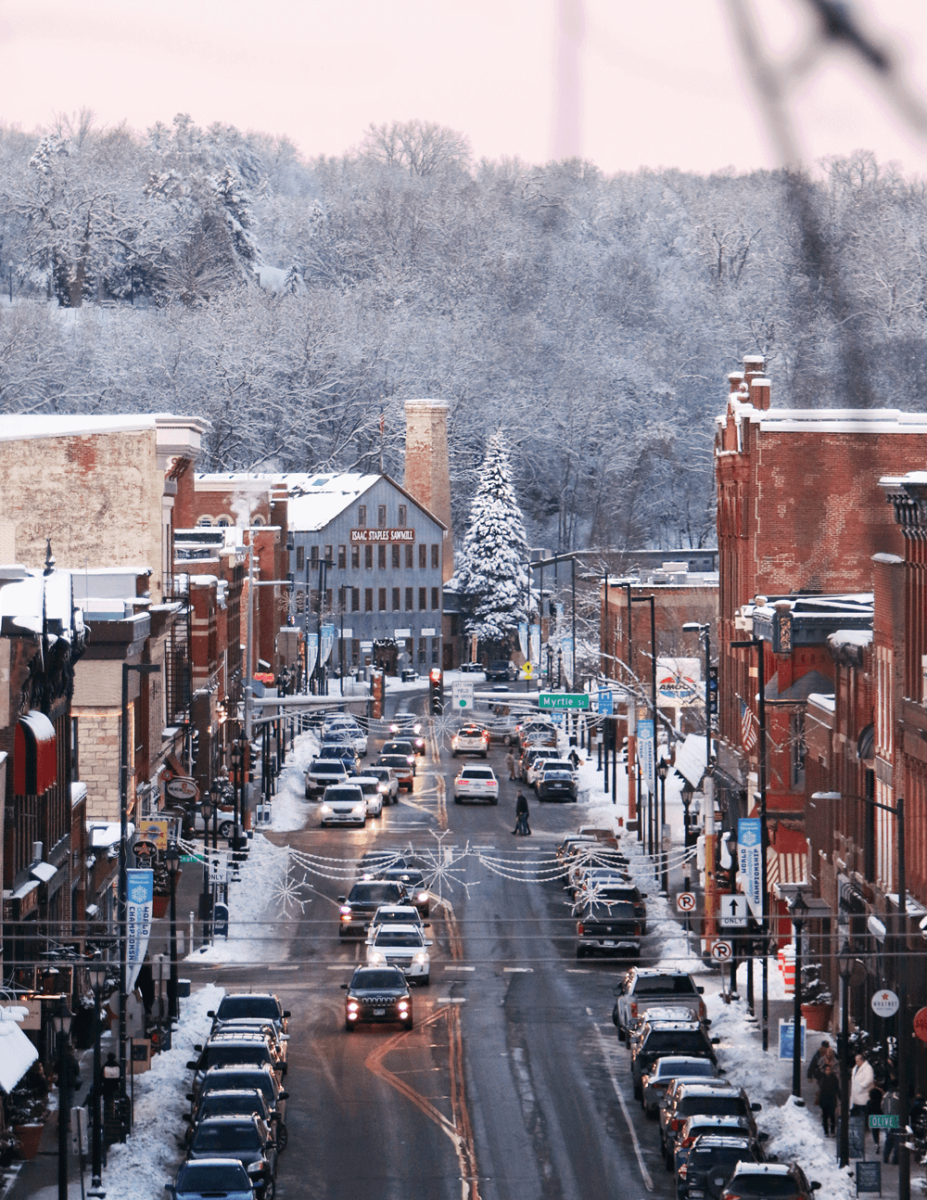
Stillwater’s downtown survived a wave of mid-century commercial redevelopment that gutted comparable river towns elsewhere in the upper Midwest. The old lumber baron mansions on the bluffs above Main Street were converted to bed-and-breakfasts and inns rather than torn down for new construction. Hotel Crosby, a boutique luxury property in a historic downtown building, anchors the modern lodging segment, with Water Street Inn, Lora Hotel, the Country Inn and Suites, and a cluster of B and B properties filling out the inventory. The DiscoverStillwater 2025 visitors guide lists more than thirty downtown lodging options.

The festival calendar
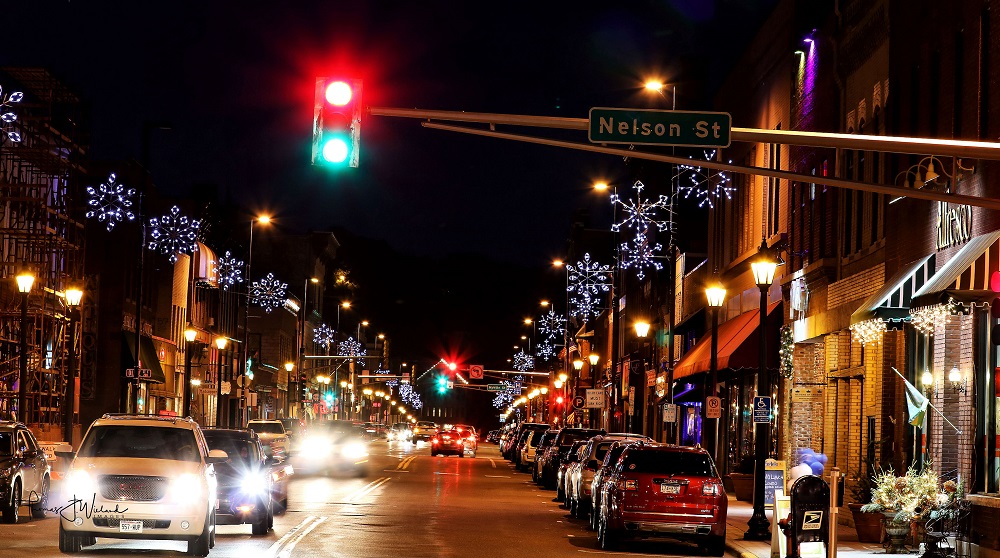
The Discover Stillwater operation has built a festival year that does not collapse outside the summer. Lumberjack Days, in July, has run for ninety-one years and brings a parade, a 5K, log-rolling contests, and crowds that fill the bluffs above the river. Harvest Fest, in October, anchors the fall. Hometown for the Holidays, from mid-November through early January, is the multi-week Christmas event that brings holiday lighting, a parade, and the visitor segment that drives DiscoverStillwater’s “Christmas in Stillwater” social campaign. Summer Tuesdays, a weekly outdoor program in July and August, is in its twenty-fourth year. Opera on the River, a seventh-year program from Pine City Opera, sets a small stage on the riverfront. Five recurring annual return drivers is the maximum on the VIS schema; Stillwater hits it.
The lift bridge and the trail loop
The conversion of the lift bridge from a state highway to a pedestrian and bicycle trail in 2017 is the single biggest infrastructure decision of the modern Stillwater story. The St. Croix Crossing loop, a five-mile circuit using the new highway bridge two miles downstream and the old lift bridge in the center of downtown, dumps walkers and cyclists straight into Main Street. The trail is open year-round. The Snowflake Trail, a marked walking loop with seasonal lighting, runs the same downtown footprint in winter, which extends the festival programming through the cold months.
By the Numbers
The category leaders were Brand and Stay; the laggard was Anchor at 70.0, which reads as “the town has a great downtown but no single bookable signature experience yet.” The downtown vitality and curb-appeal categories are pending an in-person audit. TripAdvisor reviews for the top attractions cluster at 4.4 to 4.8 stars: Lift Bridge 4.4 over 209 reviews, Nelson’s Drive-In 4.8 over roughly 300 reviews, Lolo American Kitchen 4.6 over 592 reviews. CrimeGrade gives the town a C overall safety grade, mid-range for a tourism-active small city in the Twin Cities exurbs. The Discover Stillwater Instagram audience sits at about 32,000 followers; their email newsletter and Facebook channel are active year-round.
Community Benefits
The benefit to residents shows up in two places. First, downtown businesses are open year-round because the festival calendar never empties them out. Second, the bridge-to-trail conversion in 2017 took a state highway off Main Street, which dropped car traffic by orders of magnitude and gave the downtown the pedestrian feel that visitors photograph and that residents actually walk in. The 1996 to 2015 annexation of Stillwater Township expanded the city’s boundaries west to Manning Avenue and north toward Highway 96; new growth has not eroded the historic downtown because the new fabric extends outward, not over the top.
Why Other Towns Should Follow Stillwater’s Lead
Stillwater’s lesson is the one that does not photograph well: do not demolish what you have. The town did not catch a single break for a hundred years; the lumber economy walked away, the prison closed, the steamboat passenger traffic ended, the highway was forced through the lift bridge and then taken back off it. At every junction Stillwater chose to keep the old buildings, keep the lift bridge, keep the riverfront walkable, and add one more festival to the calendar instead of one more strip mall to the edge of town. The result is a Forbes “prettiest town” listing, an Instagram audience that does the marketing for free, and a year-round visitor economy in a town that should have died with its sawmills. The play other towns can run is: do not bulldoze your downtown waiting for the next anchor industry, because that next anchor industry is the downtown itself.