
What Uyuni is known for
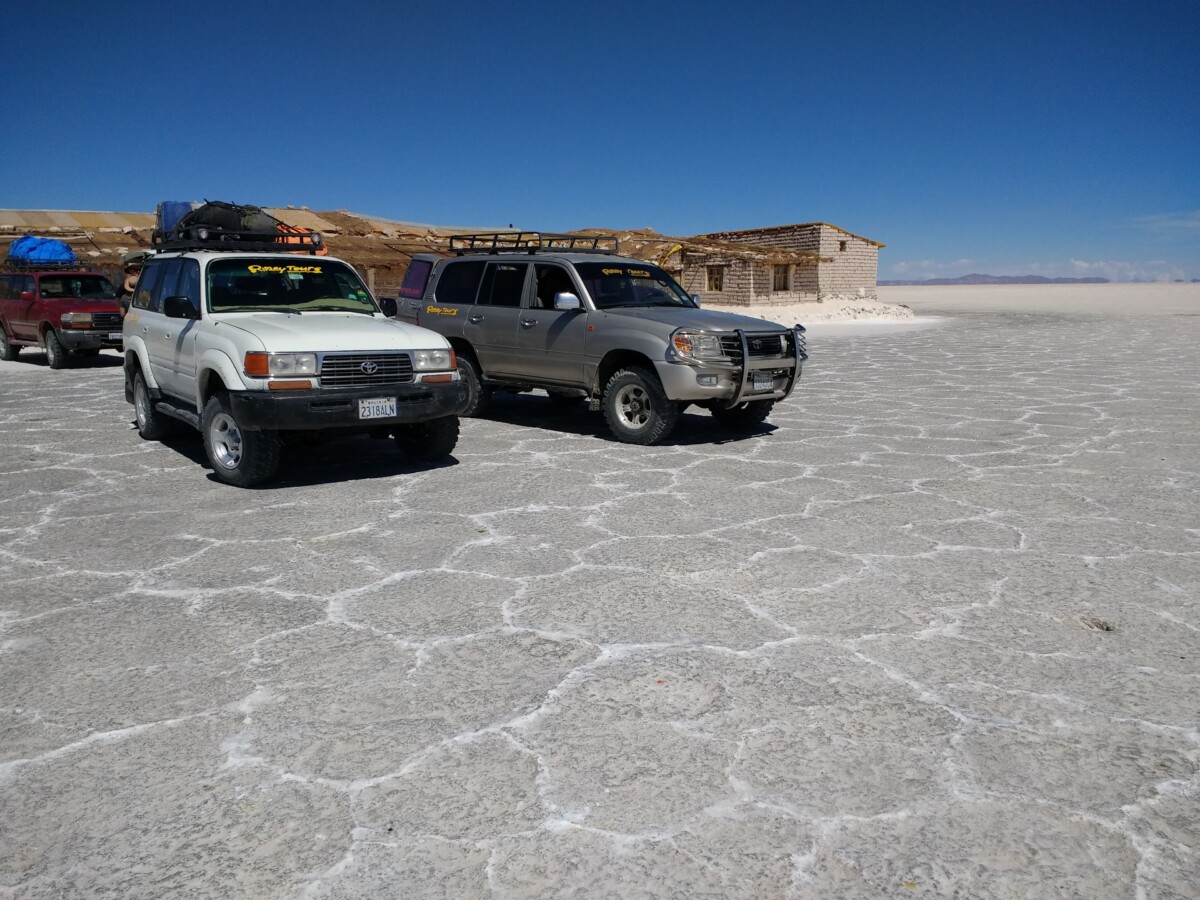
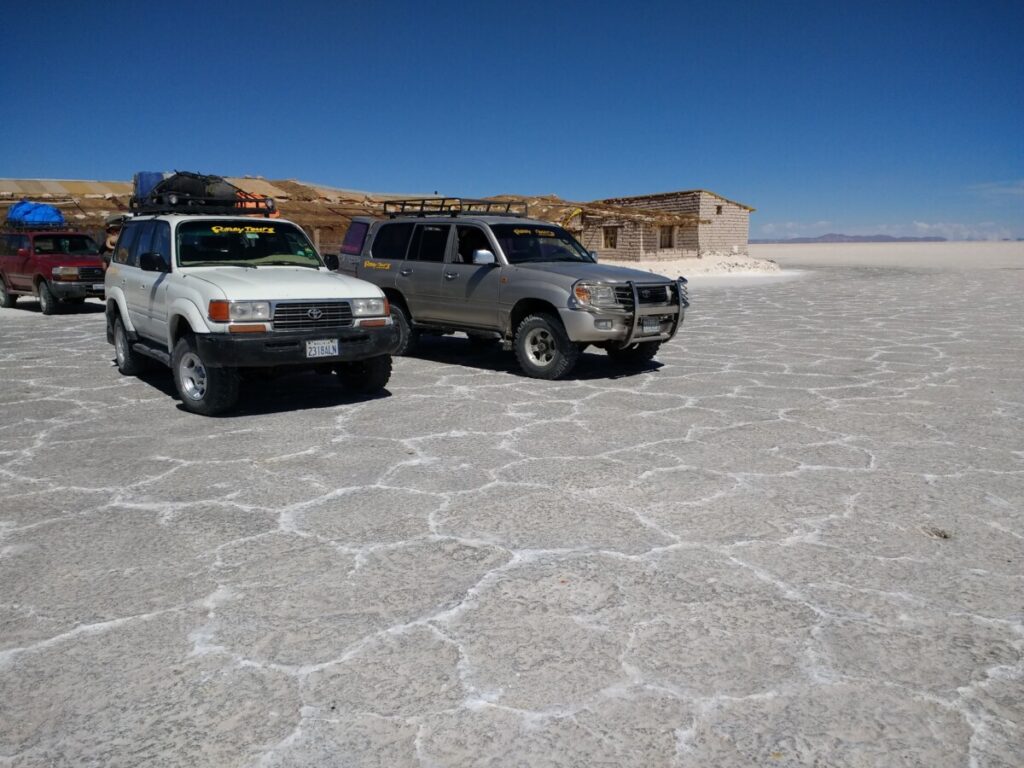
Uyuni is an altiplano town of 29,672 people at 3,700 metres, known for hotels built of salt blocks cut from the flat at its door. When the mines failed it was left with rusting locomotives, and it learned to quarry its lodging from the Salar de Uyuni. It now takes roughly 60,000 visitors a year.
A junction with nothing left to join
Uyuni was founded in 1890 as a trading post on the Bolivian altiplano at 3,700 metres. British engineers began the railways in 1888 and finished in 1892, and four lines converge here, from La Paz via Oruro, from Calama in Chile, from Potosi and from Villazon. At its door lies the Salar de Uyuni, 10,582 square kilometres of crust up to eight metres thick.
In the 1940s the mining industry collapsed, partly through mineral depletion. The freight went and the locomotives stayed, rusting on sidings outside town. The salt was no substitute, with less than 25,000 tonnes taken from the salar in a year.
A hotel of salt, then a second attempt
In 1993 builders raised a hotel out on the flat itself, with walls and floors of cut salt blocks, twelve double rooms, one shared bathroom and no shower. It was finished in 1995. The draw was sleeping inside the thing you had come to look at. Waste had to be collected by hand, mismanagement polluted the salar, and in 2002 the hotel was pulled down.
Around 2007 a replacement went up on the eastern edge of the flat, built of about a million salt blocks of 35 centimetres, its sanitary system rebuilt to meet government rules.
What the salt earns
Uyuni now takes roughly 60,000 visitors a year, and the dead locomotives outside town became a stop on the tour. Bolivia holds about 22 percent of the world’s known lithium resources, most of it under the same flat.
Why it worked
It worked on the second attempt. The first salt hotel proved the idea and damaged the asset, sited out on the flat where waste had to be hauled by hand until the pollution forced it down in 2002. The rebuild moved to the edge and plumbed itself properly.
Scenery alone was never the point, since the salar had always been there. What Uyuni added was a reason to stay the night, made from the only material it owned in quantity.
Questions people ask about Uyuni
Why is Uyuni, Bolivia famous?
Uyuni is known for its salt flat, the Salar de Uyuni, and for hotels built of salt blocks cut from it. A dead rail junction at 3,700 metres, it now takes roughly 60,000 visitors a year, and the rusting locomotives outside town became a stop on the tour.
When was the first salt hotel built at Uyuni?
In 1993 builders raised a hotel out on the salt flat itself, finished in 1995, with walls and floors of cut salt blocks. Waste had to be collected by hand and mismanagement polluted the salar, so it was pulled down in 2002.
Where is the replacement salt hotel at Uyuni?
Around 2007 a replacement went up on the eastern edge of the flat at Uyuni, built of about a million salt blocks of 35 centimetres, with its sanitary system rebuilt to meet government rules.
How big is the Salar de Uyuni?
The Salar de Uyuni covers 10,582 square kilometres of crust up to eight metres thick, at the door of the town. Bolivia holds about 22 percent of the world's known lithium resources, most of it under the same flat.