
What Matjiesfontein is known for
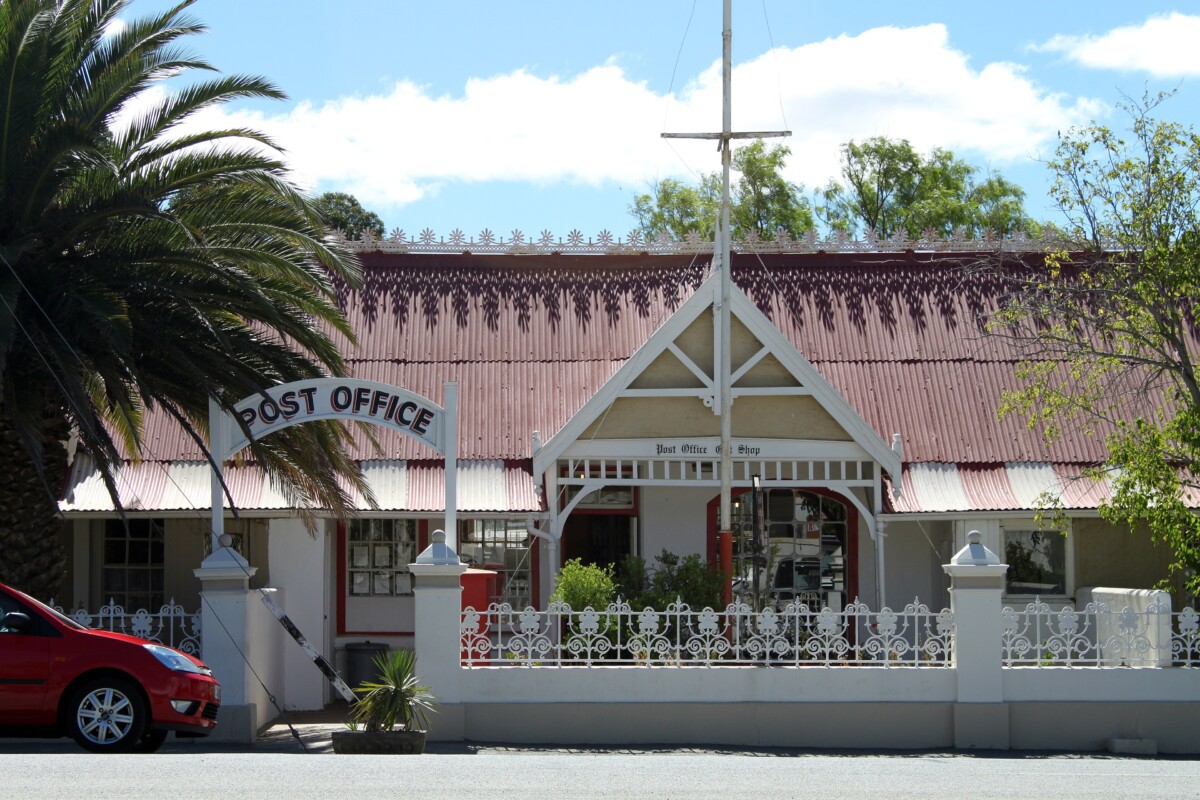
Matjiesfontein is a village of just over four hundred people on the open Karoo veld. It was raised from a railway watering point into a Victorian spa town, left to decay, then restored so fully that the state declared the whole place a national monument on 12 September 1975.
A name on a timetable
In 1884 Matjiesfontein was a name on a railway timetable, a watering point for steam engines crossing the Karoo on the line inland from Cape Town. The spring, named for reeds Khoekhoen cut for mats, served a small depot and farm. Into this arrived James Douglas Logan, a Scottish railwayman with a weak chest.
A siding in the middle of the Karoo offered a passenger nothing but a brief stop for water. To be more than a place the train paused, Matjiesfontein had to manufacture a reason for people to get off, stay the night and spend. The asset closest to hand was the dry air itself, held to be good for weak lungs.
Dressing a halt as a spa
Logan bought the land, opened a refreshment station, then dressed the halt in full Victorian spa costume: formal gardens, a cricket ground, street lamps shipped from London and, in 1899, a grand hotel. He sold the dry Karoo air as a cure and drew the ill, fashionable and famous to take it.
Decay, then protection
Logan died in 1920 and the village declined until hotelier David Rawdon bought it in 1968, reopening it in 1970. On 12 September 1975 the state declared the whole village a national monument. Today roughly four hundred residents keep one grand hotel, museums and a street of protected Victorian buildings for travelers off the N1.
Why it worked
Matjiesfontein committed to one improbable identity and it outlived a long collapse. Logan did not conjure a spa out of nothing; the spring was already named, in country first inhabited by Khoikhoi herders and San hunter gatherers, and a depot and a farm stood on the site.
He sold the dry Karoo air as a cure, down to imported London lampposts. The village then decayed, was bought and restored by David Rawdon in 1968, and in 1975 the state declared what Rawdon had rebuilt a national monument.
Questions people ask about Matjiesfontein
Why is Matjiesfontein, South Africa famous?
Matjiesfontein is known as a Victorian spa town on the open Karoo veld, raised from a railway watering point. The state declared the whole village a national monument on 12 September 1975, and about four hundred residents keep its grand hotel and museums.
Who turned Matjiesfontein into a Victorian spa?
James Douglas Logan, a Scottish railwayman with a weak chest, bought the land, opened a refreshment station and dressed the halt in Victorian spa costume: formal gardens, a cricket ground, London street lamps and, in 1899, a grand hotel.
Who restored Matjiesfontein?
Logan died in 1920 and Matjiesfontein declined until hotelier David Rawdon bought it in 1968, reopening it in 1970. In 1975 the state declared what Rawdon had rebuilt a national monument.
What was sold at Matjiesfontein as a cure?
Logan sold the dry Karoo air as a cure, held to be good for weak lungs, and drew the ill, fashionable and famous to take it. The Matjiesfontein spring was already named, for reeds Khoekhoen cut for mats.