
What Coober Pedy is known for
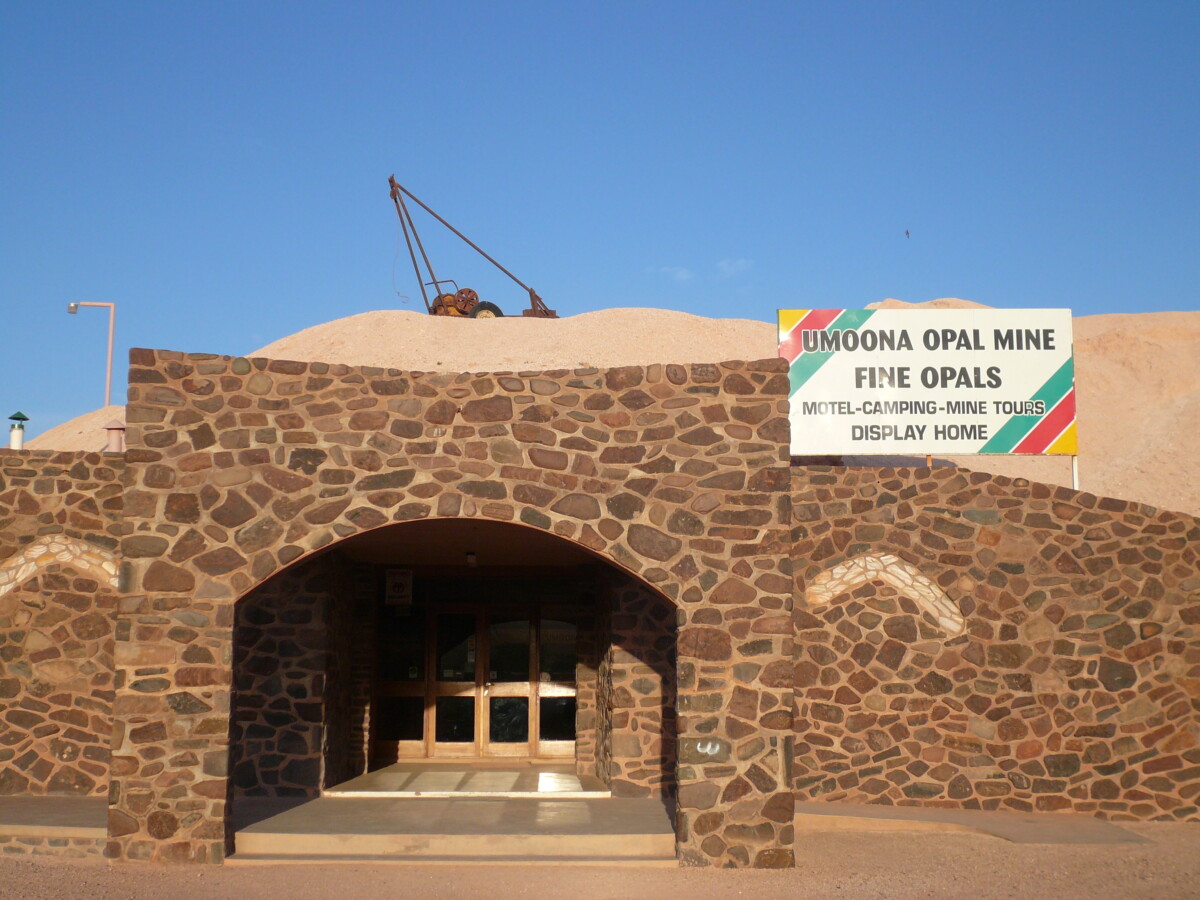
Coober Pedy is a town of fewer than 1,500 people on the edge of the Stuart Ranges scarp, in the semi-desert of South Australia. It turned the holes it dug to escape the heat into the reason to visit. Roughly half the town still lives underground.
Digging in against the heat
Coober Pedy sits where January maximums average 36.7 C. Opal miners found life above ground unbearable, so they dug in, cutting homes, then shops and churches, into the soft rock.
This is Arabana country, with Kokatha, Yankunytjatjara and Antakirinja ties, and Western Desert people travelled to the Stuart Range for quarry stone long before opal. What the 1915 opal camp lacked was not travelers but a sealed road to bring them.
A sealed road and a hotel underground
The Stuart Highway was fully sealed in February 1987, and the traffic followed. Underground churches dated from 1967 and a golf course without a blade of grass from 1976. In 1988 the first underground hotel opened, a dugout a traveler would pay to sleep in. The town called itself the opal capital of the world.
What the dugouts earn
Coober Pedy draws around 150,000 visitors a year to a town of under 1,500. They come for dugout hotels, underground churches and mullock heaps so alien filmmakers use them as an off-world backdrop. Port Augusta, the nearest city, is 540 km off, and Adelaide is 846 km, about 8 to 10 hours by road.
Why it worked
Coober Pedy took its biggest liability and made it part of the pitch. The heat that drove miners underground became a room travelers would pay to sleep in, and the February 1987 sealing of the Stuart Highway put passing traffic at the door.
It never traded mining for tourism: the field still works 70 individual mining areas and supports over 30 opal retailers, and Kanku-Breakaways Conservation Park pulls its own visitors 25 km north. The dugout is the pitch, not the whole town.
Questions people ask about Coober Pedy
Why is Coober Pedy, South Australia famous?
Coober Pedy is known for living underground. Opal miners dug homes, shops and churches into the soft rock to escape the heat, and the town now draws around 150,000 visitors a year to dugout hotels and underground churches.
When did the first underground hotel open in Coober Pedy?
In 1988 the first underground hotel opened at Coober Pedy, a dugout a traveler would pay to sleep in. The Stuart Highway had been fully sealed in February 1987, and the traffic followed.
How many people live underground in Coober Pedy?
Roughly half the town still lives underground. Coober Pedy has fewer than 1,500 people, and January maximums average 36.7 C in the semi-desert of South Australia.
Whose country is Coober Pedy on?
This is Arabana country, with Kokatha, Yankunytjatjara and Antakirinja ties, and Western Desert people travelled to the Stuart Range for quarry stone long before the opal camp of 1915.