
What Woodstock is known for
Woodstock is a picture-perfect Vermont village that turned out to be the cradle of American conservation. In 1864 George Perkins Marsh, born in the village in 1801, published Man and Nature, credited with launching American conservation. Woodstock is now home to a national historical park that the Park Service calls its only unit devoted to the history of conservation.
Pretty is common in Vermont
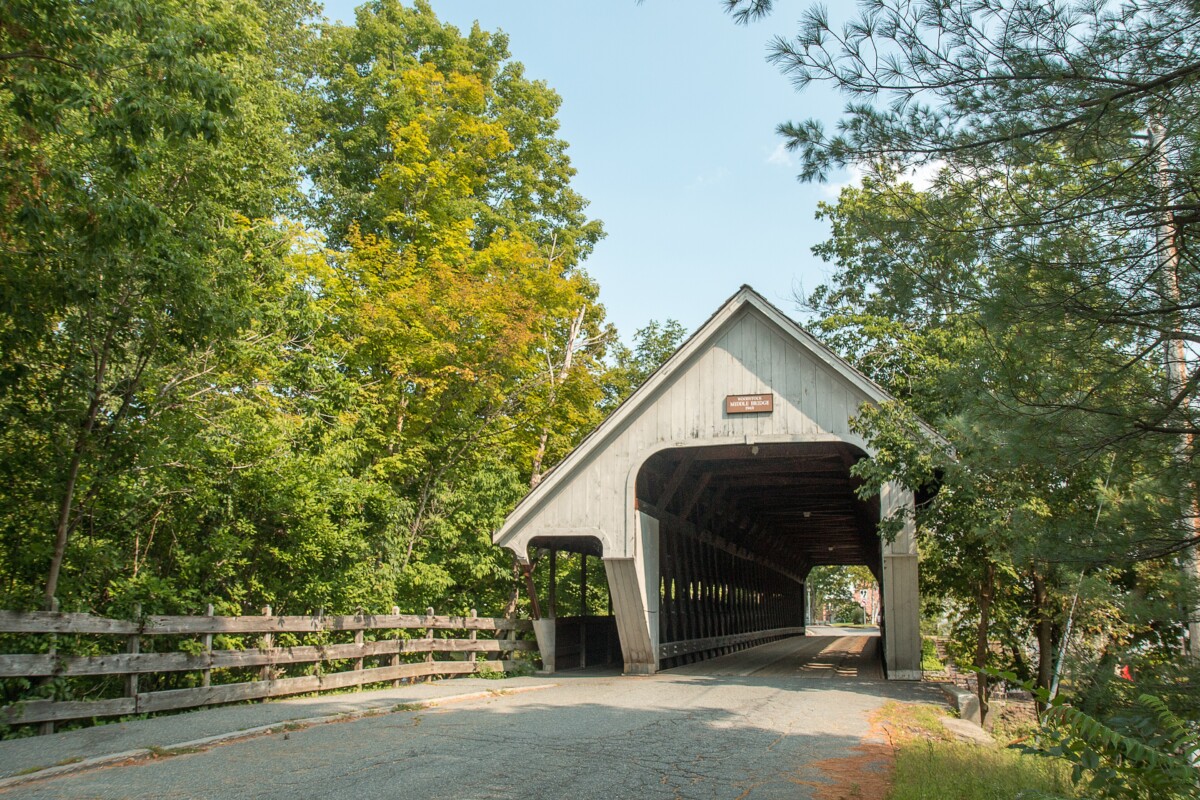
Woodstock looked like the platonic New England village: a green ringed by Federal and Greek Revival homes, covered bridges, a church bell and the Ottauquechee sliding past. But pretty is common in Vermont. Dozens of villages compete for the same leaf-peepers and second-home buyers, and scenery alone does not always give travelers a reason to stop.
A town that wants to be more than a postcard needs a claim no neighbor can copy. Woodstock had to find something singular, a story rooted in the place itself rather than the same beauty everyone else was selling.
A claim hiding in the soil
Woodstock’s claim was hiding in its own soil. George Perkins Marsh watched the hills stripped bare and in 1864 published Man and Nature. His boyhood farm passed to Frederick Billings, who reforested the slopes, then to the Rockefellers, who gave it to the nation in 1992.
A national park for an idea
The result is Marsh-Billings-Rockefeller National Historical Park, which the Park Service calls its only unit devoted to the history of conservation, and the only national park in Vermont apart from the Appalachian Trail. Visitors now walk 20 miles of carriage roads and trails through one of the oldest professionally managed forests in America.
Why it worked
Woodstock had the same scenery as a hundred rivals, so scenery could never set it apart. What it owned that none of them could claim was the literal birthplace of American conservation, an idea born in its own hills and written down in 1864. It also raised the first ski tow in the United States, on Gilbert’s Hill in 1934.
Turning the conservation story into a national park, paired with a working dairy from 1871, gave a lovely village a claim no neighbor could duplicate. The draw was built on purpose, not by scenery alone.
Questions people ask about Woodstock
Why is Woodstock, Vermont famous?
Woodstock is known as the cradle of American conservation. George Perkins Marsh, born there in 1801, published Man and Nature in 1864, and the village is now home to Marsh-Billings-Rockefeller National Historical Park, devoted to the history of conservation.
Who gave Woodstock's Marsh-Billings-Rockefeller park land to the nation?
The Rockefellers gave the former Marsh boyhood farm to the nation in 1992. George Perkins Marsh's boyhood farm passed to Frederick Billings, who reforested the slopes, and then to the Rockefellers.
Where was the first ski tow in the United States?
Woodstock raised the first ski tow in the United States, on Gilbert's Hill in 1934. It is one of the claims that sets the village apart from other Vermont villages with the same scenery.
How far can you walk in Woodstock's national park?
Visitors walk 20 miles of carriage roads and trails through one of the oldest professionally managed forests in America. The Park Service calls the park its only unit devoted to the history of conservation.