
What Ponoka is known for
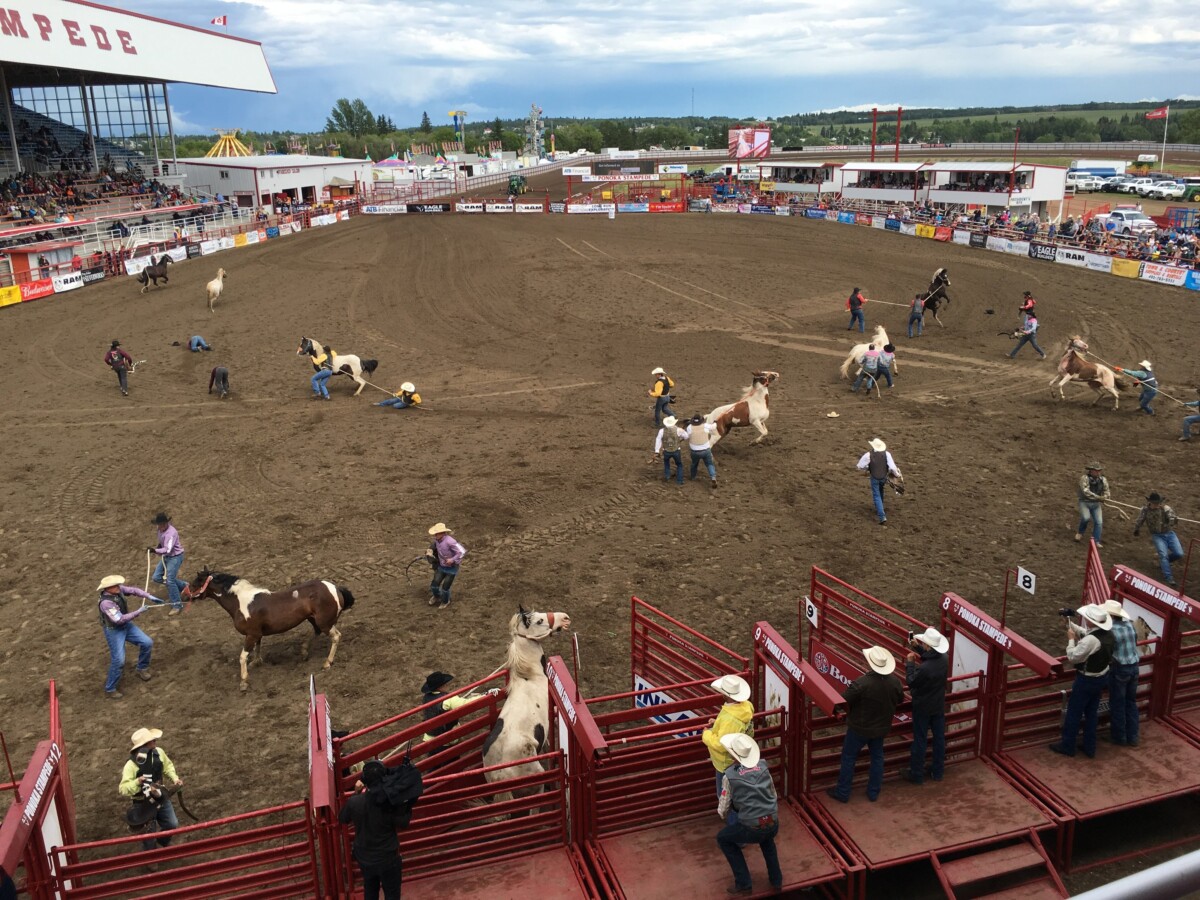
Ponoka is an Alberta town of 7,331 people at the 2021 census, and it is known for the Ponoka Stampede. In 1936 the Ponoka Sports Association ran a two-day Stampede, Carnival and Sports Event over the July 1 holiday, which the association’s history calls the Stampede’s inception, and about 3,000 people came. By a 2021 profile, the Stampede drew as many as 80,000 fans over its rodeo week.
Blackfoot, Tsuut'ina and Cree land
Blackfoot and Tsuut’ina people occupied this part of central Alberta first. The Cree began migrating into the region around the 1730s, and by the 1830s they increasingly occupied the lands around present-day Ponoka; a smallpox epidemic in 1870 devastated the area’s Indigenous population. Ponoka sits on Treaty 6 land; the treaty was signed in 1876 at Fort Carlton and Fort Pitt. Maskwacis, partly within Ponoka County, is home to four Cree nations, the Ermineskin Cree Nation, Samson Cree Nation, Louis Bull Tribe and Montana First Nation, each a party to Treaty 6; its five reserves counted 7,663 people at the 2016 census.
A siding called Ponoka
The town began in 1891 as a railway waypoint between Edmonton and Calgary, and the first train stopped at the future Ponoka site on July 27, 1891. The siding took the name Ponoka, apparently the Blackfoot word for elk, though Cree people were then settling the immediate area; an elk is on the town’s flag. Ponoka became a town in 1904, and the Ponoka Sports Association was formed around 1920, first organizing events to raise money for a community restroom.
The first Stampede
The Stampede’s first manager was George MacKeddie, a one-handed cowboy who had lost his hand in a 1923 roping accident. A separate account says he was a North West Mounted Police and war veteran. Admission cost 25 cents, prize money ran from 50 cents to C$6 an event, and the program listed saddle bucking, bareback riding, wild cow milking, pony races, roman races, chariot racing and an event the organizers called “Indian races.” Chuckwagon racing was added in 1941 with help from the Dorchester family.
Year after year
The association puts prize money above C$885,000, while the Canadian Pro Rodeo Association recorded a total payout of C$551,924.49 for the 2024 Stampede. The association says more than 800 volunteers donate over 3,000 hours during Stampede week. Frank Mickey volunteered from 1947 until his death in November 2025, and a 2027 expansion, begun after the 90th Stampede in July 2026, is adding 16 luxury suites. The Stampede grew on Treaty 6 land, in a town given a Blackfoot name while Cree people were settling the area, and its first program billed an event called “Indian races.”
Questions people ask about Ponoka
When did the Ponoka Stampede start?
The Ponoka Stampede Association's own history dates the Stampede's inception to 1936, when the Ponoka Sports Association ran a two-day Stampede, Carnival and Sports Event over the July 1 holiday. About 3,000 people came, admission cost 25 cents, and chuckwagon racing was added in 1941 with help from the Dorchester family.
How big is the Ponoka Stampede?
By a 2021 profile, it drew as many as 80,000 fans over its rodeo week. The association says more than 800 volunteers donate over 3,000 hours during Stampede week and puts prize money above C$885,000; the Canadian Pro Rodeo Association recorded a total payout of C$551,924.49 for the 2024 Stampede.
When is the Ponoka Stampede held?
The 2024 Stampede ran from June 25 to July 1, and the Stampede's own site lists the 91st Ponoka Stampede for June 28 to July 4, 2027. The first, in 1936, was held over the July 1 holiday.
What does Ponoka mean?
Ponoka is apparently the Blackfoot word for elk, and the animal appears on the town's flag. The railway siding the town grew from took the name, though Cree people, not Blackfoot, were then settling the immediate area.
What is Maskwacis?
Maskwacis, partly within Ponoka County, is home to four Cree nations: the Ermineskin Cree Nation, Samson Cree Nation, Louis Bull Tribe and Montana First Nation, each a party to Treaty 6. Its five reserves had 7,663 people at the 2016 census. It was called Hobbema until it renamed itself Maskwacis, Cree for bear hills, on January 1, 2014.