What Lucas is known for
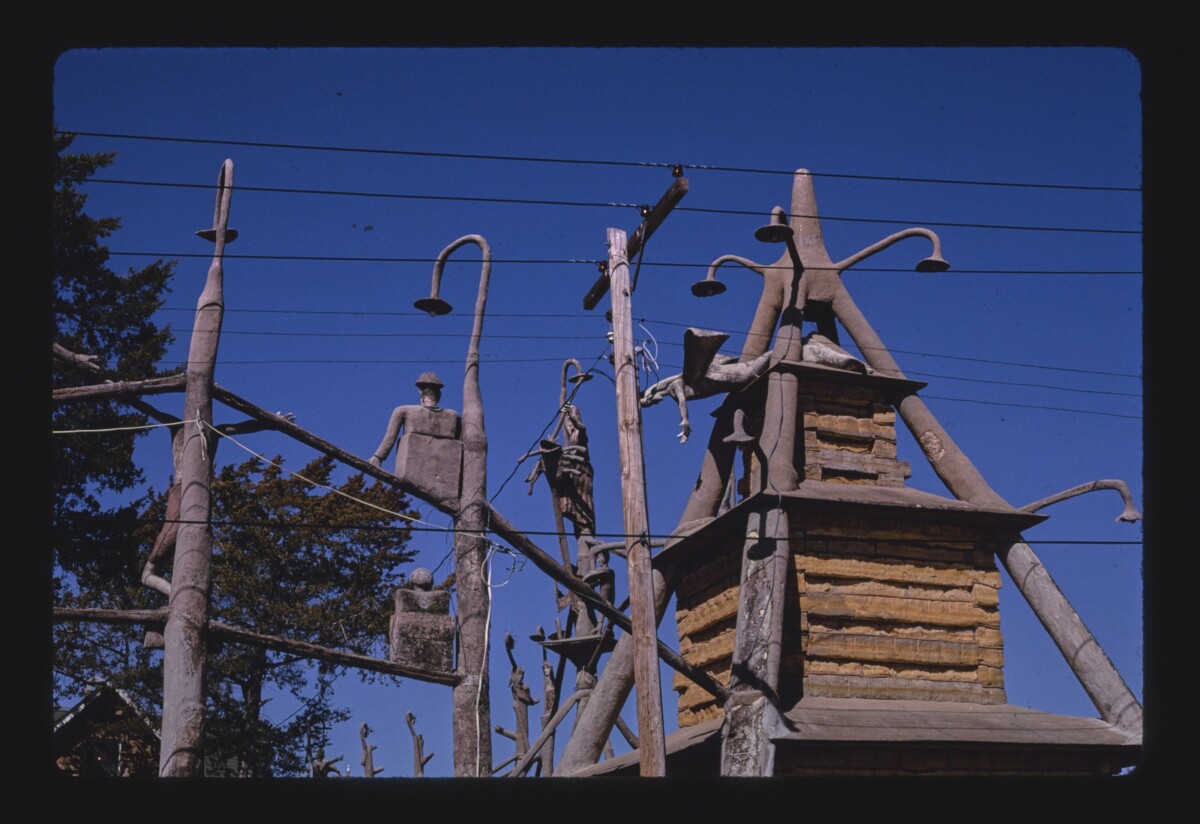
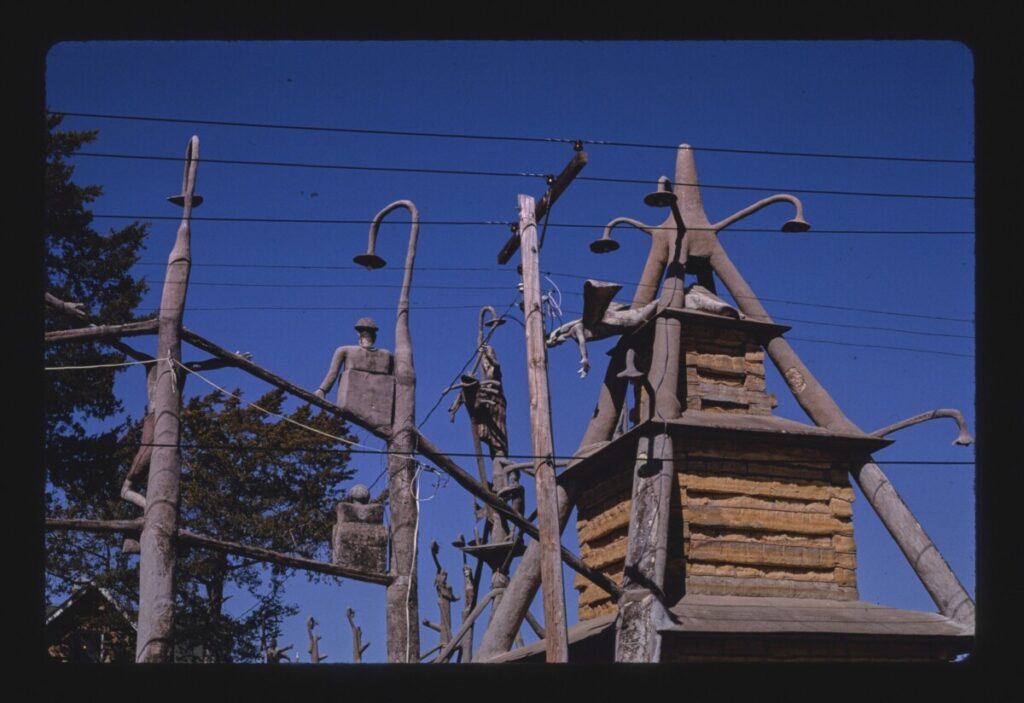
Lucas is a Kansas town of 332 people at the 2020 census, known for grassroots art and for the concrete Garden of Eden that Civil War veteran S. P. Dinsmoor built there. In 1996 Governor Bill Graves named Lucas the Grassroots Art Capital of Kansas, and the Kohler Foundation reports that the garden draws over 10,000 visitors a year.
Plains Indian hunting ground
The Kansas Historical Society calls Russell County, where Lucas sits, prime hunting ground for Plains Indians, and the county saw no white settlement before 1869. Nations native to Kansas include the Arapaho, Cheyenne, Comanche, Kanza, Kiowa, Osage, Pawnee and Wichita. The Kanza held a reservation centered on Council Grove, 256,000 acres under an 1846 treaty and 80,000 by 1860, until the United States forced them out of Kansas on June 4, 1873. Lucas began in 1877 as Blue Stem.
A veteran's concrete Eden
Samuel Perry Dinsmoor, born in Ohio in 1843, saw eighteen major battles of the Civil War, including Gettysburg, then taught school in Illinois before farming, and came to Kansas in 1888. He retired and began a second career as a sculptor. The Kansas Sampler Foundation says locals at first tried to run him out of town, and that he charged admission, joking that he would wink at anyone who paid. He built a twelve-room limestone log cabin and surrounded it with concrete sculpture.
Who kept the garden
Dinsmoor died in 1932, and the garden was listed on the National Register of Historic Places in 1977. From 1989 it belonged to Garden of Eden Inc., more than a dozen Lawrence residents and others with University of Kansas ties, who sold it to the Kohler Foundation by July 2011. The foundation calls it its largest preservation project to date; after about five months of conservation, it gave the restored site to the nonprofit Friends of S.P. Dinsmoor’s Garden of Eden, of Lucas.
A town that made more of its own
The Kansas Grassroots Art Association, organized in the 1960s to preserve and document the town’s grassroots art environments, later developed the Grassroots Art Center, which has operated downtown since 1995. Florence Deeble made colored-concrete postcard scenes and a miniature Mount Rushmore in her yard, and since 2002 her former house has been the Garden of Isis, a gallery of recycled-material art by Mri-Pilar. A 2008 community effort built Bowl Plaza, a restroom shaped like a toilet, which placed second in the 2014 America’s Best Restroom Contest. Some people objected, recalled Rosslyn Schultz, then the art center’s director: “We are not having a big toilet on Main Street!”
Lucas once tried to run its sculptor out of town; later it built a folk art identity around his garden.
Questions people ask about Lucas
Why is Lucas, Kansas known for grassroots art?
In 1996 Kansas Governor Bill Graves named Lucas the Grassroots Art Capital of Kansas. The town is home to S. P. Dinsmoor's Garden of Eden, the Grassroots Art Center, Florence Deeble's former house, now the Garden of Isis gallery, and Bowl Plaza, a toilet-shaped public restroom built through a 2008 community effort.
What is the Garden of Eden in Lucas, Kansas?
The home and sculpture garden of Samuel Perry Dinsmoor, a Civil War veteran: a twelve-room limestone log cabin surrounded by concrete sculpture, including a Labor Crucified figure among a doctor, a lawyer, a preacher and a capitalist. It was listed on the National Register of Historic Places on April 28, 1977.
When did S. P. Dinsmoor build the Garden of Eden?
Sources disagree. The garden's own website says he started building in 1904, Wikipedia says he built the cabin between 1905 and 1907, and the Kansas Sampler Foundation dates the start of construction to 1907. He kept working until his health stopped him, and he died on July 21, 1932.
Is S. P. Dinsmoor buried at the Garden of Eden?
Yes. Dinsmoor built a mausoleum on the site, and his body lies there in a glass-lidded concrete coffin beside his first wife's. He also arranged a double-exposed photograph of himself viewing his own corpse. He died on July 21, 1932.
What is Bowl Plaza in Lucas?
A public restroom shaped like a toilet, built through a 2008 community effort. Its mosaics, made from donated bottles, pottery, dishes, tiles, toys and mirrors, include a 16 foot mosaic lid and a 6 foot sculpture of a toilet bowl drain by artist Eric Abraham. It placed second in the 2014 America's Best Restroom Contest.