
What Kulin is known for
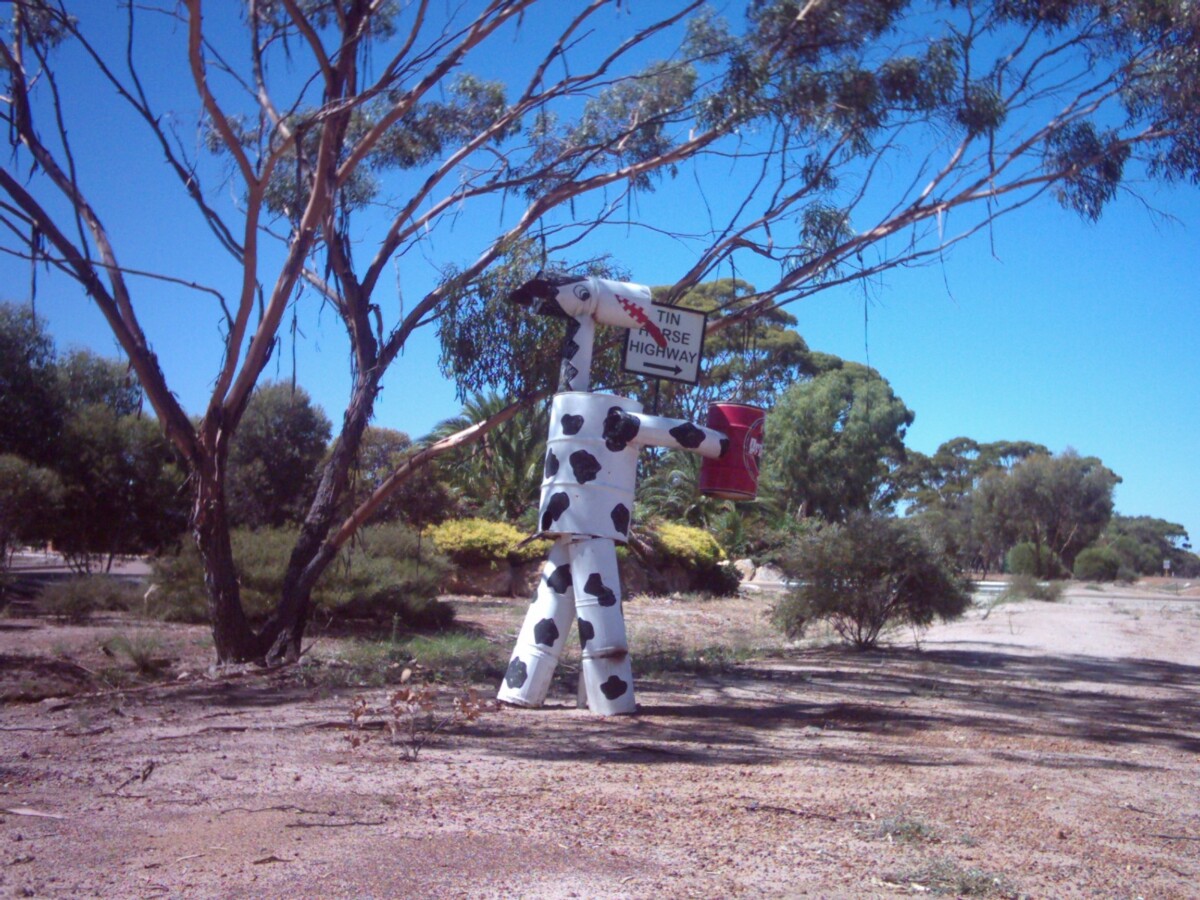
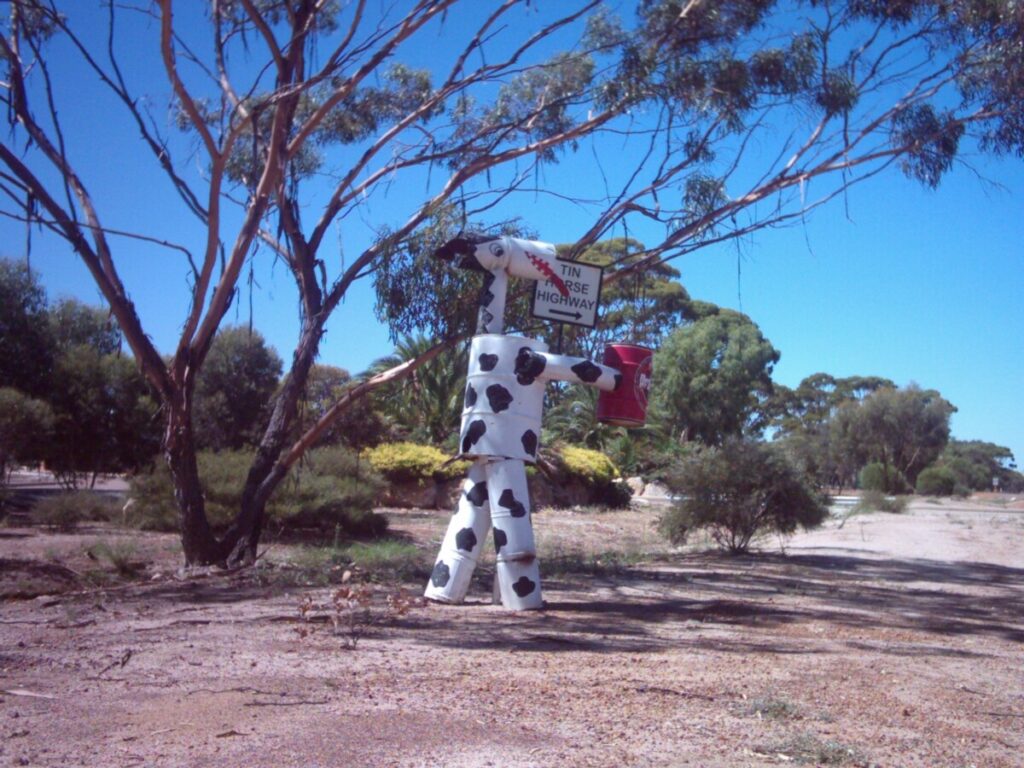
Kulin is a Wheatbelt farm town in Western Australia, on Njaki Njaki Noongar country, about 280 kilometres from Perth. It is known for the Kulin Bush Races, an amateur race meeting eight people started in 1995 with no funds, racetrack or racing knowledge, and for the Tin Horse Highway, a road lined with horses its farmers built from scrap metal to advertise the races.
A meeting built from nothing
By Aussie Towns’ count, Noongar people have lived in the area for at least 40,000 years. Aboriginal guides who led the colonial surveyor Roe to a rock water soak called the area Coolin, a name recorded in 1848, though its exact meaning is not settled. Farmers took up land in 1909, and the railway from Narrogin reached the town in 1915. In 1994 the shire called a community meeting, and the bush races that followed, held on Lucchesi family farmland between Jilakin Rock and Cave Rock, drew 1,200 people in their first year, 1995.
Horses built from scrap
Mary Lucchesi, who had seen scarecrows draw interest to the southwest town of Balingup, encouraged local farmers to build tin horses in their paddocks on the way to the track; Anne-Marie Carmody and Serge Lucchesi built the first ones, and farmers kept adding more in friendly rivalry, trying to outdo their neighbours. The horses are welded from scrap metal, drums, kerosene tins, star pickets, bicycles, car bonnets and mufflers. Over 70 now stand along the 15 kilometre Tin Horse Highway, in town and on other roads to Kulin, with new ones judged in an annual competition each year.
What the races give back
The races now draw up to 4,000 guests, and all 4,000 tickets for the 25th running, in 2019, sold out before the event; the 30th running was held in 2025. About 200 volunteers keep the races going, and by the organisers’ own reckoning an estimated A$1.2 million has gone back into the community over the races’ first 25 years, helping fund a giant water slide, medical services, education and the Royal Flying Doctor Service.
The rock beside the track
The racetrack sits on Lucchesi farmland between Jilakin Rock and Cave Rock. Kulin is on Njaki Njaki Nyoongar traditional lands, but the shire’s own heritage record for Jilakin Rock names only pastoralists and settlers, including the Bush Races themselves, with no Aboriginal significance recorded there.
Questions people ask about Kulin
Why is Kulin, Western Australia known for tin horses?
Kulin farmers build horses from scrap metal, in friendly rivalry to outdo their neighbours, and set them along the road to the Kulin Bush Races track. Over 70 now stand on the 15 kilometre Tin Horse Highway, with new ones added and judged in an annual competition.
Who started the Kulin Bush Races?
A committee of eight people started the races in 1995 with no funds, racetrack or racing knowledge, on Lucchesi family farmland between Jilakin Rock and Cave Rock. The first meeting drew 1,200 people, and the races have run most years since, celebrating a 30th event in 2025.
How much money have the Kulin Bush Races raised?
Organisers estimate the races put about A$1.2 million back into the community over their first 25 years, helping fund a water slide, medical services, education and the Royal Flying Doctor Service. About 200 volunteers keep the races running each year.
Whose land is Kulin on?
Kulin is on Njaki Njaki Noongar country, home to Noongar people for at least 40,000 years by one travel guide's count. The shire's own heritage record for Jilakin Rock, beside the racetrack, names only pastoralists and settlers.