What Inglis is known for
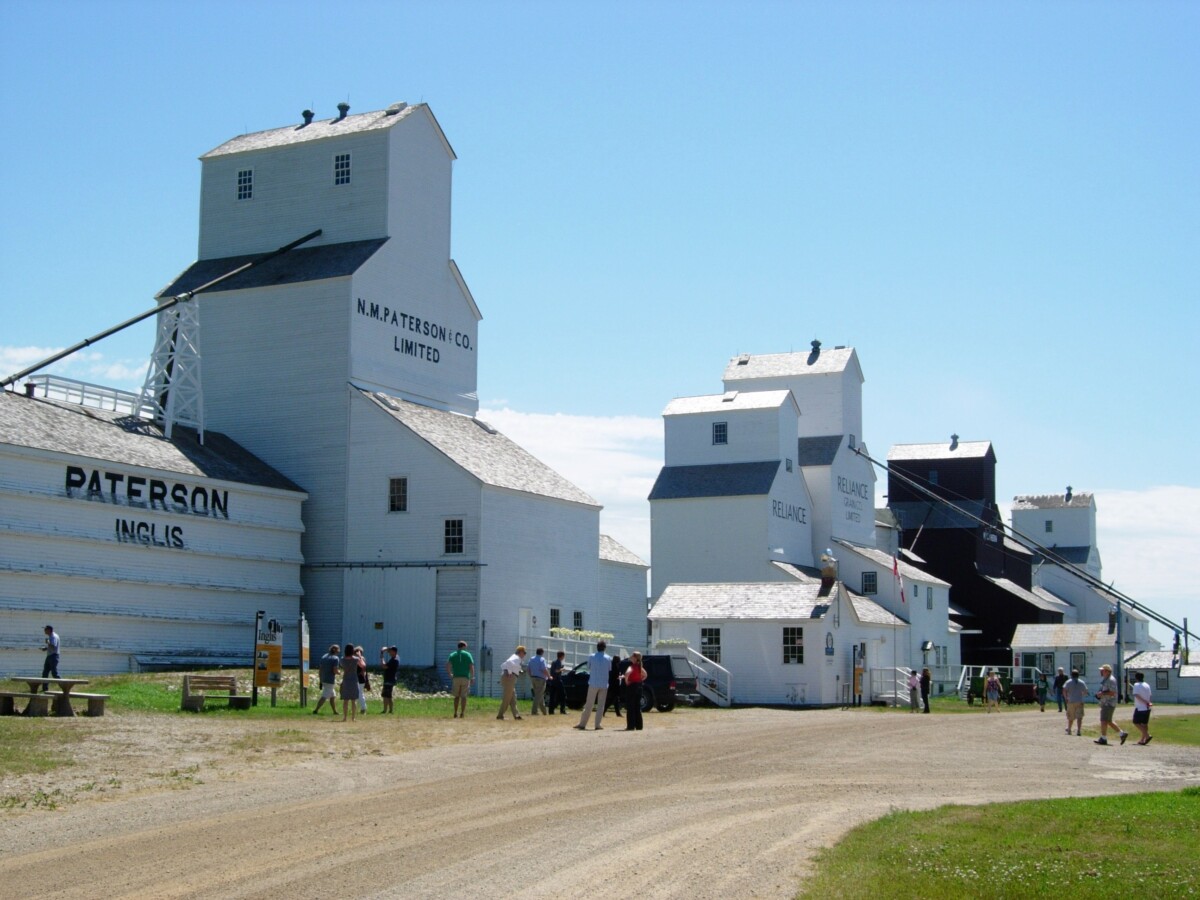
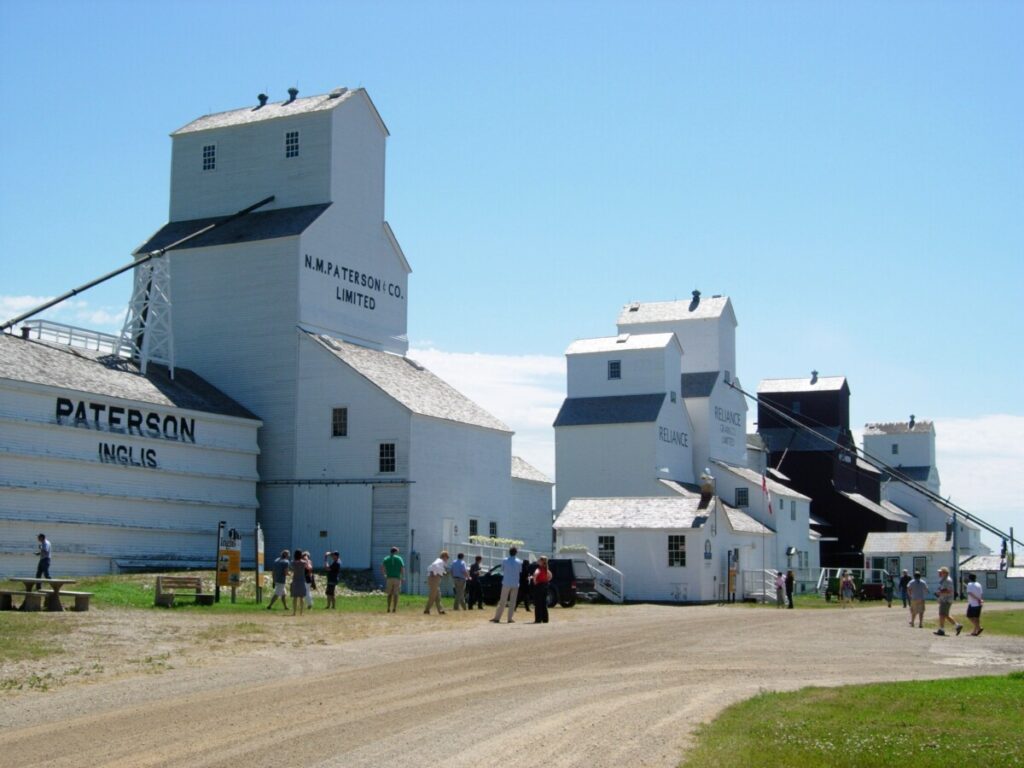
Inglis is a Manitoba community between Russell and Roblin, home to a row of five wooden grain elevators built in 1922. The row is a National Historic Site, called by the Canadian Register of Historic Places Canada’s best and Manitoba’s only surviving collection of early twentieth-century grain storage and shipping facilities.
Treaty land before the railway
The land around Inglis lies within the Treaty 2 area of 1871 and beside Treaty 4 nations, home to long Anishinaabe and Métis presence. Waywayseecappo First Nation, an Ojibwe community whose chief signed Treaty 4 at Fort Ellice in 1874, has its reserve about 32 km east of Russell; Gambler First Nation is also nearby. The railway reached the new townsite only in 1922, when four of the five grain elevators went up that year.
A row of elevators, then a Manitoba-wide decline
Inglis was built to ship grain. Manitoba had about 700 elevators by 1910; by the 1920s nearly 4,000 stood across the Prairies, peaking above 5,500 by the 1940s. Over the roughly 70 years the Inglis elevators worked, Manitoba’s grain companies consolidated from 67 to 8, and a 1992 inventory found only 220 traditional-style elevators left in Manitoba. After the 1995 harvest, the Inglis elevators closed along with the Russell to Inglis branch line.
A committee formed before the closing
After a 1994 tourism forum in Russell, local resident Marcia Rowat organized the Inglis Area Heritage Committee. Paterson and United Grain Growers donated their elevators to the committee, along with what demolition would have cost them. The row became a National Historic Site in 1996 and a Manitoba Provincial Heritage Site in 1999. Parks Canada pledged up to C$1 million to a restoration budgeted in 1999 at C$2 million, and a second restoration cycle from 2015 to 2021 cost C$65,000 to C$80,000 an elevator. The committee now owns all five elevators, and the Northern elevator holds the site’s gift shop.
Questions people ask about Inglis
Why is Inglis, Manitoba known for grain elevators?
Inglis kept a row of five wooden grain elevators built in 1922, after most such rows across the Canadian Prairies were demolished. The row became a National Historic Site in 1996 and is now called Canada's best and Manitoba's only surviving collection of early twentieth-century grain storage and shipping facilities.
When did the Inglis elevators stop operating?
The five elevators closed after the 1995 harvest, along with the Russell to Inglis branch line that served them. By then Manitoba's grain companies had consolidated from 67 to 8 over the roughly 70 years the elevators worked.
Who saved the Inglis grain elevators?
Local resident Marcia Rowat organized community members into the Inglis Area Heritage Committee after a 1994 tourism forum in Russell, a year before the elevators closed. Paterson and United Grain Growers then donated their elevators to the committee, along with what demolition would have cost them.
How much did restoring the Inglis elevators cost?
Parks Canada pledged up to C$1 million toward a restoration budgeted in 1999 at C$2 million. A second restoration cycle, running from 2015 to 2021, cost C$65,000 to C$80,000 for each elevator.