How Mount Airy earned the score
Population 10,676 (US Census 2020), in Surry County against the Virginia line.
Situation Andy Griffith was born here in 1926, and for decades the town sat next to a fictional version of itself, the Mayberry millions watched on television, without cashing the connection in.
Action Mount Airy leaned all the way into being the real Mayberry: squad-car tours from Wally’s Service Station, the Andy Griffith Museum, Snappy Lunch, Floyd’s City Barber Shop, and Mayberry Days every September.
Result Roughly 500,000 people a year make the pilgrimage, Surry County tourism topped 136.99 million dollars in visitor spending in 2021, and the town estimates the Griffith connection alone is worth about 5 million dollars a year.
Let’s Meet Mount Airy, NC

Mount Airy sits in Surry County in the far north of North Carolina, up against the Virginia line and in the shadow of Pilot Mountain, the 2,421 foot knob that Andy Griffith Show fans know as Mount Pilot. The 2020 census counted 10,676 people at an elevation of 1,096 feet. It is a real working town with a real history, incorporated in 1885 and named, in the plain way these things happened, after a plantation in the vicinity. For most of the twentieth century it made its living from textiles and furniture, with mills run by Spencer’s Incorporated and Renfro Corporation, and from a hole in the ground that turned out to be one of the most remarkable pieces of geology in the country.
What makes Mount Airy worth writing about is not that it has one thing. It has three. It has granite. It has music. And it has a television show that was never actually filmed here, about a town that does not exist, which the town decided to become anyway. The third one is the reason the tour buses come. The first two are the reason the story is more interesting than nostalgia alone.
The Town That Became a Show That Was Never Here
Andy Griffith was born in Mount Airy on June 1, 1926, and grew up here until he graduated from high school. When The Andy Griffith Show went on the air in 1960, it was set in a fictional North Carolina town called Mayberry, a place of one sheriff, one deputy, a barber, a filling station and a courthouse that never seemed to have any actual crime. Griffith always said Mayberry was drawn from the town he knew as a boy. He mentioned Mount Airy landmarks by name on the show. Snappy Lunch, the diner that has been on Main Street since 1923, got a spoken mention in the first season, which is how a fried pork chop sandwich became a pilgrimage food.
Here is the strange part, and it is the part that makes Mount Airy a genuine case study rather than a postcard. The show was produced in California. Mayberry is not Mount Airy. It is a memory of Mount Airy, filtered through a writers’ room and broadcast to the whole country for eight seasons. For years the town lived beside this idealized twin without doing much about it. The mills were what paid the bills. Then the mills started to leave, the way mills did across the Carolinas, and a town that had a nationally beloved fictional identity sitting unused had to decide whether to pick it up.
How Mount Airy Built the Real Mayberry
The turning point has a date. In 1990, to mark the thirtieth anniversary of the show, the Surry Arts Council launched a festival called Mayberry Days. It was small at first, a weekend of tribute artists and screenings and fans in deputy costumes. It grew. By 2009 about 30,000 people came, and in 2010, for the fiftieth anniversary of the show, roughly 90,000 poured into a town of ten thousand for a single weekend. Mayberry Days is now held every September and draws fans from every state and several foreign countries. In 2017 the Southeast Tourism Society named it a Top-20 event across twelve states for the month.
Once the festival proved the demand, the town built the year-round version around it. The Andy Griffith Museum opened to house the world’s largest collection of Griffith memorabilia, most of it assembled over a lifetime by his boyhood friend Emmett Forrest. It sits next to the Andy Griffith Playhouse, a half mile from the house where Griffith actually grew up, and it draws about 200 visitors a day. Down on Main Street, Floyd’s City Barber Shop still cuts hair under the name of the show’s fictional barber. Wally’s Service Station runs squad-car tours in replicas of Barney Fife’s patrol car, four passengers at a time, thirty to forty-five minutes past the Playhouse and Snappy Lunch and the rest of it. Opie’s Candy Store and the Mayberry Soda Fountain sell the sugar. And Andy Griffith’s actual boyhood home is now rentable by the night, so a family can sleep in the house that a fictional town was based on.
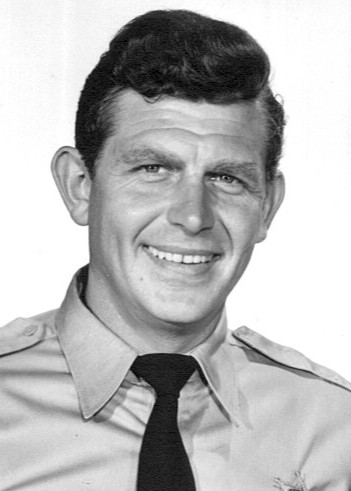
None of this is subtle, and the town does not pretend it is. Mount Airy took a fictional identity, one it did not create and does not own, and turned it into an economy. That is the monetization of nostalgia in its clearest form, and it worked. This is the same play, in a different key, that Detroit Lakes, Minnesota ran when it invited the artist Thomas Dambo to build giant recycled-wood trolls and watched tourism climb, a story we told in our Detroit Lakes flagship report. One town used sculpture, one used a sitcom, but the move is identical: find the one thing people already want to associate with you, and give them a reason to drive in and spend the afternoon.
What the Nostalgia Economy Actually Produced
The numbers are real and they are not small for a place this size. Tourism officials estimate that at least 500,000 people a year make the trip to see Mayberry in the flesh. Tourism is the second largest industry in Surry County, behind only agriculture, with an economic impact estimated at more than 100 million dollars. According to the Visit North Carolina economic impact study prepared by Tourism Economics, visitors spent 136.99 million dollars in Surry County in 2021, a 45.4 percent jump over the pandemic-depressed 2020 figure. That spending supported 854 tourism jobs and 31.7 million dollars in payroll, and it generated 6.0 million dollars in state taxes and 4.4 million dollars in local taxes. The town’s own estimate is that the Andy Griffith connection specifically is worth about 5 million dollars a year to Mount Airy.
The town funds the machine the way tourism towns do. Mount Airy and unincorporated Surry County levy a 6 percent occupancy tax on overnight stays, remitted to tourism development authorities that plow it back into promotion. As Mayberry Days grew, town leaders approved that occupancy tax specifically to fund the tourism it was generating. The tourism director for the Mount Airy Chamber has credited the start of Mayberry Days with the whole economic transformation, and after the pandemic, tourism revenue returned to pre-COVID levels, with the Mayberry draw accounting for the overwhelming majority of visits.
The Granite City, and Why It Matters to the Story

Before Mayberry, Mount Airy was famous for stone. On May 14, 1889, Thomas Woodroffe founded what became the North Carolina Granite Corporation, and it has operated continuously ever since. The quarry it works is the largest open-face granite quarry in the world. On the surface it covers about 60 acres, roughly 66 football fields, but the mother mass underneath runs about 7 miles long and a mile wide and drops some 8,000 feet down. In 120 years of cutting, the company has only worked its way about 60 feet into the stone. It pulls out around a million cubic feet a year, more than 82,000 tons, and it estimates there is enough granite left to last another 500 years. Mount Airy granite went into the United States Bullion Depository at Fort Knox, the Arlington Memorial Bridge in Washington, the Wright Brothers National Memorial at Kitty Hawk, and the World War II Memorial. In 2021 the company was acquired by Polycor, the largest dimension-stone quarry firm in the world.
The granite matters to the case study for a specific reason. It proves the town was a somewhere before it was a set. A place that supplied the stone for Fort Knox did not need a sitcom to have an identity. That is the tension worth naming: Mount Airy is a real town with real industry and real geology that chose to lead with a fictional television version of itself, because the fictional version is the one that fills the parking spaces on a Saturday. The quarry is a world record almost nobody comes to see. Mayberry is a memory, and people drive hours for it.
Old-Time Music, the Third Asset
The third layer is sound. Mount Airy sits in one of the deepest wells of old-time and bluegrass string music in the country. WPAQ went on the air at 740 on the AM dial on February 2, 1948, and it still broadcasts bluegrass, old-time and gospel to the Blue Ridge. Every Saturday from 11 in the morning until half past one, WPAQ puts live local musicians on the air from the Historic Earle Theatre downtown on a program called the Merry-Go-Round. It is the second-longest-running live radio broadcast in the country, behind only the Grand Ole Opry. Surry County fiddler Tommy Jarrell, one of the most influential old-time players who ever lived, came up through this scene. For a certain kind of visitor, the free Saturday-morning show at the Earle is a better reason to come than any squad car.
Can a Town Be More Than One TV Show?
That is the real question hanging over Mount Airy, and it is the one every place with a single famous hook should ask. The Mayberry brand is a gift and a ceiling. It brings half a million people a year, but it also fixes the town in 1962, in black and white, in a version of America that some visitors are chasing for reasons that have nothing to do with Surry County. A nostalgia economy depends on the nostalgia holding, and the audience that grew up on the show is aging. The granite and the music are the honest answer to that risk: they are assets that do not depend on a rerun. The strongest version of Mount Airy is the one that keeps Mayberry as the front door and walks visitors back to the quarry overlook, the Earle Theatre stage, and Pilot Mountain State Park before they leave.
On the Visitor Impact Score, Mount Airy comes in at 95, a Destination Leader, and the shape of the score tells the story. Anchor Activity grades an A, because the real-Mayberry experience is singular and cannot be copied by any other town. Brand, Stay and Return all grade B+, the marks of a place that knows exactly who it is and gives people a reason to come back. The softer numbers are Downtown Vitality and Curb Appeal, the categories that reward what the street feels like after six o’clock and how the edges of town present up close. Those are the fixable ones, and they are where the occupancy-tax dollars can do the most good next.
Why Other Towns Should Study Mount Airy
Mount Airy ran a play any town with a latent story can run. It did not invent Mayberry. It noticed that the country had already fallen in love with a fictional version of it, and it built a real, bookable, walkable experience to meet that affection at the curb. It committed for decades, it funded the effort with a dedicated occupancy tax, and it stacked a museum, a festival, tours, and themed storefronts into a single anchor tight enough to fill a September weekend with 90,000 people. The lesson is not that every town has an Andy Griffith. It is that most towns are sitting next to some version of themselves that outsiders already find charming, and the work is deciding to become it on purpose. The open question, the one Mount Airy is answering slowly with granite and fiddle music, is what you build behind the front door so the town is more than one show.