Real guides and magazines we read for this page. Covers are shown small, for comment, and copyright stays with each publisher.
How to make a visitor guide people use
Creative City Developments. Published November 4, 2026. Facts last checked November 2, 2026.
For people who make, edit or pay for a town's visitor guide. What people do with a guide, who they are, and what magazines in other fields do that visitor guides mostly do not, each shown on a real page.
What people do with a guide
People who ask for a guide, or pick one up, mostly use it. Maps and things to do come first. Hotels and tours come far behind.
People who ordered a guide
Read or looked through it98.2%
Planned with it before they arrived82.5%
Chose attractions from it77.6%
Used it in town74.9%
Used its map69.3%
Chose a restaurant from it50.7%
Chose a shop from it29.7%
Chose a hotel from it21.1%
Chose a tour from it20.5%
Bureaus' own studies, by Destination Analysts: Anchorage, 2014, read and planned; 11 bureaus, 2013, the rest; 12 bureaus, 2020 to 2021, during the pandemic, the map, with support from Miles Partnership, a guide publisher. All but the first line are people who read it and came. In the 2013 and 2014 studies, invitations went to people who had asked for a guide and said they planned to come, with a prize draw, so the figures run high. Newer figures run lower on most lines: in the 2020 to 2021 study, attractions 59.5, restaurants 46.6, tours 10.2. In 2013 the map was 60.2.
What 932 guide readers who visited rated helpful (2020 to 2021)
Maps81.6%
Articles72%
Itineraries57.9%
Events calendar57.7%
Advertisements50.4%
Business listings49.7%
DMA West study, done for a bureau trade foundation with support from Miles Partnership. Only 40 percent of readers said they read the articles.
What visitors said about brochures on a trip
Found it useful87%
Shared it73%
Kept it for the visit or longer68%
Learned of a new place47%
Bought something because of it21%
Changed plans because of it20%
986 visitors, 2022, by Bentley University with a brochure trade body, so read it with care. 70 percent used brochures, maps or guides. "Found it useful" is among those who picked one up; the report does not give the base for the other lines.
You may have heard that only 11 percent of travelers use printed guides. That figure answers a different question.
11.3%of all US travelers used a free printed guide or pamphlet to plan, past 12 months (2023, slides hosted by Miles Partnership, a guide publisher). One line on a long list of sources.
74.9%of people who ordered a guide, read it and came used the printed guide in town (2013).
83%of Great Smoky Mountains visitor groups used the park brochure or map (2008). Federal survey. Other parks in the same series: 60 to 87.
Our reading: use is low when you ask all travelers about a year of planning. It is high when a guide reaches someone already coming, on the spot. Your job is not to win the 11 percent. It is to get into the hands of people already on their way, and be worth keeping.
The low numbers are real, and print is shrinking
Asked of all US travelers, an official visitor guide in any format ranged from 12.1 to 34.6 percent between 2015 and 2021. From 2016 on, winter surveys ran well above summer ones, and summer fell from 19.0 percent in 2016 to 12.1 in 2021 (Destination Analysts, slide 7).
Official sites and guides combined were used by 21.1 percent to plan the latest overnight trip, behind search at 48.4 and word of mouth at 47.1 (Future Partners, October 2026).
In Wales in 2013, 89 percent of day visitors and 54 percent of UK staying visitors used no information source during the trip (Welsh Government).
In England's Yorkshire Dales, use of Google Maps rose from 33 to 43 percent between 2017 and 2022, and leaflets in accommodation fell from 27 to 17 (park survey).
What we do not know
No study has tested what an editorial change does to use.
Most in-town figures are from 2013 and 2014, from people who ordered a guide. We found nothing newer.
Several figures come from studies done for bureaus or tied to firms that publish guides or distribute brochures. The chart notes say which.
We found no real split of guide use by income or by length of stay.
Who uses a visitor guide
The evidence splits two ways, depending on how the guide reached people. Ask who plans with any print, and the answer is everyone, at every age. Ask who orders a guide, and the answer is older people who have already decided to come.
Travelers who plan with print are not older.
48 vs 50average age of US leisure travelers who used any printed material to plan, against those who did not (2018)
3.9 vs 3.4leisure trips a year, with a $3,664 leisure budget against $2,695 (same study)
About evenby generation: Millennials 49.8 percent, Gen X 46.5, Boomers 47.2 used any print to plan (2016)
Any print is wider than free guides, and both reports carry the logo of Miles Partnership, a guide publisher.
People who ask for a guide are older, and already coming.
3 in 4people who ordered a guide were Baby Boomers or older (12 bureaus, 2020 to 2021, with support from Miles Partnership)
75%of those who came had already decided to come. In Anchorage, 83 percent (2014)
1 in 10had children under 18 at home. About $100,000 average household income, and three in four married or partnered
Brochures tell a different story. In Alaska, the mailed planner leans older. Brochures used to plan the trip do not.
Who used brochures to plan a trip to Alaska, 2016
From Europe33%
Fly and drive32%
Independent, no package30%
Age 18 to 2930%
First trip to Alaska25%
All visitors23%
Age 60 to 6921%
Group of six or more21%
Repeat visitor19%
Cruise passengers16%
Out of state vacation visitors who stayed in Anchorage or Girdwood, 1,973 people, asked which sources they used to plan. The mailed state planner reached 6 percent of ages 18 to 29 and 24 percent of ages 60 to 69. Alaska is a long, costly trip, so a small town may differ. Small groups have wide margins. Cruise passengers were 15 or 16 percent, depending on port.
In Juneau, visitors who came by highway or ferry were far likelier to plan with a brochure: 40 percent, against 14 of all visitors. That count includes ferry schedules (2016).
Does a guide make people stay longer or spend more?
Maybe, but the proof is thin. We found only one comparison of users and non users, and no study of printed guide readers alone.
In Alaska in 2016, visitors who used state sources stayed 2.9 nights in Anchorage against 2.5, and spent $539 against $494 there. That group includes website users, and non users were more often on cruises, so this does not show the guide did it (McDowell Group for Visit Anchorage).
In Anchorage in 2014, 28 percent of already decided visitors said the guide affected their days, and 72 percent of those stayed longer, by 2.1 days on average. By our arithmetic, that is about one in five already decided visitors. This is their own report, in a study done for the bureau.
Do not print "guide readers stay longer and spend more" as fact.
How to tailor your guide
Write first for someone who has already decided to come. Each row is a finding, and the last column is our advice, with the card to look at. No study has tested these edits.
Who picks it up
What the research shows
So do this
Already decided to come
75 to 83 percent of people who ordered and came
Skip the sales pitch. Spend your pages on what to do and how long to stay. See card 7
Here for the first time
Brochures used to plan: 25 percent of first timers, 19 of repeat visitors, in Alaska
Say where to start, how long things take and where to park. See card 4
Driving their own route
Fly and drive 32 percent, cruise about 16, in Alaska
Give driving times, nearby towns and stops along the way. See card 8
Older, asking for a copy
75 percent Boomers or older
Use larger type and dark text on a plain ground
Younger readers
Day plans rated helpful by 69.9 percent of younger guide readers, 55.6 of Boomers, in a small younger group
Give ready-made day plans and one good map. See card 7
Day visitors
89 percent used no source during the trip, in Wales
Give them one quick page, placed where they arrive. See card 11
Could stay another night
About 20 to 40 percent of decided visitors across 11 places, and 28 in Anchorage, said a guide affected their days
Label a one day plan and a two day plan. See card 7
What magazines know
Visitor guides have the furniture of a magazine: a cover, a contents page, sections, ads. What they mostly lack is the editing behind it. So we read magazines from fields far from tourism, page by page, to see what they do and why. Four whole issues: a state wildlife monthly (Missouri Conservationist, January 2026), an in-flight magazine (Lufthansa Magazin, February 2020), a city magazine (Omaha Magazine, January 2025) and a mechanics title (Popular Mechanics, January 2001, on Google Books). Then single pages from workshop, outdoor, food, consumer, fashion and city titles, and from guidebooks.
Eleven things came out of it, each shown on a real page, beside a visitor guide page that already does it where we found one. No magazine and no guide is used twice, so each card stands on a different source. Tap a page to read it. Each magazine page is cropped to the part discussed, without its photos, and credited with a link to the whole page. The pages belong to their publishers and are shown for comment. We did not read a fashion or car issue cover to cover, so where we lean on a magazine's own description of its method rather than its pages, we say so.
Where the pages go: three issues, page by page
Lufthansa Magazin, 88 pages
Omaha Magazine, 92 pages
Popular Mechanics, 116 pages
Fast frontLong piecesReference backPaid or house adsOther
Our page by page count from the issues named, from thumbnails: light yellow the fast front of short items, gold the long pieces, tan the reference back, grey the department pages between, black the ads and house pages. The Conservationist carries no paid ads, so it is not shown, and Popular Mechanics is shown by its printed pages without its covers, both of which were ads at the back.
1. Put the numbers before the words
Good: a paragraph that describes the walk.
Great: a box first, then the words. Time, cost, effort, what to bring.
In magazines: a workshop project opens with Total Time, Complexity and Cost, then a tools list and a materials list (Family Handyman). Backpacker's Wonderland Trail guide leads with a stats box: distance, total climb, daily gain, difficulty, dogs (Backpacker). Make's page for a clock kit prints a Time Required line and a materials box before the first step (Make).
For a town guide: four lines at the top of every walk, drive, paddle and museum: Time, Cost, Effort, Bring. The reader decides in five seconds, and looks for the same box on every page.
In a magazineFamily Handyman, Entryway Hall Tree, web page, October 16, 2025. Open itIn a visitor guideBryce Canyon Visitor Guide, 2024, page 2, our one example from a park brochure. Open it
2. Build it in three parts
Good: stories, listings and ads mixed through the book.
Great: a fast front, a slow middle, a reference back, and one editorial page before the closing ads.
In magazines: the front of the book is short items in the magazine's own voice; a journalism school calls it the fast, voice driven section every magazine uses to set its personality (NYU). The middle is the long pieces, each opening on a page that is mostly picture: two in the thin issues we read, six or seven in the thick ones. The back is the pages a reader returns to: listings, maps, the calendar, the service section. All four issues we read keep to it, and three end on one editorial page before the closing ads: Lufthansa on a travel photo with a getting there box, and Popular Mechanics on the Last Page it lists among its monthly pages. A trade article describes that back page as a one page essay of humor, opinion or information, often a recurring column (WritersWeekly).
For a town guide: open with two to four pages of short items in the town's voice (new this year, five things locals know). Put two or three long pieces in the middle. Close with one labelled reference section: map, listings, hours, calendar. Do not scatter listings between stories. End on one photo of the town and a line from a local, or a page to write on, with the ad on the cover behind it. Wisconsin's page 24 is the middle done right: a long piece that opens on a page built around its title and one photo.
In a magazineLufthansa Magazin, 2/2020, page 10, a fast front page. Open the issueIn a visitor guide2022 Wisconsin Travel Guide, printed page 24, a feature opener in the slow middle. Open it
3. One page that says who made it, when, and where to write
Good: a list of sections, and an unsigned welcome from "the team".
Great: a contents page that sells and signs: every section with a page number, the two best pictures with theirs, the recurring pages grouped apart, who made it and when, and an email for corrections.
In magazines: the Conservationist puts its masthead on the contents page: the director, the staff by role, the cover photographer, the subscription terms. The editor's letter has six possible jobs, and the simplest is a meet and greet that walks through the issue (Press Gazette). Ads beside a contents page were noted by 59 percent of readers, against 51 percent beside editorial and 46 beside other ads, in Starch ad surveys of 68,000 ads (GfK MRI, 2010; MediaPost corrected its headline and the survey name the next day). Vendor data.
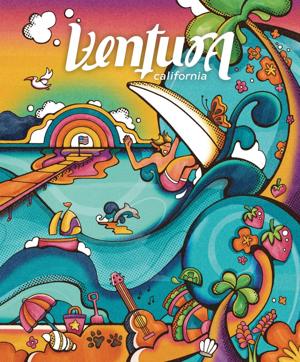
For a town guide: one page that does four jobs: every section with a page number, the two best pictures with page numbers, half a page from the person who runs the visitor center with a name and an email for corrections, and who made the guide and when. Check every page number against the final proof. We did not find a visitor guide that groups its recurring pages on its contents page, though we did not read every contents page. Ventura comes closest: named staff, each answering one question, beside the staff list. A text search of 52 guides found named writers in two, and our readers noticed a few more. In about half of the 138 guides we read, no resident, maker or owner is profiled or quoted by name.
In a magazineMissouri Conservationist, January 2026, contents and masthead. Open the issueIn a visitor guideVisit Ventura Inspiration Guide, 2026 to 2027, printed page 5. Open it
4. The same box on every entry
Good: every entry written fresh.
Great: a fixed name, slot and box for every page that comes back, so a reader who learns it once reads every entry faster.
In magazines: Consumer Reports prints the same ratings table for every product in its buying guide: brand and model, overall score, price, survey results, test results, then the features, in that order on every page, with the key explained once at the front. A reader who learns the table on page 5 reads every table after it (Consumer Reports Buying Guide 2021, printed pages 5 and 22).
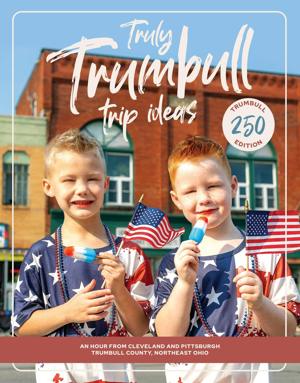
For a town guide: three or four pages that return every edition in the same place with the same name, and one box on every place entry: how to get there, hours, cost, what to do, what to look for, who to call. The office can update a box without rewriting a page. Trumbull's Local Trip Idea pages come back through the guide with the same stamp, a named local, a checklist and a caption on every photo. 4 of 52 have a new this year section, one of them only on its dining pages. A text search misses words set inside a picture, so this is the least there could be.
In a magazineConsumer Reports Buying Guide 2021, printed page 22. The ratings key is printed once, on page 5. Open itIn a visitor guideTruly Trumbull Trip Ideas, 2026, printed page 18, a Local Trip Idea page. The same format returns on printed page 22. Open it
5. Say who checked it, and when
Good: "a charming cafe loved by locals".
Great: who tried it, when, and why it works, in two sentences.
In magazines: a Cook's Illustrated recipe opens with Time and Yield, then "Why This Recipe Works". Its publisher says each recipe goes through at least six weeks of testing, and that the magazine carries no advertising (America's Test Kitchen, its standards page). Those are the publisher's own descriptions of its method.
For a town guide: a dated line on every entry, "Checked March 2027", and two sentences of "Why locals go" that say something only a local would know. We did not find a guide that prints a checked on date. The nearest thing is a named local's picks with her reasons, as on card 4.
In a magazineCook's Illustrated, Best Lemon Bars, web page, read November 2, 2026. Open itIn a visitor guide
No visitor guide page to show. We did not find a guide that prints a checked on date beside its entries. The nearest thing is a named local's picks with her reasons, shown on card 4.
6. Pick, and print how you picked
Good: a list of every restaurant, all treated the same.
Great: three labelled picks for each decision, a method line, and one honest catch per pick.
In magazines: Wirecutter's guides carry fixed labels (Top pick, Budget pick, Upgrade pick) and a "How we picked" box; it says those sections exist so a reader can see who wrote it and how it was tested (Wirecutter). Time Out prints "How we choose" on its best restaurants list and the reviewer's face on each review (Time Out). Michelin's inspectors pay their own bills and visit more than once (Michelin). Car and Driver's 10Best prints its rules: every contender driven back to back on the same roads, a price cap, 20 evaluators (Car and Driver).
For a town guide: for the five decisions every visitor makes (where to sleep, dinner, coffee, a rainy afternoon, a half day with kids), print Our pick, Budget pick and Upgrade pick, each with the price, the reason and the catch. Above them, one line: who chose, how, and whether anyone paid. The USE-IT map of Esch, Luxembourg, is the one visitor guide we read that prints such a line: it names its authors and says nobody paid to be on it. Its notice bars reuse, so we link to it rather than show it. If you have members, keep a fair listing for everyone and put the picks under a named person.
In a magazineWirecutter, The Best Dutch Oven, web page, January 28, 2026. Open itIn a visitor guide
No visitor guide page to show. In the guides we read, we did not find a page that prints how its picks were chosen. The nearest is the USE-IT map of Esch, which names its writers and says nobody paid to be on it. Its notice bars reuse, so we link to it instead. Open it
7. One perfect day, written out
Good: a things to do section, or one "48 hours" page.
Great: a day told in order, every stop named, with a reason at each stop and the time it takes.
In magazines: United's Hemispheres runs Three Perfect Days: a card per day at the top saying what the day is about, then each day from breakfast to a nightcap with the places in bold. It does not print the time each stop takes; that part is our advice.
For a town guide: a One Perfect Day page, and Three Perfect Days if the town can carry it, one version per audience if there is room. Posey County has the shape: a three day weekend by morning, afternoon and evening, with named stops. It lacks the times, and its reasons are one clause each.
In a magazineHemispheres, Three Perfect Days: Puerto Rico, web page, July 24, 2026. Open itIn a visitor guideExperience Posey County, page 41. Open it
8. Draw the walk, start to end
Good: one overview map with dots.
Great: the route drawn on the map, numbered stops, a start and an end, and the time each stop takes.
In guidebooks: Rick Steves' walks are drawn on the street map with numbered stops, a Tour Begins mark and a Tour Ends mark, and the stop list under the map. Lonely Planet's Experience series prints a trip builder: a map with each stop's page number and the time to allow for it, from one hour to a day (Lonely Planet, sample pages). None of the pages we read prints minutes between stops.
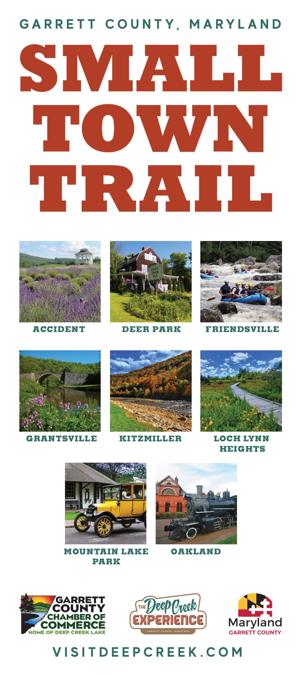
For a town guide: one self guided walk drawn on the map with numbered stops, a start and an end, and the time to allow at each stop. Garrett County numbers its stops on a street map and marks the info kiosk as the start, with no route line and no end, so Rick Steves is the one to copy.
In a guidebookRick Steves' Europe, Berlin City Walk map, 2014, from a guidebook publisher. Open itIn a visitor guideGarrett County Small Town Trail, fall 2024, page 5. Open it
9. Credit every photo like a fashion page
Good: a lovely photo with no words.
Great: under every photo, what it is, where it is, what it costs and when it is open.
In magazines: a fashion page prints the item, the price and where to buy under every photo, says an editor chose it, and names the editors in the pictures. That is the whole reason the page exists. We read this on a Bazaar web page; no print fashion spread was open to us.
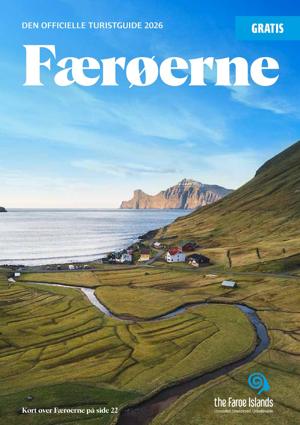
For a town guide: a credit line under every photo: the place, the street, the map number, the cost, the hours. A photo without one is decoration. With one, it sells a stop. Faroe keys every photo to a map number and a page; nobody we read prints a price under a photo.
In a magazineHarper's Bazaar, The Best Winter Coats According to Bazaar Editors, web page, December 19, 2025. Open itIn a visitor guideFaroe Islands Tourist Guide, 2026, page 12. Open it
10. Treat ads the way magazines do
Good: ads wherever they fit, and a paid write up that reads like a story.
Great: ads between pieces, the word "Advertisement" on every paid page, and a price ladder that matches where readers look.
In magazines: Omaha prints "Sponsored Content" above the first page of its paid dining guide, and only there; the five pages after it carry the section name alone, and its ads sit between the listings, not inside a story. So the magazine does not label every paid page, and the advice rests on the rule, not on it: the Federal Trade Commission says a paid page that could pass for a story needs a word such as "Advertisement" above the headline; it calls "Promoted" ambiguous, and warns that "Presented by" and "Sponsored by" can read as paid for but not written by the sponsor (FTC, 2015). Texas Highways' public rate card says it sells no adjacencies: a business in a story gets no ad near it (Texas Highways).
For a town guide: put ads between pieces and in the reference section, not inside a story. About one in five of the guides with ads put one inside a story or on an article page. Our readers' notes give examples, not a full list, so there may be more. Print "Advertisement" at the top of any paid page that reads like one, the same word everywhere, on every page of a paid section. Charge for the covers and the page facing the contents, and leave the right hand page off the price list. We are not lawyers; have your own counsel check your labels.
In a magazineOmaha Magazine, January to February 2025, printed page 76. Open the issueIn a visitor guide
No visitor guide page to show. Among the guides we read, we did not find one we could show here that prints the word on a paid page. Most keep ads between pieces, which needs no example. The drawn page under Six mistakes to avoid shows what an ad inside a story looks like.
If you sell ads: what up to 13 public rate cards charge
Position premium over a full page, middle card
Back cover, 13 cards26%
Inside front cover, 11 cards20%
Guaranteed position surcharge, 5 cards10%
Inside back cover, 10 cards10%
First right hand page, the one card that prices it2.2%
Our arithmetic from posted rates on cards from car, outdoor, city, in-flight, news and regional magazines, read November 2, 2026: Garden and Gun, Smithsonian, Texas Highways, Cleveland, Santa Fe, Holland Herald, Breeze, ADAC MotorWelt, FOCUS, Sandpoint and others, plus a 2017 Car and Driver card read on a third party host. Asking prices, not what advertisers paid. The guaranteed surcharge ran 10 to 15 percent.
About half the pages is the common magazine ratio: ads were 47 percent of US magazine pages in 2007, by the publishers' association (Adweek). No study we found ties a ratio to how visitors use a guide, so state yours as a house rule.
11. Built for the lobby rack
Good: a guide built as if one person reads it once, from the front.
Great: a guide built for many readers, in short sittings, from any page, over months, by people who may not read the page at all.
30 minout of home reading time per magazine title, against 52 at home (MRI-Simmons, spring 2020, in the publishers' Factbook, page 88)
30 vs 4readers per copy, public place copies against newsstand copies, in a 2003 Condé Nast study (via MediaPost). Old, and publisher funded
1 in 5of a monthly's eventual readers are reached on the day it goes on sale, and about 82 percent by ten weeks, read off a chart in the same Factbook, page 4, so approximate
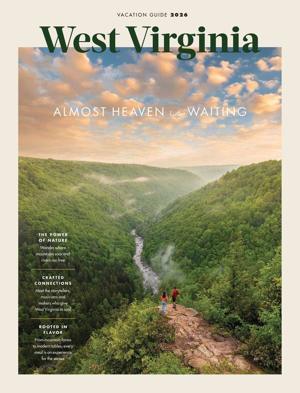
For a town guide: a rack copy is read standing up, in a lobby, by one visitor after another, for months. So the must knows land in a five minute flip, every dated page carries its month, and the guide does not get padded: in a 2003 study of 100 magazines done for the publishers' and editors' associations, page count was not a driver of the reader's experience (MediaPost on Northwestern's study). And make sure everyone can use it: a web page first, a PDF a screen reader can read, and access as a feature, as West Virginia does.
In a visitor guide2026 West Virginia Vacation Guide, printed page 14. Request a copy
If you are a public body: the April 2027 and April 2028 dates
If you are a city, county or public bureau, the rule applies to you. As of November 2, 2026, the Justice Department's rule sets WCAG 2.1 Level AA, a web accessibility standard, for what you post online:
April 26, 2027 if your government's Census population is 50,000 or more
April 26, 2028 if it is under 50,000, or you are a special district (28 CFR 35.200)
A bureau with no Census count of its own uses the population of the government it belongs to (ADA.gov first steps). These dates come from an April 2026 interim rule that moved each one back a year (Federal Register). A lawsuit filed in May 2026 asks a court to set that rule aside, and the case was open when we last checked (Civil Rights Litigation Clearinghouse). Check again before you post.
PDFs posted before your date are usually exempt, unless people use them to get services (28 CFR 35.201). So we treat each new edition as covered. That is our reading, not the department's. If a city pays you, a private chamber or nonprofit, to run visitor services, ask your attorney and theirs. None of this is legal advice. Federal guidance also tells agencies to prioritize HTML over PDF, and usability researchers find PDFs hard to use on phones.
What we read, and what we could not
Whole issues, page by page: Missouri Conservationist, January 2026 (the department's own PDF); Lufthansa Magazin 2/2020 (the airline's own PDF); Omaha Magazine, January to February 2025 (the publisher's own Issuu account); Popular Mechanics, January 2001 (a Google Books full view scan). The page by page tables are available on request.
Single pages from the publisher's own site: Family Handyman, Make, Backpacker, Cook's Illustrated, Bon Appetit, Hemispheres, Wirecutter, Consumer Reports' 2021 Buying Guide, Car and Driver, Michelin, AAA, Time Out, New York magazine, Harper's Bazaar, Rick Steves, Lonely Planet's sample pages.
Not read: a whole fashion issue or a whole car issue. The Car and Driver rate card in the ad chart is a 2017 card read on a third party host; the other cards are the publishers' own postings. Google Books blocked most page requests, Vogue's archive is paywalled, and two Vogue media kits refused to open. Fine Woodworking, Trail Runner and Outside were not checked. We used nothing from sharing sites.
Thin evidence: no study measures pacing, cover lines or the three part structure for readers. Those are craft, taught by practitioners and visible in every issue we read. The readership figures are industry funded, and the readers per copy figure is from 2003.
Six mistakes to avoid
These are drawn pages, not real guides. Each shows a mistake we saw in the guides we read, so that no town is held up as the bad example. Tap a page to see it larger. The fix for each is on the numbered card above.
Drawn example, not a real guide
Nobody signs it
Stories with no name on them, no date on the guide, no email for corrections. A text search of 52 guides found named writers in two.
A boxed ad in the middle of a story. About one in five of the guides with ads put one inside a story or on an article page. Our readers' notes give examples, not a full list, so there may be more.
Who does it the very best? This is our judgment, from awards we could confirm and from reading the pages. If you read only three: the park brochures for system, USE-IT for nerve, and Trumbull for how a small bureau does it. Awards go only to guides that entered, and several went to earlier editions than the ones we read. ESTO is U.S. Travel's destination marketing awards.
More than 400 parks. About 20 million copies a year
The classic. One system since 1977, with short stories as well as maps. Won a 1985 Presidential Design Award, says the Park Service. Shown without the arrowhead, which the Park Service keeps for itself.
A weekend plan and a town map a stranger can use. Local radio reports a 2026 state Best Visitor Guide award, which we could not confirm with the awarding body.
A transport map with bus numbers, ferries and charging points. Plain words on safety. No award found. We read the Danish edition.
Listings, or stories?
About half of readers still found listings helpful, so this is a question of space, not a ban. Explore Georgia published its reasons for taking listings out of its 2023 state guide to make room for stories, moving ads to full pages and pointing readers to its website. It planned 750,000 copies (Explore Georgia, 2023). That is a decision on the record, not proof it worked.
If you charge for listings, we think you should tell readers. The accreditation standard for destination organizations asks for a written policy that visitors get full information regardless of membership (Destinations International, 2025). It sells that accreditation.
Seven things people forget
Tick the ones your guide already does. Your ticks stay in this browser.
Rack sizes, if you want a tourism brochure template
Ask the racks you care about, since rules vary. South Dakota recommends brochures of 3.5 to 4 by 8.5 to 9 inches and wants the title in the top third, since a stacked rack hides the rest. VisitEngland gives the same warning about the top third. Kansas takes booklets from 3.5 to 6 inches wide, requires dates and hours on attraction brochures, and asks for dated pieces to be resubmitted every year.
Try it today
The 5 pm test. Open your guide. Pretend it is 5 pm on a Sunday and you are hungry. Using the guide alone, find somewhere to eat that is open, and work out how to get there. If you cannot, that is your first fix.
Try it on one stranger
Testing with real readers is standard in plain language work (Digital.gov). This version for a printed guide is our own, and nobody has measured it. Find someone who has never been to your town. Take away their phone. Give them three tasks, one at a time: "It is 5 pm on Sunday. Where can you eat?" "You have two hours and a stroller. What do you do?" "Point to where you would park." Say nothing, and note each place they stall.
What we offer, so you can weigh this. Creative City Developments offers to review and rewrite visitor guides, and those offers are below. The evidence on this page comes from published research and real pages, named as we go. The advice is our own.
Share this page freely. Quote our words and charts. The magazine and guide pages shown belong to their publishers. Please cite: Creative City Developments, "How to make a visitor guide people use", last checked November 2, 2026.
Your next step
If you would like a second pair of eyes, send a link to your guide or a PDF to info@creativecitydevelopments.com, or ask how to send printed copies. We will send back a free report card: up to ten fixes for your next edition, each with its page number and the reason.
Two paid levels follow if you want them, each one flat price whatever the size. A layout review is $1,000: a page by page markup of your draft before it prints, plus a page plan for the next edition. A rewrite is $3,000: we write your guide's planning pages, including day plans, the map key and an access page. Design and printing stay with your own designer and printer.
Sources
Each outside link in this guide was opened on November 2, 2026.