Landmark Listing Management and the Statue Study
Be Part of the Statue Research.
And Get Your Monument’s Web Presence Right.
Your monument’s Google listing is the first thing every visitor sees and the only honest record of who came. We run those listings for towns, and we pool what they reveal. Join the study with your listing for free, or have us run it for $349 a month. Either way your town finally learns what its monument is worth.
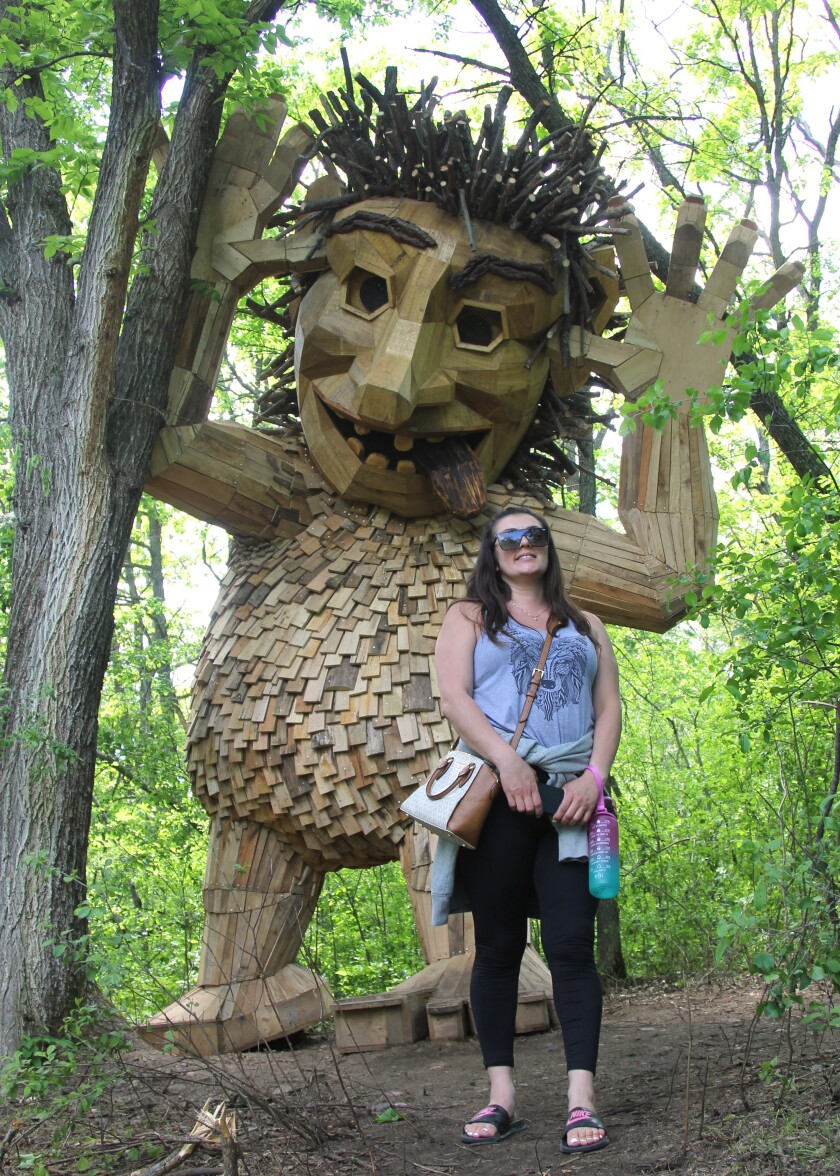
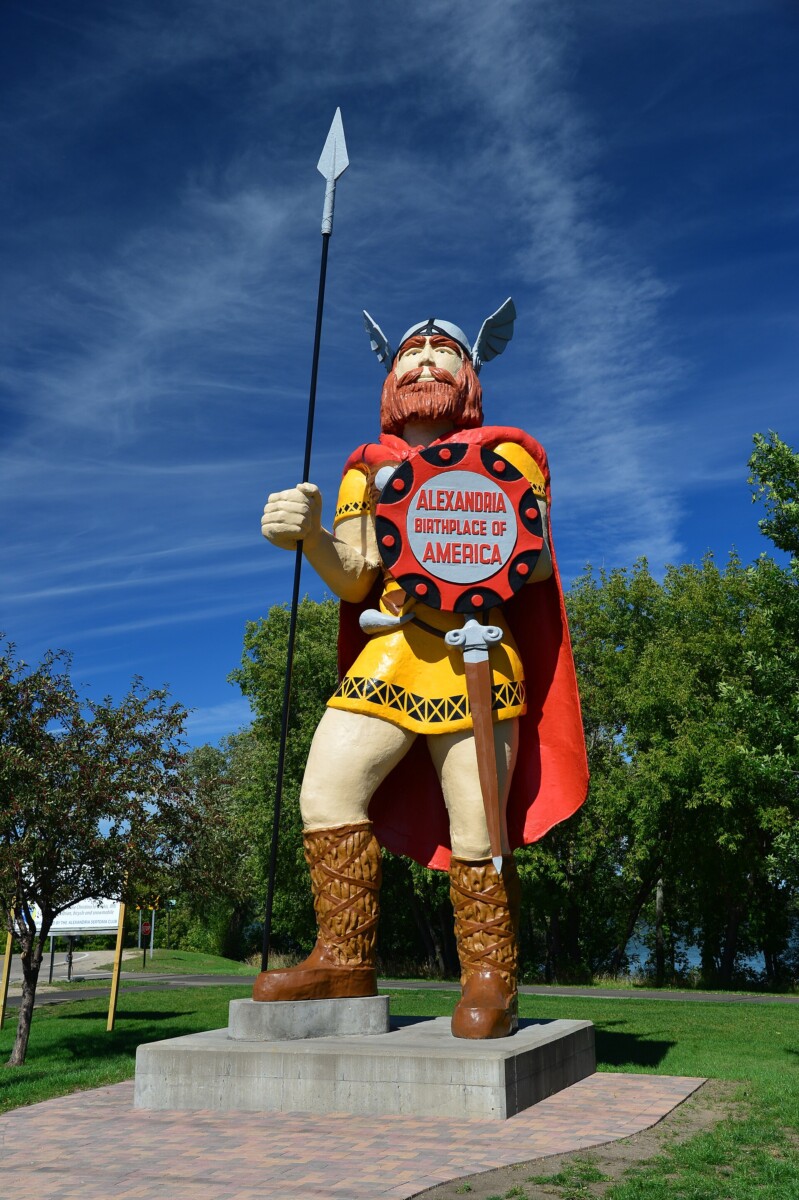
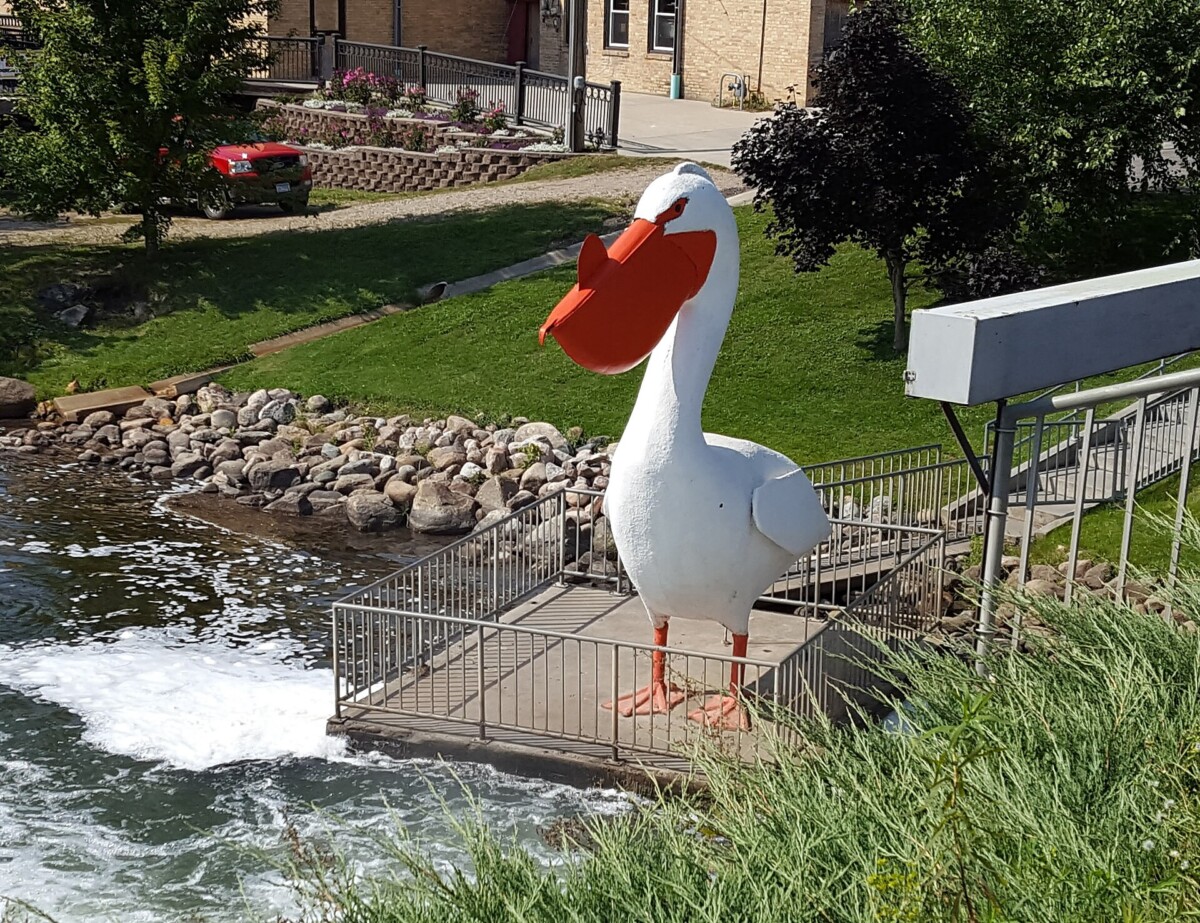
Photos: Big Ole by DrReload, CC BY 4.0, and Pelican Pete by Skvader, CC0, via Wikimedia Commons; troll photo by Creative City Developments.
The Problem
Towns Build Monuments, Then Guess
A town spends real money on a statue, a mural trail, a fountain, an arch. A ribbon gets cut, a photo runs in the paper, and after that nobody measures anything. Whether the thing actually brought anyone to town goes unanswered for decades.
We manage the listings for Alexa’s Elixir, the Thomas Dambo troll in Detroit Lakes; for Big Ole in Alexandria; and for Pelican Pete in Pelican Rapids. Each profile reports how many people searched for it, how many asked for driving directions, and which month they came. That is the closest thing to a real answer that exists, and almost every town leaves it switched off.
The Statue Study
1 Monument Listing Is an Anecdote. 20 Are an Answer. 100 Is a Revelation.
We are pooling the visitor data behind town monument listings across the country. Every town that joins shares its listing’s numbers, and every town that joins gets the pooled findings back. Nothing is published about any single town without its say-so; the value is in the aggregate.
What participating towns get, once enough are in:
- Your monument’s season curve. Which months it actually pulls people, so events and hours land when visitors do.
- Destination or drive-by. Whether people come to town for it or catch it on the way through, from what they searched to find it.
- The detour rate. How many of the people who see the listing decide to drive, benchmarked against every other monument in the study.
- Your catchment. How far people travel for it, so marketing radius can match visitor radius.
- Before and after. What a properly run listing changes, measured against a day-one baseline instead of a feeling.
- The windfall, in numbers. With lodging tax or event counts from participating towns, an honest estimate of what a monument is worth to a community.
Joining costs nothing and requires buying nothing. Towns that already run their own listing add us as a manager or send a monthly export. Towns that want the listing run for them can hire us; that is a separate service, priced below.
The Questions
What the Study Sets Out to Settle
Open a question
Does a monument bring visitors, or just photographs?
Direction requests are the tell. A photo is free attention that costs a town nothing and returns nothing. A direction request is a person deciding to drive. We track the ratio on every listing we manage, so a town can see which one it actually has.
How far will someone drive for one?
Google reports the areas that discovery searches come from. On one listing that is trivia. Across enough listings it becomes a real catchment map, and a town can stop guessing whether its marketing radius matches its visitor radius.
What changes when a listing is managed properly?
We baseline every profile on day one, before touching anything: photos, questions, hours, categories, and the traffic it was already producing. Everything after that is measured against the baseline, so the change is a number rather than a feeling.
Which months does a monument actually work?
Seasonality per monument, not per town. Some carry a shoulder season the town has never noticed because it only ever looked at lodging tax in aggregate. That is a programming decision hiding in plain sight.
Does a second monument add visitors, or split them?
This is the question a council asks right before commissioning another one, and nobody can answer it from inside one town. It needs the same measurement running in many towns at once, which is exactly what the study is for.
Monument Visibility Study · 2026
How much pull does your monument have left?
We tracked 101 town monuments across 33 states, installed between 1881 and 2026. Move the slider to your monument’s age.
opening year20 yrs40 yrs60 yrs
100%
of the pull it had its opening summer
Brand new. This is the peak, and it is the most valuable year the monument will ever have.
29% of monuments this age cannot be found on Google Maps by their own name
Decay is not destiny. Of the monuments we tracked through a restoration, an anniversary or an award, four in six measurably recovered, by between 40 and 250 percent.
Curve fitted from national search data, 2004 to 2026. The sample is small and the band around this line is wide. That is the reason the study is still recruiting towns.
Want the findings as more towns join?
The study is still open. As towns contribute their monument’s listing data, the middle of the curve fills in. Leave an address and I will send you what changes, and nothing else.
No list, no sequence, no sharing your address. If you would rather just talk, write to Matthew@creativecitydevelopments.com.
Packages
Three Ways In. One Guarantee.
Every town on this page has the same problem and a different budget. Start free, run one monument, or hand us all of them. Whichever you pick, the listing is yours and stays yours.
Join the Study
Freewith or without anything else
For a town that wants the answer before it spends a dollar.
- Send one export from your monument’s Google listing
- We read it and send back what it says in plain English
- You get the pooled findings from every town in the study
- Your town is never named in anything published without your say so
- About thirty minutes, once
Where most towns start
Managed Listing
$349a month, one monument
For a town with one landmark that carries its name.
- Month one is the full rescue: ownership set up in your organization’s name, categories and hours corrected, fifteen to twenty optimized photos loaded, and the ten questions every visitor asks answered
- Placement and correction across roughly a dozen directories, not just Google
- Ongoing photo refreshes, event posts, question answers and review replies
- A monthly report of searches, views and direction requests
- Everything in Join the Study, included
No setup fee. The old $450 rescue is now simply month one.
Town Monument Program
$899a month, capped, however many
For a town with three or more, or a whole trail.
- Every monument in town run as one portfolio
- Graduated: $349 for the first, $249 the second, $149 the third, $100 each after that
- The town total stops at $899 no matter how many you have
- Reporting broken out per monument, never lumped together
- Everything in Managed Listing, for all of them
60
The Guarantee
More people find it in sixty days, or you do not pay.
Before we touch anything we pull the last sixty days from your monument’s listing and write the number down. You get a copy of that baseline on day one, so there is no argument later about where you started.
Sixty days after we begin, we pull the same number again. If the searches that surfaced your monument have not gone up, we refund both months. You keep the baseline report, the photos, the corrected data and every directory placement we made. The listing was always yours and it stays that way.
If the listing is brand new and has no history to measure against, your first full month becomes the baseline and the sixty days run from there. Applies to Managed Listing and the Town Monument Program.
Open a row
Directory Placement and CorrectionIn both paid tiers
Your monument should appear in roughly a dozen places besides Google. Travel directories, map databases, public art registries and the state tourism system all carry monuments, and each one is a page that ranks, gets crawled, and gets read back by AI answer engines when somebody asks what there is to see near you.
Most towns are in one or two of them. We audit all of them, correct the listings that already exist, and submit to the rest on each platform’s own terms, which are all different and several of which will reject a submission that reads like marketing.
Two things we look for first, because they are the most common and the most expensive. A monument nobody can find by name: in our 2026 study of 101 town monuments, one in four did not come back when we searched its own name on Google Maps. Some returned nothing. Some returned the park, the plaza or the nonprofit that owns it, which is not the same thing to a visitor. And a monument filed under the wrong name: of the monuments that did have their own listing, a quarter were filed under a name their own town never uses, so every sign and brochure pointing at the local name is pointing at a search term that returns nothing.
Neither of those costs anything to fix. Both of them have to be found first.
Six month minimum once the guarantee period ends, then cancel any time. Creating and verifying a listing that does not exist yet is quoted separately after a call, because what Google accepts for an unstaffed monument varies and we will not promise you an outcome we do not control.
Price Your Town
What More Than One Monument Costs
Drag it. The first monument is $349 a month, the second $249, the third $149, and every one after that $100. The town total never passes $899.
$349 a month for 1 monument.
The first monument is $349 a month, the second $249, the third $149, and every one after that $100. The town total never goes above $899 a month.
Not the Same Thing
Listing Management Is Not the Town Assessment
This page is about running Google listings well. If what you want is to know how the whole town draws visitors, that is a different service: the Visitor Impact Score, which starts free and has synced and on-site tiers. It lives at creativecitydevelopments.com/consultation/. Many towns do both; neither requires the other.
FAQ
Questions Towns Ask Us
Who ends up owning the Google listing?
You do. Always. The chamber, the city, or the nonprofit that stewards the site holds the owner role; we work as an authorized manager. If we ever part ways, everything stays with you.
We have several statues. What does it cost to manage all of them?
The first is $349 a month, the second $249, the third $149, every one after that $100, and the town total is capped at $899 a month no matter how many monuments there are. So five statues cost $899, not five times $349. If the listings need to be created and verified on site, that is quoted separately after a call.
Our landmark shows on Google Maps but has no claim button. Can you still help?
Yes. Many landmarks are unclaimable points of interest. For those, visibility is won through photos, questions and answers, and making your town’s page the source Google trusts for the landmark. That is exactly what the Rescue covers.
What do we have to share to be in the study?
Either add matthew@creativecitydevelopments.com as a manager on the monument’s Google Business Profile (the owner role stays with you), or send the profile’s Performance export once a month. Nothing else. We never publish a single town’s numbers without its say-so.
How fast do results show?
Listing fixes appear within days. Movement in views and direction requests typically shows in the first quarterly report. We baseline everything on day one so the change is measurable, not anecdotal.
Why does a book publisher manage Google listings?
We write the Only Here book series, field studies of how towns manufacture reasons to visit. Researching it means we already know what your landmark is worth: the visitor counts, the festival economics, the stories. That research is why our first email to you usually includes a free scorecard of your landmark’s current Google presence, with the gaps named. No obligation; the scorecard is yours either way.
Can you write about our town too?
Sometimes we already have. Several towns we contact are chapters in the Only Here series. Ask and we will send yours.
Get in Touch
Join the Study or Have Us Run Your Listing
Tell us the monument and who runs its listing today. Joining the study is free. If you want the listing run for you, say so and we will send the plan and the price for your count.